أرخميدس
أرخميدس | |
|---|---|
Ἀρχιμήδης | |
 أرخميدس المفكر بريشة فتي (1620) | |
| وُلِدَ | ح. 287 ق.م. |
| توفي | ح. 212 ق.م. (عمره حوالي 75) سرقوسة |
| عـُرِف بـ | |
| السيرة العلمية | |
| المجالات | الرياضيات الفيزياء الهندسة علم الفلك الاختراع |
أرخميدس من سرقوسة (Archimedes ؛ /ˌɑːkɪˈmiːdiːz/;[2] باليونانية: Ἀρχιμήδης أو أرشميدس؛ ح. 287 ق.م. – ح. 212 ق.م.)، هو رياضيات، فيزيائي، مهندس، مخترع، وفلكي يوناني قديم.[3] بالرغم من معرفة القليل من تفاصيل حياته، إلا أنه يعتبر واحداً من أبرز العلماء في العصر العتيق الكلاسيكي.
يعتبر بصفة عامة من أعظم الرياضياتيين في العصر العتيق وواحداً من أعظم الرياضياتيين في جميع العصور،[4][5] كان أرخميدس من رواد حساب التفاضل والتكامل والتحليل الحديث بتطبيق مفاهيم متناهيات الصغر وطريقة الاستنفاد لاشتقاق والاثبات القاطع لنطاق النظريات الهندسية، وتشمل مساحة الدائرة، مساحة السطح وحجم الكرة، المساحة أسفل القطع المكافئ.[6]
يعود له الفضل في تصميم الآلات المبتكرة، بما في ذلك محركات الحصار ومضخة المسمار التي تحمل اسمه.
خلافا لإختراعاته، كانت كتابات أرخميدس الرياضية معروفة قليلا في العصور القديمة، وقد نقلها عنه علماء الرياضيات من الإسكندرية، ولكن أول تجميع شامل لنظريات أرخميدس تم تقديمه سنة 530 م. لإيزيدور ميليتس، بينما التعليقات على أعمال أرخميدس كتبها يوتوسيوس في القرن السادس الميلادي فتحت المجال الأوسع للقراء والتعرف عليها لأول مرة.
وقد كانت النسخ القليلة نسبيا من أعمال أرخميدس المكتوبة التي نجت خلال العصور الوسطى مصدرا مؤثرا في أفكار العلماء في عصر النهضة[7]، بينما في عام 1906 قدمت إكتشافات جديدة من أعمال أرخميدس لم تكن معروفة سابقا ، وقد قدم فيها أرخميدس رؤى جديدة في طرق و كيفية حصوله على النتائج الرياضية[8].
توفي أرخميدس حوالي سنة 212 ق.م. أثناء الحرب البونيقية الثانية، عندما استولت القوات الرومانية تحت قيادة الجنرال ماركوس كلاوديوس مرسلوس بالإستيلاء على مدينة سيراقوسة بعد حصار دام سنتين. وحسب قصة شهيرة يرويها پلوتارخ، فإن أرخميدس كان يقوم بحل مشكلة رياضية هندسية عندما تم الاستيلاء على المدينة. أتاه جندي روماني يأمره بلقاء جنرال مرسلوس إلا أن أرخميدس رفض، قائلاً أن عليه أن ينتهي من المسألة الرياضية أولاً. الجندي غضب من ذلك وقتله بالسيف. پلوتارخ يعطي كذلك رواية أخرى أقل شهرة عن مقتل أرخميدس، وتقول تلك الرواية أن أرخميدس قد يكون قد قـُتل بينما كان يحاول الاستسلام للجندي الروماني. وحسب تلك الرواية، فأرخميدس كان يحمل أدواتاً هندسية, وقتله الجندي ظناً منه أنه يحاول الفرار بأشياء ثمينة. ويروى أن الجنرال مرسلوس غضب لمصرع أرخميدس، إذ أنه قد أمر مسبقاً ألا يؤذى.[9]
آخر كلمات تُنسب لأرخميدس "لا تفسدوا دوائري" (باليونانية: μή μου τούς κύκλους τάραττε)، في إشارة إلى الدوائر التي كان يرسمها أثناء حله لمشكلة رياضية حين دخل عليه جنود غزاة رومان. هذا القول صار مأثوراً باللاتينية: "Noli turbare circulos meos"، إلا أنه ليس هنالك من دليل على أن أرخميدس قال تلك الكلمات ولا هي تظهر في الرواية التي نقلها پلوتارخ.[9]
سيرته

وُلد أرخميدس سنة 287 ق.م. في سيراقوسة الواقعة بجزيرة صقلية، في ذلك الوقت كانت مستعمرة متمتعة بالحكم ذاتي في اليونان العظمى، وكان والده فلكياً شهيراً، وقد كتب پلوتارخ في كتابه حياة موازية أن أرخميدس كان مرتبطاً إلى الملك هيرون الثاني، ملك سيراقوسة [10]، وصنع له السفينة سيراكوزيا الضخمة، سيرة أرخميدس كتبها صديق له يدعى هيراقليديس ولكن هذا العمل قد فقد، وترك تفاصيل حياته غامضة وغير معروفة [11]، فعلى سبيل المثال، لم تذكر المراجع التاريخية،إن كان أرخميدس قد تزوج في فترة شبابه أو رزق بأطفال.
كمعظم الشباب آنذاك سافر أرخميدس إلى الإسكندرية والتقى بقونون ساموس وإراتوستينس القيرواني وهما من علماء الرياضيات في عصره، وتشير اثنين من أعمال أرخميدس (الأسلوب النظريات الميكانيكية إنگليزية: The Method of Mechanical Theorems ومشكلة الماشية إنگليزية: Cattle Problem) لديهم مقدمات موجهة إلى إراتوستينس[a]، بعدها سافر إلى اليونان طلباً للدراسة. ويعد الكثير من مؤرخي الرياضيات والعلوم أن أرخميدس من أعظم علماء الرياضيات في العصور القديمة، وهو أبو الهندسة.
الإكليل الذهبي

قصة أخرى لمشكلة يُنسب إلى أرخميدس حلها لصالح هيرو الثاني هي "مشكلة الإكليل".[12] بحسب ڤيتروڤيوس، الذي كتب بعد حوالي قرنين من وفاة أرخميدس، فإن هيرون الثاني ملك سيراقوسة أمر بصنع إكليل ذهبي لمعبد الآلهة الخالدة، وزود الصائغ بالذهب الخالص.[13] ومع ذلك، بدأ الملك يشك في أن الصائغ قد استخدم بعض الفضة الرخيصة واحتفظ ببعض الذهب الخالص لنفسه، ولم يتمكن من إقناع الصائغ بالاعتراف، وطلب من أرخميدس التحقيق.[14] لاحقاً، أثناء دخوله إلى الحمام، لاحظ أرخميدس أن مستوى الماء في الحوض ارتفع أكثر كلما نزل في الحوض، وأدرك أن هذا التأثير يمكن استخدامه لتحديد حجم للتاج الذهبي، وكان متحمساً جداً لدرجة أنه نزل إلى الشوارع عارياً، بعد أن نسي ارتداء ملابسه، وهو يصيح باكياً "يوريكا!"[أ]، والتي تعني "وجدتها!"[14] بحسب ڤيتروڤيوس، أخذ أرشميدس بعد ذلك كتلة من الذهب وكتلة من الفضة متساويتان في وزن الإكليل، ووضع كل منهما في حوض الاستحمام، وأظهر أن الإكليل أزاح ماءاً أكثر من الذهب وأقل من الفضة، مما يدل على أن الإكليل كان ذهباً مخلوطاً بالفضة.[14]
هناك رواية مختلفة مذكورة في أغنية التأملات (Carmen de Ponderibus)،[15] وهي قصيدة تعليمية لاتينية لمؤلف مجهول من القرن الخامس الميلادي حول الأوزان والمقاييس، كانت تُنسب في السابق إلى النحوي پريسكيان.[14] في هذه القصيدة، وُضعت قطع الذهب والفضة على كفتي ميزان، ثم غُمر الجهاز بأكمله في الماء؛ ويؤدي اختلاف الكثافة بين الذهب والفضة، أو بين الذهب والتاج، إلى ميل الكفة تبعاً لذلك.[16] بخلاف وصف حوض الاستحمام الأكثر شهرة الذي قدمه ڤيتروڤيوس، يستخدم هذا الوصف الشعري مبدأ استاتيكا الموائع المعروف الآن بمبدأ أرخميدس والذي ورد في رسالته "في الأجسام الطافية"، حيث يتعرض الجسم المغمور في سائل قوة الطفو تساوي وزن السائل الذي يزيحه.[17] گاليليو گاليلِيْ، الذي اخترع الميزان الهيدروستاتيكي عام 1586 المستوحى من عمل أرخميدس، اعتبر أنه "من المحتمل أن تكون هذه الطريقة هي نفسها التي اتبعها أرخميدس، لأنها، إلى جانب كونها دقيقة للغاية، تستند إلى البراهين التي وجدها أرخميدس نفسه".[18]
إطلاق السفينة سيراكوزيا
ربما نشأ جزء كبير من عمل أرخميدس في الهندسة من تلبية احتياجات مدينته سيراقوسة.[19] إراتوسثينس الناقراطي في كتابه مائدة الحكماء يقتبس موسكيون معيناً لوصف كيف أمر الملك هيرون الثاني بتصميم سفينة ضخمة، سيراكوزيا، والتي يقال أنها كانت أكبر سفينة بنيت في العصور القديمة الكلاسيكية، ووفقاً لرواية موسكيون، أطلقها أرخميدس.[20] يروي پلوتارخ رواية مختلفة قليلاً،[21] يروي أن أرخميدس تفاخر أمام هيرون بأنه قادر على تحريك أي وزن كبير، وعندها تحداه هيرون لتحريك سفينة.[22] تحتوي هذه الروايات على العديد من التفاصيل الرائعة غير القابلة للتصديق تاريخياً، ويقدم مؤلفو هذه القصص أفكاراً متضاربة حول كيفية إنجاز هذه المهمة:[22] يذكر پلوتارخ أن أرخميدس قام ببناء نظام بكرة صد ومعالجة، في حين عزا هيرون السكندري نفس التفاخر إلى اختراع أرخميدس لبارولكوس، وهو نوع من التلاعات (الدواليب).[23] بدلاً من ذلك أعزى پاپوس الإسكندري هذا العمل الفذ إلى استخدام أرخميدس الفائدة الميكانيكية،[22] مبدأ الرافعة لرفع الأشياء التي لولا ذلك لكانت ثقيلة للغاية بحيث لا يمكن تحريكها، ونسبت إليه الملاحظة المقتبسة كثيراً: "أعطني مكاناً لأقف عليه، وسأحرك الأرض".[ب][24]
من المرجح أن إراتوسثينس قد شوّه تفاصيل رواية هيرون عن البارولكوس،[25] يذكر أيضاً أن أرخميدس استخدم "لولباً" لإزالة أي تسرب محتمل للمياه عبر هيكل السفينة سيراكوزيا. مع أن هذا الجهاز يُشار إليه أحياناً باسم لولب أرخميدس، إلا أنه على الأرجح أقدم منه بكثير، ولم ينسب إليه أي من معاصريه المقربين الذين وصفوا استخدامه (فيلون البيزنطي، سترابون، وڤيتروڤيوس).[22]
الآلات الحربية

أعظم ما اشتهر به أرخميدس خلال العصور القديمة كان دفاعه عن مدينته ضد الرومان أثناء حصار سيراقوسة.[26] بحسب پلوتارخ،[27] قام أرخميدس ببناء آلات حربية لهيرون الثاني، لكن لم تتح له الفرصة أبداً لاستخدامها خلال حياة هيرون. ومع ذلك، عام 214 ق.م، أثناء الحرب الپونيقية الثانية، عندما حولت سيراقوسة ولاءاتها من روما إلى قرطاج، حاول الجيش الروماني بقيادة ماركوس كلاوديوس ماركلوس الاستيلاء على المدينة، ويُزعم أن أرخميدس أشرف شخصياً على استخدام هذه الآلات الحربية في الدفاع عن المدينة، مما أدى إلى تأخير الرومان بشكل كبير، الذين لم يتمكنوا من الاستيلاء على المدينة إلا بعد حصار طويل.[28] يقدم ثلاثة مؤرخين مختلفين، پلوتارخ، ليڤي، وپوليبيوس، شهادات حول هذه الآلات الحربية، ويصفون المقاليع المحسنة، الرافعات التي أسقطت قطعاً ثقيلة من الرصاص على السفن الرومانية أو التي استخدمت مخلب حديدي لرفعها من الماء، وإسقاطها مرة أخرى حتى تغرق.[ت][30]
هناك رواية غير محتملة، لم يُعثر عليها في أي من الروايات الثلاثة الأقدم (پلوتارخ، پوليبيوس، أو ليڤي) تصف كيف استخدم أرخميدس "المرايا المحترقة" لتركيز أشعة الشمس على السفن الرومانية المهاجمة، مما أدى إلى إضرام النيران فيها.[26] أقدم رواية تذكر إضرام النيران في السفن، كتبها الكاتب الساخر من القرن الثاني الميلادي لوقيان السميساطي،[31] لم تذكر المرايا، واكتفى بالقول إن السفن أُضرمت فيها النيران بوسائل اصطناعية، مما قد يعني استخدام مقذوفات مشتعلة.[26] وأول مؤلف ذكر المرايا هو جالينوس، وكتب في وقت لاحق من نفس القرن.[32] بعد ما يقرب من أربعمائة سنة من لوقيان وجالينوس، حاول أنتثيميوس ، على الرغم من الشكوك، إعادة بناء هندسة أرخميدس العاكسة الافتراضية.[33][34] كان الجهاز المزعوم، الذي يطلق عليه أحياناً "شعاع أرخميدس الحراري"، موضوعاً لنقاش مستمر حول مصداقيته منذ عصر النهضة.[35] ورفضه ديكارت باعتباره زائفاً،[36] بينما حاول الباحثون المعاصرون إعادة إنشاء التأثير باستخدام الوسائل التي كانت متاحة لأرخميدس فقط، وكانت النتائج مختلطة.[37]
وفاته
_by_Thomas_Degeorge.png&filetimestamp=20251205145633&)
هناك عدة روايات متباينة عن وفاة أرخميدس أثناء نهب سيراقوسة بعد سقوطها في أيدي الرومان:[38] أقدم رواية، من ليڤي، [39] تقول أنه أثناء رسم الأشكال في الغبار، قُتل أرخميدس على يد جندي روماني لم يكن يعلم أنه أرخميدس. ووفقاً لپلوتارخ،[40] وطالب الجندي أن يأتي أرخميدس معه، لكن أرخميدس رفض قائلاً إن عليه إنهاء العمل على المشكلة، فقتل الجندي أرخميدس بسيفه. وفي قصة أخرى من پلوتارخ كان أرخميدس يحمل أدوات رياضيات قبل أن يُقتل لأن جندياً اعتقد أنها أشياء ثمينة.[38] كتب كاتب روماني آخر، ڤالريوس ماكسيموس (ف. 30 م)، في كتاب أعمال وأقوال لا تُنسى أن آخر كلمات أرشميدس عندما قتله الجندي كانت "... لكنه بينما كان يحمي الغبار بيديه، قال "أتوسل إليك، لا تُفسدوا هذا"." وهي تشبه الكلمات الأخيرة المنسوبة إليه بشكل شائع الآن، "لا تُفسدوا دوائري"، والتي لا تظهر في أي مصادر قديمة.[38]
وبحسب ما ورد كان ماركلوس غاضباً من وفاة أرخميدس، لأنه اعتبره رصيداً علمياً قيماً (أطلق على أرخميدس لقب "برياريوس") وأمر بعدم إيذائه.[41][42]
يذكر شيشرون (106–43 ق.م.) أن ماركلوس أحضر إلى روما كرتين،[43] بناهما أرخميدس وأظهرتا حركة الشمس والقمر وخمسة كواكب، تبرع بواحدة منها إلى معبد الفضيلة في روما، والأخرة يُزعم أنه احتفظ بها باعتبارها الشيء الوحيد الذي نهبه من سيراقوسة.[44] يقود پاپوس السكندري تقريراً عن أطروحة مفقودة حالياً لأرخميدس حول صنع الكرات، والتي ربما تناولت بناء هذه الآليات.[30] كان إنشاء آليات من هذا النوع يتطلب معرفة متطورة بالتروس التفاضلية، والذي كان يُعتقد أنها كانت خارج نطاق التكنولوجيا المتاحة في العصور القديمة، لكن اكتشاف آلية أنتيكيثرا عام 1902، وهو جهاز آخر بُني حوالي عام 100 ق.م. ومصمم لغرض مماثل، أكد أن الأجهزة من هذا النوع كانت معروفة لدى اليونانيين القدماء،[45] مع بعض العلماء فيما يتعلق بجهاز أرخميدس باعتباره مقدمة.[46][47]
أثناء خدمته كمحقق عام روماني في صقلية، وجد شيشرون نفسه ما كان يُفترض أنه قبر أرخميدس بالقرب من البوابة الزراعية في سيراقوسة، في حالة مهملة ومليئة بالشجيرات. قام شيشرون بتنظيف القبر وتمكن من رؤية النحت وقراءة بعض الأبيات التي أُضيفت كنقش. حمل القبر منحوتة توضح كتاب أرخميدس الدليل الرياضي المفضل، أن حجم الكرة ومساحة سطحها تبلغ ثلثي مساحة الأسطوانة المحيطة بما في ذلك قواعدها.[48]
الرياضيات
في حين أنه غالباً ما يُنظر إليه على أنه مصمم للأجهزة الميكانيكية، فقد قدم أرخميدس أيضاً مساهمات في مجال الرياضيات، سواء في تطبيق تقنيات أسلافه للحصول على نتائج جديدة، أو في تطوير أساليب جديدة خاصة به.
طريقة الاستنفاد
| جزء من سلسلة مقالات عن |
| الثابت الرياضي π |
|---|
| 3.1415926535897932384626433... |
| استعمالات |
| خواص |
| القيمة |
| أشخاص |
| تاريخ |
| في الثقافة |
| متعلقات |

في كتاب تربيع القطع المكافئ، يذكر أرخميدس أن إحدى القضايا الواردة في كتاب العناصر لإقليدس، والتي تُبين أن مساحة الدائرة تتناسب طردياً مع قطرها، قد أُثبت ذلك باستخدام مبرهنة تُعرف الآن بخاصية أرخميدس، وهي أن "الزيادة التي تتجاوز بها مساحة منطقتين غير متساويتين مساحة المنطقة الأصغر، إذا أُضيفت إلى نفسها، يمكن أن تتجاوز أي منطقة محددة". قبل أرخميدس، قام كل من أودكسوس الكنيدي وغيره من علماء الرياضيات السابقين بإثبات أن أودكسوس هو صاحب كتاب إقليدس الثاني عشر بأكمله، بينما ينسب إليه أرخميدس صراحةً فقط إثباتيْ الفصلين 7 و10 من الكتاب، واللذين ينصان على أن حجم الهرم والمخروط يساويان، على التوالي، ثلث حجم المنشور المستطيل والمخروط ذي القاعدة والارتفاع نفسيهما.Acerbi 2018, p. 279}} طُبقت هذه المبرهنة ، وهي تقنية يشار إليها الآن بطريقة الاستنفاد، لإيجاد حجم رباعي الأسطح، الأسطوانة، المخروط، والكرة، والتي ترد براهينها في الكتاب الثاني عشر من كتاب العناصر لإقليدس.[49]
في كتاب قياس الدائرة، استخدم أرخميدس هذه الطريقة لإثبات أن مساحة الدائرة تساوي مساحة المثلث القائم الزاوية الذي تساوي قاعدته وارتفاعه نصف قطره ومحيطه.[50] ثم قام بتقريب النسبة بين نصف القطر والمحيط، أي قيمة π، برسم مضلع سداسي منتظم أكبر خارج الدائرة، ثم مضلع سداسي منتظم أصغر داخلها، ومضاعفة عدد أضلاع كل مضلع منتظم تدريجياً، وحساب طول ضلع كل مضلع في كل خطوة. ومع ازدياد عدد الأضلاع، يصبح التقريب أدق للدائرة. بعد أربع خطوات من هذا القبيل، عندما أصبح لكل مضلع 96 ضلعاً، تمكن من تحديد أن قيمة π تقع بين 31/7 (3.1429 تقريباً) و310/71 (3.1408 تقريباً)، وهو ما يتوافق مع قيمتها الفعلية البالغة 3.1416 تقريباً.[51] وفي نفس الرسالة، يؤكد أيضاً أن قيمة الجذر التربيعي للعدد 3 تقع بين 265/153 (1.7320261 تقريباً) و 1351/780 (1.7320512 تقريباً)، والتي ربما يكون قد استنتجها بطريقة مماثلة.[52]

In Quadrature of the Parabola, Archimedes used this technique to prove that the area enclosed by a parabola and a straight line is 4/3 times the area of a corresponding inscribed triangle as shown in the figure at right, expressing the solution to the problem as an infinite geometric series with the common ratio 1/4:[53]
إذا كان الحد الأول في هذه المتسلسلة هو مساحة المثلث، فإن الحد الثاني هو مجموع مساحتي مثلثين قاعدتاهما هما القاطعان الأصغران، ورأسهما الثالث هو نقطة تقاطع الخط الموازي لمحور القطع المكافئ والمار بمنتصف القاعدة مع القطع المكافئ، وهكذا. يستخدم هذا البرهان صيغة معدلة من المتسلسلة 1/4 + 1/16 + 1/64 + 1/256 + · · · التي تساوي 1/3.
كما استخدم هذه التقنية لقياس مساحات سطح الكرة والمخروط،[54] لحساب مساحة القطع الناقص،[55] ولإيجاد المساحة المحصورة داخل حلزون أرخميدس.[56][50]
الطريقة الميكانيكية
فإنه أجدر إذا كان في حوزته، من خلال الطريقة، علم بنوع من المسائل التي هي قيد التحقيق، أن يقدم الدليل – بدلاً من أن يحققه وهو لا يعرف شيئاً.
— أرخميدس، منهج النظريات الميكانيكية[57]
بالإضافة إلى تطوير أعمال علماء الرياضيات الأوائل فيما يتعلق بمنهج الاستنفاد، كان أرخميدس أيضاً رائداً في تقنية جديدة تستخدم قانون الرافعة لقياس مساحة وحجم الأشكال باستخدام الوسائل الفيزيائية. لقد قدم أولاً الخطوط العريضة لهذا الدليل في تربيع القطع المكافئ جنباً إلى جنب مع الدليل الهندسي، لكنه قدم شرحاً أكمل في منهج النظريات الميكانيكية.[53] وفقاً لأرخميدس، فقد أثبت النتائج في أطروحاته الرياضية أولاً باستخدام هذه الطريقة، ثم عمل بشكل عكسي، حيث طبق طريقة الاستنفاد فقط بعد أن قام بالفعل بحساب قيمة تقريبية للإجابة.[58]
الأعداد الكبيرة
طور أرخميدس طريقة لتمثيل الأعداد الكبيرة.
في حاسب الرمل، ابتكر أرخميدس نظاماً للعد يعتمد على عدد لا يحصى،[ث] المصطلح اليوناني للرقم 10.000، وذلك لحساب عدد أكبر من حبات الرمل اللازمة لملء الكون. واقترح نظام أرقام يستخدم قوى لا تعد ولا تحصى (100 مليون، أي 10000 × 10000) وخلص إلى أن عدد حبات الرمل المطلوبة لملء الكون سيكون 8 ڤيجنتيليون، أو 8×1063.[59] وبذلك، أثبت أن الرياضيات يمكن أن تمثل أعداداً كبيرة بشكل تعسفي.
في مشكلة الماشية، تحدى أرخميدس علماء الرياضيات في مكتبة الإسكندرية لحساب أعداد الماشية في قطيع الشمس، والتي تتضمن حل عدد من المعادلات الديوفانتية المتزامنة. نسخة أكثر صعوبة من المشكلة حيث يشترط أن تكون بعض الإجابات أرقام مربعة، والإجابة هي رقم كبير جداً، حوالي 7.760271×10206544.[60]
المجسم الأرخميدي
في عمل مفقود وصفه پاپوس السكندري، أثبت أرخميدس أن هناك ثلاثة عشر متعدد السطوح شبه المنتظم.[61]
كتاباته
 |
 |


نشر أرخميدس أعماله من خلال مراسلاته مع علماء الرياضيات في الإسكندرية،[62] والتي كُتبت في الأصل باللغة اليونانية الدورية، وهي لهجة مدينة سيراقوسة القديمة.[63]
أعماله الباقية
الأعمال التالية مرتبة زمنياً بناءً على المعايير المصطلحية والتاريخية الجديدة التي وضعها كنور (1978) وساتو (1986).[64][65]
في قياس الدائرة
في قياس الدائرة هو عمل موجز يتألف من ثلاث قضايا. كُتِبَ على شكل مراسلات مع دوسثيوس الپلوسيومي، الذي كان تلميذاً لكونون الساموسي. في القضية الثانية، يُقدِّم أرخميدس تقريباً لقيمة پاي (π)، مُبيِّناً أنها أكبر من 223/71 (3.1408...) وأصغر من 22/7 (3.1428...).
حاسب الرمل
في هذه الرسالة، المعروفة أيضاً باسم حاسب الرمل، يجد أرخميدس عدداً أكبر من عدد حبات الرمل اللازمة لملء الكون. ويذكر هذا الكتاب نظرية مركزية الشمس بالنسبة للمجموعة الشمسية التي اقترحها أرسطارخوس الساموسي، بالإضافة إلى الأفكار المعاصرة حول حجم الأرض والمسافة بين مختلف الأجرام السماوية، ومحاولات قياس القطر الظاهري للشمس.[66][67] باستخدام نظام عددي قائم على قوى عدد لا يعد ولا يحصى، استنتج أرخميدس أن عدد حبات الرمل اللازمة لملء الكون هو 8×1063 حبة رمل وفقاً للتدوين الحديث. تشير الرسالة التمهيدية إلى أن والد أرخميدس كان فلكياً يُدعى فيدياس. يُعد كتاب حاسب الرمل العمل الوحيد الباقي الذي يناقش فيه أرخميدس آراءه في علم الفلك.[68]
يناقش أرخميدس القياسات الفلكية للأرض والشمس والقمر، بالإضافة إلى نموذج مركزية الشمس للكون أرسطارخوس، في حاسب الرمال.[69] بدون استخدام علم المثلثات أو جدول الأوتار، يحدد أرخميدس القطر الظاهري للشمس من خلال وصف الإجراء والأداة المستخدمة لإجراء الملاحظات (قضيب مستقيم به أوتاد أو أخاديد)،[70] مطبقاً عوامل التصحيح على هذه القياسات، وأخيراً إعطاء النتيجة في شكل حدود عليا وسفلى لمراعاة الخطأ الرصدي.[71]
يشير پطليموس، نقلاً عن هيپارخوس، إلى ملاحظات أرخميدس حول الانقلاب الشمسي في كتاب المجسطي. وهذا يجعل أرخميدس أول يوناني معروف يسجل تواريخ وأوقات الانقلابات الشمسية المتعددة في سنوات متتالية.[72]
في اتزان المستويات
يتألف كتاب في اتزان المستويات من جزأين: الأول يحتوي على سبع مسلمات وخمس عشرة افتراض، بينما يحتوي الجزء الثاني على عشر قضايا. في الجزء الأول، يبرهن أرخميدس على قانون الرافعة،[73] والذي ينص على:
الأحجام في حالة توازن على مسافات تتناسب طردياً مع أوزانها.
توجد أوصاف سابقة لمبدأ الرافعة في عمل من تأليف إقليدس وفي كتاب المشاكل الميكانيكية، الذي ينتمي إلى المدرسة المشائية لأتباع أرسطو، والذي نسبه البعض إلى أرخيتاس.[74]
يستخدم أرخميدس المبادئ المشتقة لحساب مساحات ومراكز الثقل للأشكال الهندسية المختلفة بما في ذلك المثلثات ومتوازيات الأضلاع والقطع المكافئة.[75]
تربيع القطع المكافئ
في هذا العمل المؤلف من 24 فرضية موجهة إلى دوسيثيوس، أثبت أرخميدس بطريقتين أن المساحة المحاطة بالقطع المكافئ والخط المستقيم هي 4/3 مساحة مثلث متساوي القاعدة والارتفاع. ويحقق ذلك بطريقتين مختلفتين: الأولى من خلال تطبيق قانون الرافعة، ومن خلال حساب قيمة متسلسلة هندسية التي مجموعها لا نهاية بنسبة 1/4.[76]
في الكرة والإسطوانة

في هذه الرسالة المكونة من مجلدين والموجهة إلى دوسيثيوس، توصل أرخميدس إلى النتيجة التي كان يفخر بها أيما فخر، ألا وهي العلاقة بين كرة وأسطوانة محيطة بهما نفس الارتفاع والقطر. حجم الكرة هو 4/3πr3، وحجم الأسطوانة هو 2πr3. مساحة سطح الكرة هي 4πr2، ومساحة سطح الأسطوانة (بما في ذلك قاعدتيها) هي 6πr2، حيث r هو نصف قطر الكرة والأسطوانة.[77][78]
في اللوالب
هذا العمل المؤلف من 28 افتراض موجه أيضاً إلى دوسيثيوس. ويعرّف هذا الكتاب ما يُعرف الآن بحلزون أرخميدس أو لولب أرخميدس.[79] هو محل النقاط التي تُمثل مواقع نقطة تتحرك مع الزمن بعيداً عن نقطة ثابتة بسرعة ثابتة على امتداد خط يدور بسرعة زاوية ثابتة. وبصورة مكافئة، في نظام الإحداثيات القطبية الحديث (r، θ)، يمكن وصفه بالمعادلة حيث a و b عددان حقيقيان.[80]
هذا مثال مبكر على منحنى ميكانيكي (منحنى يُرسم بواسطة نقطة) متحركة يعتبره عالم رياضيات يوناني.
في القمعيات والكرويات
يتضمن هذا العمل 32 مقترحاً موجهاً إلى دوسيثيوس. في هذه الرسالة، قام أرخميدس بحساب مساحات وأحجام الأقسام من المخاريط، والمجالات، والسطوح المكافئة.[81][82]
في الأجسام الطافية
هناك كتابان في الأجسام الطافية. في الكتاب الأول، يوضح أرشميدس قانون الاتزام للسوائل ويثبت أن الماء سيتخذ شكلاً كروياً حول مركز الجاذبية.[83]
يُقدّم هذا العمل مبدأ أرخميدس للطفو، والذي يُذكر على النحو التالي:[84]
أي جسم مغمور كلياً أو جزئياً في سائل يتعرض لقوة دفع لأعلى تساوي وزن السائل المزاح، لكنها معاكسة له في الاتجاه.
وفي الجزء الثاني، قام بحساب مواضع التوازن لأجزاء من القطع المكافئة. ربما كان هذا بمثابة إضفاء المثالية على أشكال هياكل السفن. وتطفو بعض أقسامه بحيث تكون القاعدة تحت الماء والقمة فوق الماء، على غرار الطريقة التي تطفو بها الجبال الجليدية.[85]
أوستوماكيون (صندوق أرخميدس)

الأوستوماكيون، الذي يُعرف أيضاً باسم لوكولوس أرخميدس أو صندوق أرخميدس،[86] هو لغز تشريح يشبه التنگرام، وقد عُثر على الأطروحة التي تصفه بشكل أكثر اكتمالاً في طرسية أرخميدس. قام أرخميدس بحساب مساحات القطع الأربعة عشر، والتي يمكن تجميعها لتشكل مربعاً. جادل رڤيل نتز من جامعة ستانفورد عام 2003 بأن أرخميدس كان يحاول تحديد عدد الطرق التي يمكن من خلالها تجميع القطع على شكل مربع. حسب حسابات نتز أنه يمكن تحويل القطع إلى مربع بنحو 17152 طريقة.[87] يبلغ عدد الترتيبات 536 عند استبعاد الحلول المتكافئة بالدوران والانعكاس.[88] يمثل هذا اللغز مثالاً على مشكلة مبكرة في التوافيق.
أصل اسم اللغز غير واضح، وقد أُقترح أنه مأخوذ من الكلمة اليونانية القديمة ستوماخوس (στόμαχος) والتي تعني الحلق أو البلعوم.[89] يُطلق أوسنيوس على اللغز اسم Ostomachion، وهي كلمة يونانية مركبة مشتقة من جذور osteon (ὀστέον, 'العظام') وmachē (μάχη, 'قتال').[86]
مشكلة الماشية
في هذا العمل، الموجه إلى إراتوستينس وعلماء الرياضيات في الإسكندرية، يتحداهم أرخميدس لحساب أعداد الماشية في قطيع الشمس، والتي تتضمن حل عدد من المعادلات الديوفانتية المتزامنة. اكتشف گوتهولد إفرايم لسنگ هذا العمل في مخطوطة يونانية تتكون من قصيدة مكونة من 44 سطراً في مكتبة هرتسوگ أوگوست في ڤولفنبوتل، ألمانيا، عام 1773. هناك نسخة أكثر صعوبة من المشكلة حيث يشترط أن تكون بعض الإجابات أرقام مربعة. قام أ. أمثور أولاً بحل هذا الإصدار من المشكلة[90] عام 1880، والإجابة هي عدد كبير جداً، يساوي تقريباً 7.760271×10206544.[91]
منهج النظريات الميكانيكية
كما هو الحال مع مشكلة الماشية، فقد كُتب منهج النظريات الميكانيكية على شكل رسالة إلى إراتوستين في الإسكندرية.
في هذا العمل، يستخدم أرخميدس طريقة جديدة، وهي شكل مبكر من مبدأ كاڤالييري،[92] لإعادة استخلاص النتائج من الأطروحات المرسلة إلى دوسيثيوس (تربيع القطع المكافئ، في الكرة والأسطوانة، في اللوالب، في القمعيات والكرويات) التي سبق له أن استخدم طريقة الاستنفاد لإثباتها،[93] باستخدام قانون الرافعة الذي طبقه في كتابه في اتزان المستويات لإيجاد مركز الكتلة أولاً، ثم الاستدلال الهندسي من هناك لاستنتاج حجم الجسم بسهولة أكبر.[94] يذكر أرخميدس أنه استخدم هذه الطريقة لاستخلاص النتائج من الرسائل المرسلة إلى دوسيثيوس قبل أن يثبتها بشكل أكثر صرامة باستخدام طريقة الاستنفاد، مشيراً إلى أنه من المفيد معرفة أن النتيجة صحيحة قبل إثباتها بدقة، مثلما ساعد أودكسوس الكنيدوسي في إثبات أن حجم المخروط هو ثلث حجم الأسطوانة من خلال معرفة أن ديمقريطس قد أكد ذلك بالفعل. صحيح على أساس أن هذا صحيح من خلال حقيقة أن الهرم يحتوي على ثلث المنشور المستطيل الذي له نفس القاعدة.[95]
كان يُعتقد أن هذه الرسالة مفقودة حتى اكتشاف طرسية أرخميدس عام 1906.[96]
أعمال غير مؤكدة
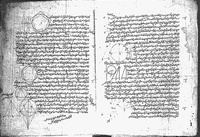
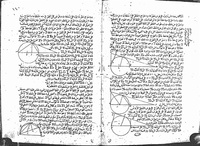
كتاب الليمات أو ليبر أسومپتوروم لأرخميدس هو رسالة تتضمن 15 قضية حول طبيعة الدوائر. أقدم نسخة معروفة من النص مكتوبة باللغة العربية. جادل ت. ل. هيث بأنه لا يمكن أن يكون أرخميدس هو من كتبه بصيغته الحالية، لأنه يقتبس من أرخميدس بالاسم، مما يشير إلى أن الليمات جُمعت بواسطة مؤلف لاحق. ورأى أن أفكاره، مثل كتاب أربلوس، تعود أصولها إلى أرخميدس.[97] يفترض تانري أنه إذا كان مثل هذا العمل موجوداً في وقت ما، فقد فُقد بالفعل بحلول زمن پاپوس، الذي وضع عبارات مماثلة في المجموعة، واصفاً إياها بأنها "قديمة ومن أعمال مختلفة".[98][99]
تشمل الإسنادات الأخرى الغير مؤكدة لأرخميدس القصيدة اللاتينية قصيدة عن الأوزان والمقاييس (Carmen de ponderibus et mensuris) (القرن الرابع أو الخامس)، والتي تصف استخدام الاتزان الهيدروستاتيكي، لحل مشكلة التاج، ونص القرن الثاني عشر الخريطة الرئيسية (Mappae clavicula، والذي يحتوي على تعليمات حول كيفية إجراء فحص الفلزات بواسطة حساب جاذبيتها النوعية.[100][101]
الأعمال المفقودة
لم ينجو العديد من أعمال أرخميدس المكتوبة أو هي موجودة فقط في أجزاء عُدلت بشكل كبير:[102] يذكر پاپوس السكندري كتاب في صناعة الكرة، بالإضافة إلى كتاب عن المجسمات شبه المنتظمة، وكتاب آخر عن اللوالب، بينما يقتبس ثيون السكندري ملاحظة حول الانكسار من كتاب كاتوپتريكا المفقود. وقد شرح كتاب المبادئ، الموجه إلى زيوخيپوس، نظام الأرقام المستخدم في حاسبة الرمال؛ وهناك أيضاً كتاب في الموازين وكتاب في مراكز الجاذبية.[102]
ينسب العلماء في العالم الإسلامي بالعصور الوسطى أيضاً إلى أرخميدس صيغة لحساب مساحة المثلث من طول أضلاعه، والتي تُعرف اليوم بصيغة هيرون نظراً لأول ظهور معروف لها في أعمال هيرون السكندري في القرن الأول الميلادي، وربما أُثبتت في عمل أرخميدس المفقود الذي لم يعد موجوداً.[103]
طرسية أرخميدس

عام 1906، زار الأستاذ الدنماركي يوهان لودڤيگ هيبيرگ القسطنطينية لفحص مخطوطة من 174 صفحة من برشمان جلد الماعز، كُتبت في القرن الثالث عشر، بعد قراءة نسخة مختصرة نُشرت قبل سبع سنوات بواسطة پاپادوپولوس-كراميوس.[104][105] أكد أنها بالفعل طرسية، وهي وثيقة كُتب عليها نص فوق نص أقدم مُحي. كانت الطرسيات تُصنع عن طريق كشط الحبر من أعمال موجودة وإعادة استخدامها، وهي ممارسة شائعة في العصور الوسطى، نظراً لارتفاع تكلفة الرق. وقد حدد الباحثون الأعمال الأقدم في الطرسيات على أنها نسخ من القرن العاشر لرسائل مفقودة سابقاً لأرخميدس.[104][106]
تحتوي الطرسية على سبع رسائل، من بينها النسخة الوحيدة الباقية من رسالة في الأجسام الطافية باليونانية الأصلية. وهي المصدر الوحيد المعروف لرسالة طريقة النظريات الميكانيكية، التي أشار إليها سويداس والتي كان يُعتقد أنها فُقدت إلى الأبد. كما عُثر على رسالة الأوستوماكيون في المخطوطة، والتي تتضمن تحليلاً أكثر شمولاً للغز مما وُجد في النصوص السابقة.
وتتضمن رسائل أرخميدس:
- في اتزان المستويات On the Equilibrium of Planes
- في اللوالب On Spirals
- في قياس الدائرة Measurement of a Circle
- في الكرة والإسطوانة On the Sphere and Cylinder
- الأجسام الطافية On Floating Bodies
- منهج النظريات الميكانيكية The Method of Mechanical Theorems
- أوستوماكيون (صندوق أرخميدس) Stomachion
- خطب السياسي هايپريدس من القرن الرابع ق.م.
- تعليق على كتاب المقولات لأرسطو
- أعمال أخرى
أمضت البرشمنت مئات السنين في مكتبة دير في القسطنطينية قبل أن تُباع إلى جامع مقتنيات خاص في العشرينيات. وفي 29 أكتوبر 1998، بيعت في مزاد علني لمشتري مجهول مقابل 2.2 مليون دولار.[107][108] الطرسية مخزنة في متحف والترز للفن بالتيمور، ماريلاند، حيث خضعت لمجموعة من الاختبارات الحديثة بما في ذلك استخدام الأشعة فوق البنفسجية والأشعة السينية لقراءة النص المكتوب فوقها.[109] It has since returned to its anonymous owner.[110][111]
ذكراه
يُطلق على أرخميدس أحياناً أبو الرياضيات والفيزياء الرياضية، وكان لأرخميدس تأثير واسع على الرياضيات والعلوم.[112]
الرياضيات والفيزياء

يتفق مؤرخو العلوم والرياضيات بشكل شبه عالمي على أن أرخميدس كان أفضل عالم رياضيات في العصور القديمة. على سبيل المثال، كتب إريك تمپل بل:
أي قائمة بأعظم علماء الرياضيات الثلاثة في التاريخ ستتضمن اسم أرخميدس. والاثنان الآخران المرتبطان به عادةً هما نيوتن وگاوس. البعض، بالنظر إلى الثروة النسبية - أو الفقر - للرياضيات والعلوم الفيزيائية في العصور التي عاش فيها هؤلاء العمالقة، وتقدير إنجازاتهم على خلفية عصرهم، سيضعون أرخميدس في المرتبة الأولى.[113]
وبالمثل، قال ألفرد نورث وايتهيد وجورج سيمنوز عن أرخميدس:
... في عام 1500 عرفت أوروپا أقل مما عرفته أرخميدس الذي توفي عام 212 ق.م...[114]
إذا نظرنا إلى ما أنجزه جميع الرجال الآخرين في الرياضيات والفيزياء، في كل قارة وفي كل حضارة، منذ بداية الزمن وحتى القرن السابع عشر في غرب أوروپا، فإن إنجازات أرخميدس تفوق كل شيء. لقد كان حضارة عظيمة بمفرده.[115]
ويشير رڤيل نتز، أستاذ سوپس في الرياضيات اليونانية وعلم الفلك في جامعة ستانفورد وخبير في أرخميدس:
وهكذا، بما أن أرخميدس قاد أكثر من أي شخص آخر إلى تشكيل حساب التفاضل والتكامل، وبما أنه كان رائد تطبيق الرياضيات على العالم المادي، فقد اتضح أن العلوم الغربية ليست سوى سلسلة من الهوامش لأرخميدس. وهكذا يتبين أن أرخميدس هو أهم عالم عاش على الإطلاق.[116]
أعرب ليوناردو دا ڤنشي مراراً وتكراراً عن إعجابه بأرخميدس، ونسب اختراعه Architonnerre إلى أرخميدس.[117][118][119] أطلق گاليلِيْ عليه لقب "الإنسان الخارق" و"سيدي"،[120][121] بينما قال هويگنز: "أعتقد أن أرخميدس لا يمكن مقارنته بأحد"، مقلداً إياه عمداً في أعماله المبكرة.[122] وقال لايبنتس: "إن من يفهم أرخميدس وأپولونيوس سيعجب بشكل أقل بإنجازات الرجلين البارزين في العصور اللاحقة".[123] أبطال گاوس هم أرخميدس ونيوتن،[124] وموريتز كانتور، الذي درس على يد گاوس في جامعة گوتنگن، ذكر أنه لاحظ ذات مرة في محادثة أنه "لم يكن هناك سوى ثلاثة علماء رياضيات صنعوا عصراً جديداً: أرخميدس، نيوتن، وآيزنشتاين".[125]
وأشاد به المخترع نيكولا تيسلا قائلاً:
لقد كان أرخميدس هو المثل الأعلى بالنسبة لي. لقد أعجبت بأعمال الفنانين، لكنها في رأيي كانت مجرد ظلال وأشكال. اعتقدت أن المخترع يعطي للعالم إبداعات ملموسة، تعيش وتعمل.[126]
التكريم والتخليد

.jpg&filetimestamp=20071128141742&)

هناك فوهة على سطح القمر اسمها أرخميدس (29.7° N, 4.0° W) تكريماً له، كما أن هناك سلسلة جبال قمرية، Montes Archimedes (25.3° N, 4.6° W).[127] الكويكب 3600 أرخميدس مسمى أيضاً على اسمه.[128]
وسام فيلدز للإنجاز البارز في الرياضيات يحمل پورتريه لأرخميدس، مع إثباته المتعلق بالكرة والأسطوانة. النقش الموجود حول رأس أرخميدس هو اقتباس منسوب إليه نصه باللاتينية: "Transire suum pectus mundoquepotiri" (ارتق فوق نفسك واستوعب العالم).[129]
ظهر أرخميدس على طوابع بريدية أصدرتها ألمانيا الشرقية (1973)، اليونان (1983)، إيطاليا (1983)، نيكاراگوا (1971)، سان مارينو (1982) واسبانيا (1963).[130]
صيحة التعجب يوريكا! المنسوبة إلى أرخميدس أصبحت شعار ولاية كاليفورنيا. وفي هذه الحالة فالتعجب يعود إلى اكتشاف الذهب بالقرب من طاحونة سوتر عام 1848 الذي أشعل الهروع لذهب كاليفورنيا.[131]
انظر أيضاً
|
|
مرئيات
| تهديد ووعيد، الصورة الكبيرة، 6 سبتمبر 2026. |
الهوامش
a. ^ In the preface to On Spirals addressed to Dositheus of Pelusium, Archimedes says that "many years have elapsed since Conon's death." Conon of Samos lived c. 280–220 BC, suggesting that Archimedes may have been an older man when writing some of his works.
b. ^ The treatises by Archimedes known to exist only through references in the works of other authors are: On Sphere-Making and a work on polyhedra mentioned by Pappus of Alexandria; Catoptrica, a work on optics mentioned by Theon of Alexandria; Principles, addressed to Zeuxippus and explaining the number system used in The Sand Reckoner; On Balances and Levers; On Centers of Gravity; On the Calendar. Of the surviving works by Archimedes, T. L. Heath offers the following suggestion as to the order in which they were written: On the Equilibrium of Planes I, The Quadrature of the Parabola, On the Equilibrium of Planes II, On the Sphere and the Cylinder I, II, On Spirals, On Conoids and Spheroids, On Floating Bodies I, II, On the Measurement of a Circle, The Sand Reckoner.
c. ^ Boyer, Carl Benjamin A History of Mathematics (1991) ISBN 0-471-54397-7 "Arabic scholars inform us that the familiar area formula for a triangle in terms of its three sides, usually known as Heron's formula — k = √(s(s − a)(s − b)(s − c)), where s is the semiperimeter — was known to Archimedes several centuries before Heron lived. Arabic scholars also attribute to Archimedes the 'theorem on the broken chord' ... Archimedes is reported by the Arabs to have given several proofs of the theorem."
d. ^ "It was usual to smear the seams or even the whole hull with pitch or with pitch and wax". In Νεκρικοὶ Διάλογοι (Dialogues of the Dead), Lucian refers to coating the seams of a skiff with wax, a reference to pitch (tar) or wax.[132]
الهامش
المراجع
- ^ Greek: "εὕρηκα, romanized: heúrēka
- ^ Greek: δῶς μοι πᾶ στῶ καὶ τὰν γᾶν κινάσω
- ^ There have been modern experiments to test the feasibility of the claw, and in 2005 a television documentary entitled Superweapons of the Ancient World built a version of the claw and concluded that it was a workable device.[29]
- ^ μυριάς, murias
الهامش
- ^ Knorr, Wilbur R. (1978). "Archimedes and the spirals: The heuristic background". Historia Mathematica. 5 (1): 43–75. doi:10.1016/0315-0860(78)90134-9.
"To be sure, Pappus does twice mention the theorem on the tangent to the spiral [IV, 36, 54]. But in both instances the issue is Archimedes' inappropriate use of a 'solid neusis,' that is, of a construction involving the sections of solids, in the solution of a plane problem. Yet Pappus' own resolution of the difficulty [IV, 54] is by his own classification a 'solid' method, as it makes use of conic sections." (p. 48)
- ^ "Archimedes". Collins Dictionary. n.d. Retrieved 25 September 2014.
- ^ "Archimedes (c.287 - c.212 BC)". BBC History. Retrieved 2012-06-07.
- ^ Calinger, Ronald (1999). A Contextual History of Mathematics. Prentice-Hall. p. 150. ISBN 0-02-318285-7.
Shortly after Euclid, compiler of the definitive textbook, came Archimedes of Syracuse (ca. 287 212 BC), the most original and profound mathematician of antiquity.
- ^ "Archimedes of Syracuse". The MacTutor History of Mathematics archive. January 1999. Retrieved 2008-06-09.
- ^ O'Connor, J.J. and Robertson, E.F. (February 1996). "A history of calculus". University of St Andrews. Archived from the original on 15 July 2007. Retrieved 2007-08-07.
{{cite web}}: Unknown parameter|deadurl=ignored (|url-status=suggested) (help)CS1 maint: multiple names: authors list (link) - ^ Bursill-Hall, Piers. "Galileo, Archimedes, and Renaissance engineers". sciencelive with the University of Cambridge. Retrieved 2007-08-07.
- ^ "Archimedes – The Palimpsest". Walters Art Museum. Archived from the original on 2007-09-28. Retrieved 2007-10-14.
- ^ أ ب Rorres, Chris. "Death of Archimedes: Sources". Courant Institute of Mathematical Sciences. Retrieved 2007-01-02. خطأ استشهاد: وسم
<ref>غير صالح؛ الاسم "death" معرف أكثر من مرة بمحتويات مختلفة. - ^ Plutarch. "Parallel Lives Complete e-text from Gutenberg.org". Project Gutenberg. Archived from the original on 11 July 2007. Retrieved 2007-07-23.
{{cite web}}: Unknown parameter|deadurl=ignored (|url-status=suggested) (help) - ^ O'Connor, J.J. and Robertson, E.F. "Archimedes of Syracuse". University of St Andrews. Archived from the original on 6 February 2007. Retrieved 2007-01-02.
{{cite web}}: Unknown parameter|deadurl=ignored (|url-status=suggested) (help)CS1 maint: multiple names: authors list (link) - ^ Dijksterhuis 1987, p. 18.
- ^ Vitruvius, De Architectura, Book IX, 3
- ^ أ ب ت ث Dijksterhuis 1987, p. 19.
- ^ Metrologicorum Scriptorum reliquiae, ed. F. Hultsch (Leipzig 1864), II, 88
- ^ Carmen de Ponderibus, lines 124-162
- ^ Dijksterhuis 1987, pp. 20-21.
- ^ Van Helden, Al. "The Galileo Project: Hydrostatic Balance". Rice University. Retrieved 14 September 2007.
- ^ Dijksterhuis 1987, p. 14.
- ^ Athenaeus, Deipnosophistae, V.40-45
- ^ Plutarch, Life of Marcellus 7-8
- ^ أ ب ت ث Dijksterhuis 1987, p. 15.
- ^ Heronis Opera Vol II, 1, 256, III 306
- ^ Pappus of Alexandria, Synagoge Book VIII
- ^ Dijksterhuis 1987, p. 16.
- ^ أ ب ت Dijksterhuis 1987, pp. 28-29.
- ^ Life of Marcellus, 25-27
- ^ Dijksterhuis 1987, pp. 26,28.
- ^ Carroll, Bradley W. "Archimedes' Claw: watch an animation". Weber State University. Retrieved 12 August 2007.
- ^ أ ب Dijksterhuis 1987, p. 27.
- ^ Lucian, Hippias, ¶ 2, in Lucian, vol. 1, ed. A. M. Harmon, Harvard, 1913, pp. 36–37
- ^ Galen, On temperaments 3.2
- ^ Anthemius of Tralles, On miraculous engines 153.
- ^ Knorr, Wilbur (1983). "The Geometry of Burning-Mirrors in Antiquity". Isis. 74 (1): 53–73. doi:10.1086/353176.
- ^ Simms, D. L. (1977). "Archimedes and the Burning Mirrors of Syracuse". Technology and Culture. 18 (1): 1–24. doi:10.2307/3103202. JSTOR 3103202.
- ^ John Wesley. "A Compendium of Natural Philosophy (1810) Chapter XII, Burning Glasses". Online text at Wesley Center for Applied Theology. Archived from the original on 12 October 2007. Retrieved 14 September 2007.
- ^ Jaeger, Mary (2017). "Archimedes in the 21st century imagination". In Rorres, Chris (ed.). Archimedes in the 21st Century: Proceedings of a World Conference at the Courant Institute of Mathematical Sciences. Trends in the History of Science. Birkhäuser. pp. 143–152. doi:10.1007/978-3-319-58059-3_8. ISBN 9783319580593. See p. 144.
- ^ أ ب ت Dijksterhuis 1987, pp. 30-31.
- ^ Livy, Ab Urbe Condita Book XXV, 31
- ^ Life of Marcellus, XIX, 1
- ^ Plutarch, Parallel Lives
- ^ Jaeger, Mary. Archimedes and the Roman Imagination. p. 113.
- ^ Dijksterhuis 1987, pp. 23-25.
- ^ Cicero, De republica
- ^ Rorres, Chris. "Spheres and Planetaria". Courant Institute of Mathematical Sciences. Retrieved 23 July 2007.
- ^ Freeth, Tony (2022). "Wonder of the Ancient World". Scientific American. 32 (1): 24. doi:10.1038/scientificamerican0122-24. PMID 39016582.
{{cite journal}}: Check|pmid=value (help) - ^ "The Antikythera Mechanism II". Stony Brook University. Archived from the original on 12 December 2013. Retrieved 25 December 2013.
- ^ Rorres, Chris. "Tomb of Archimedes: Sources". Courant Institute of Mathematical Sciences. Retrieved 2 January 2007.
- ^ Acerbi 2018, p. 279.
- ^ أ ب Acerbi 2018, p. 280.
- ^ McKeeman, Bill. "The Computation of Pi by Archimedes". Matlab Central. Retrieved 30 October 2012.
- ^ Miel, G (1983). "Of Calculations Past and Present: The Archimedean Algorithm". The American Mathematical Monthly. 90 (1): 17–35. doi:10.1080/00029890.1983.11971147. JSTOR 2975687. Archived from the original on 2015-09-05.
- ^ أ ب Netz 2022, p. 139.
- ^ On the Sphere and Cylinder 13-14, 33-34, 42, 44
- ^ On Conoids and Spheroids 4
- ^ On Spirals, 24-25
- ^ Netz, Noel, Tchernetska, Wilson. "Archimedes Palimpsest" p. 71
- ^ Netz 2022, p. 187.
- ^ Carroll, Bradley W. "The Sand Reckoner". Weber State University. Retrieved 23 July 2007.
- ^ Calkins, Keith G. "Archimedes' Problema Bovinum". Andrews University. Archived from the original on 12 October 2007. Retrieved 14 September 2007.
- ^ Netz 2022, p. 133.
- ^ Acerbi 2018.
- ^ Wilson, Nigel Guy (2006). Encyclopedia of Ancient Greece (in الإنجليزية). Psychology Press. p. 77. ISBN 978-0-7945-0225-6. Retrieved 29 April 2025.
- ^ Knorr, W. R. (1978). "Archimedes and the Elements: Proposal for a Revised Chronological Ordering of the Archimedean Corpus". Archive for History of Exact Sciences. 19 (3): 211–290. doi:10.1007/BF00357582. JSTOR 41133526.
- ^ Sato, T. (1986). "A Reconstruction of The Method Proposition 17, and the Development of Archimedes' Thought on Quadrature...Part One". Historia scientiarum: International journal of the History of Science Society of Japan.
- ^ Osborne, Catherine (1983). "Archimedes on the Dimensions of the Cosmos". Isis. 74 (2): 234–242. doi:10.1086/353246. JSTOR 233105.
- ^ Rozelot, Jean Pierre; Kosovichev, Alexander G.; Kilcik, Ali (2016), A brief history of the solar diameter measurements: a critical quality assessment of the existing data
- ^ "English translation of The Sand Reckoner". University of Waterloo. 2002. Archived from the original on 2002-06-01. Adapted from Newman, James R. (1956). The World of Mathematics. Vol. 1. New York: Simon & Schuster.
- ^ Toomer, G. J.; Jones, Alexander (7 March 2016). "Astronomical Instruments". Oxford Research Encyclopedia of Classics. doi:10.1093/acrefore/9780199381135.013.886. ISBN 9780199381135.
Perhaps the earliest instrument, apart from sundials, of which we have a detailed description is the device constructed by Archimedes for measuring the sun's apparent diameter; this was a rod along which different coloured pegs could be moved.
- ^ Evans, James (1 August 1999). "The Material Culture of Greek Astronomy". Journal for the History of Astronomy. 30 (3): 238–307. Bibcode:1999JHA....30..237E. doi:10.1177/002182869903000305.
- ^ Shapiro, A. E. (1975). "Archimedes's measurement of the Sun's apparent diameter". Journal for the History of Astronomy. 6 (2): 75–83. Bibcode:1975JHA.....6...75S. doi:10.1177/002182867500600201.
- ^ خطأ استشهاد: وسم
<ref>غير صحيح؛ لا نص تم توفيره للمراجع المسماةAcerbi2008 - ^ Goe, G. (1972). "Archimedes' theory of the lever and Mach's critique". Studies in History and Philosophy of Science Part A. 2 (4): 329–345. Bibcode:1972SHPSA...2..329G. doi:10.1016/0039-3681(72)90002-7.
- ^ Clagett, Marshall (2001). Greek Science in Antiquity. Dover Publications. ISBN 978-0-486-41973-2.
- ^ Heath, T.L. (1897). The Works of Archimedes. Cambridge University Press.
- ^ Archimedes (1897). Heath (ed.). The works of Archimedes. Dover., page 233
- ^ Archimedes (1897). Heath (ed.). The works of Archimedes. Dover., page 1
- ^ Netz, Reviel, ed. (2004). The Works of Archimedes. Vol. I: The Two Books On the Sphere and the Cylinder. Cambridge University Press. doi:10.1017/CBO9780511482557. ISBN 0-521-66160-9.
- ^ Netz, Reviel, ed. (2017). The Works of Archimedes: Translation and Commentary. Vol. II: On Spirals. Cambridge University Press. doi:10.1017/9781139019279. ISBN 978-0-521-66145-4.
- ^ Archimedes (1897). Heath (ed.). The works of Archimedes. Dover., page 151
- ^ Archimedes (1897). Heath (ed.). The works of Archimedes. Dover., page 99
- ^ Saito, Ken (2013). "Archimedes and double contradiction proof". Lettera Matematica International Edition. 1 (3): 97–104. doi:10.1007/s40329-013-0017-x.
- ^ Berggren, J. L. (1976). "Spurious Theorems in Archimedes' Equilibrium of Planes: Book I". Archive for History of Exact Sciences. 16 (2): 87–103. doi:10.1007/BF00349632. JSTOR 41133463.
- ^ Netz, Reviel (2017). "Archimedes' Liquid Bodies". In Buchheim, Thomas; Meißner, David; Wachsmann, Nora (eds.). ΣΩΜΑ: Körperkonzepte und körperliche Existenz in der antiken Philosophie und Literatur. Hamburg: Felix Meiner. pp. 287–322. ISBN 978-3-7873-2928-1.
- ^ Stein, Sherman (2004). "Archimedes and his floating paraboloids". In Hayes, David F.; Shubin, Tatiana (eds.). Mathematical Adventures for Students and Amateurs. Washington: Mathematical Association of America. pp. 219–231. ISBN 0-88385-548-8. Rorres, Chris (2004). "Completing Book II of Archimedes's on Floating Bodies". The Mathematical Intelligencer. 26 (3): 32–42. doi:10.1007/bf02986750. Girstmair, Kurt; Kirchner, Gerhard (2008). "Towards a completion of Archimedes' treatise on floating bodies". Expositiones Mathematicae. 26 (3): 219–236. doi:10.1016/j.exmath.2007.11.002.
- ^ أ ب "Graeco Roman Puzzles". Gianni A. Sarcone and Marie J. Waeber. Retrieved 9 May 2008.
- ^ Kolata, Gina (14 December 2003). "In Archimedes' Puzzle, a New Eureka Moment". The New York Times. Retrieved 23 July 2007.
- ^ Ed Pegg Jr. (17 November 2003). "The Loculus of Archimedes, Solved". Mathematical Association of America. Retrieved 18 May 2008.
- ^ Rorres, Chris. "Archimedes' Stomachion". Courant Institute of Mathematical Sciences. Retrieved 14 September 2007.
- ^ Krumbiegel, B. and Amthor, A. Das Problema Bovinum des Archimedes, Historisch-literarische Abteilung der Zeitschrift für Mathematik und Physik 25 (1880) pp. 121–136, 153–171.
- ^ Calkins, Keith G. "Archimedes' Problema Bovinum". Andrews University. Archived from the original on 12 October 2007. Retrieved 14 September 2007.
- ^ Powers, J. (2020). "Did Archimedes do calculus?" (PDF). maa.org. Retrieved 14 April 2021. Jullien, V. (2015), J., Vincent, ed., Archimedes and Indivisibles, Science Networks. Historical Studies, 49, Cham: Springer International Publishing, pp. 451–457, doi:, ISBN 978-3-319-00131-9 O'Connor, John J.; Robertson, Edmund F. (February 1996), "A history of the calculus", MacTutor History of Mathematics archive, University of St Andrews. Kirfel, Christoph (2013). "A generalisation of Archimedes' method". The Mathematical Gazette. 97 (538): 43–52. doi:10.1017/S0025557200005416. JSTOR 24496758.
- ^ Netz 2022, p. 131.
- ^ Netz 2022, pp. 187-193.
- ^ Netz 2022, p. 150-151.
- ^ Smith, David Eugene (1909). Geometrical Solutions Derived from Mechanics: A Treatise of Archimedes (in English). Open Court Publishing Company. Retrieved 4 May 2025.
{{cite book}}: CS1 maint: unrecognized language (link) - ^ Heath, Thomas Little (1897), The Works of Archimedes, Cambridge University Press, p. xxxii, https://books.google.com/books?id=bTEPAAAAIAAJ
- ^ Pappus of Alexandria, Collection IV, p. 1
- ^ Tannery, Paul (1887), La Géométrie grecque, p. 162, https://archive.org/details/lagomtriegre01tannuoft/page/162/mode/2up
- ^ Dilke, Oswald A. W. 1990. [Untitled]. Gnomon 62(8):697–99. JSTOR 27690606.
- ^ Berthelot, Marcel. 1891. "Sur l histoire de la balance hydrostatique et de quelques autres appareils et procédés scientifiques." Annales de Chimie et de Physique 6(23):475–85.
- ^ أ ب Netz 2022, p. 133-135.
- ^ Netz 2022, p. 135-136.
- ^ أ ب Wilson, Nigel (2004). "The Archimedes Palimpsest: A Progress Report". The Journal of the Walters Art Museum. 62: 61–68. JSTOR 20168629.
- ^ Easton, R. L.; Noel, W. (2010). "Infinite Possibilities: Ten Years of Study of the Archimedes Palimpsest". Proceedings of the American Philosophical Society. 154 (1): 50–76. JSTOR 20721527.
- ^ Miller, Mary K. (March 2007). "Reading Between the Lines". Smithsonian.
- ^ "Rare work by Archimedes sells for $2 million". CNN. 29 October 1998. Archived from the original on 16 May 2008. Retrieved 15 January 2008.
- ^ Christie's (n.d). Auction results
- ^ "X-rays reveal Archimedes' secrets". BBC News. 2 August 2006. Retrieved 23 July 2007.
- ^ Piñar, G.; Sterflinger, K.; Ettenauer, J.; Quandt, A.; Pinzari, F. (2015). "A Combined Approach to Assess the Microbial Contamination of the Archimedes Palimpsest". Microbial Ecology. 69 (1): 118–134. Bibcode:2015MicEc..69..118P. doi:10.1007/s00248-014-0481-7. PMC 4287661. PMID 25135817.
- ^ Acerbi, F. (2013). "Review: R. Netz, W. Noel, N. Tchernetska, N. Wilson (eds.), The Archimedes Palimpsest, 2001". Aestimatio. 10: 34–46.
- ^
Father of mathematics: Jane Muir, Of Men and Numbers: The Story of the Great Mathematicians, p 19.
Father of mathematical physics: James H. Williams Jr., Fundamentals of Applied Dynamics, p 30., Carl B. Boyer, Uta C. Merzbach, A History of Mathematics, p 111., Stuart Hollingdale, Makers of Mathematics, p 67., Igor Ushakov, In the Beginning, Was the Number (2), p 114.
- ^ E.T. Bell, Men of Mathematics, p 20.
- ^ Alfred North Whitehead. "The Influence of Western Medieval Culture Upon the Development of Modern Science". Retrieved 4 April 2022.
- ^ George F. Simmons, Calculus Gems: Brief Lives and Memorable Mathematics, p 43.
- ^ Reviel Netz, William Noel, The Archimedes Codex: Revealing The Secrets of the World's Greatest Palimpsest
- ^ "The Steam-Engine". Nelson Examiner and New Zealand Chronicle. Vol. I, no. 11. Nelson: National Library of New Zealand. 21 May 1842. p. 43. Retrieved 14 February 2011.
- ^ The Steam Engine. The Penny Magazine. 1838. p. 104.
- ^ Robert Henry Thurston (1996). A History of the Growth of the Steam-Engine. Elibron. p. 12. ISBN 1-4021-6205-7.
- ^ Matthews, Michael. Time for Science Education: How Teaching the History and Philosophy of Pendulum Motion Can Contribute to Science Literacy. p. 96.
- ^ "Archimedes – Galileo Galilei and Archimedes". exhibits.museogalileo.it. Retrieved 16 June 2021.
- ^ Yoder, J. (1996). "Following in the footsteps of geometry: the mathematical world of Christiaan Huygens". De Zeventiende Eeuw. Jaargang 12.
- ^ Boyer, Carl B., and Uta C. Merzbach. 1968. A History of Mathematics. ch. 7.
- ^ Jay Goldman, The Queen of Mathematics: A Historically Motivated Guide to Number Theory, p 88.
- ^ E.T. Bell, Men of Mathematics, p 237
- ^ W. Bernard Carlson, Tesla: Inventor of the Electrical Age, p 57
- ^ Friedlander, Jay and Williams, Dave. "Oblique view of Archimedes crater on the Moon". NASA. Retrieved 2007-09-13.
{{cite web}}: CS1 maint: multiple names: authors list (link) - ^ "Planetary Data System". NASA. Retrieved 2007-09-13.
- ^ "Fields Medal". International Mathematical Union. Retrieved 2007-07-23.
- ^ Rorres, Chris. "Stamps of Archimedes". Courant Institute of Mathematical Sciences. Retrieved 2007-08-25.
- ^ "California Symbols". California State Capitol Museum. Retrieved 2007-09-14.
- ^ Casson, Lionel (1995). Ships and seamanship in the ancient world. Baltimore: The Johns Hopkins University Press. pp. 211–212. ISBN 978-0-8018-5130-8.
قراءات إضافية

- Boyer, Carl Benjamin (1991). A History of Mathematics. New York: Wiley. ISBN 0-471-54397-7.
- Clagett, Marshall (1964–1984). Archimedes in the Middle Ages. Vol. 5 vols. Madison, WI: University of Wisconsin Press.
- Dijksterhuis, E.J. (1987). Archimedes. Princeton University Press, Princeton. ISBN 0-691-08421-1. Republished translation of the 1938 study of Archimedes and his works by an historian of science.
- Gow, Mary (2005). Archimedes: Mathematical Genius of the Ancient World. Enslow Publishers, Inc. ISBN 0-7660-2502-0.
- Hasan, Heather (2005). Archimedes: The Father of Mathematics. Rosen Central. ISBN 978-1-4042-0774-5.
- Heath, T.L. (1897). Works of Archimedes. Dover Publications. ISBN 0-486-42084-1. Complete works of Archimedes in English.
- Netz, Reviel and Noel, William (2007). The Archimedes Codex. Orion Publishing Group. ISBN 0-297-64547-1.
{{cite book}}: CS1 maint: multiple names: authors list (link) - Pickover, Clifford A. (2008). Archimedes to Hawking: Laws of Science and the Great Minds Behind Them. Oxford University Press. ISBN 978-0-19-533611-5.
- Simms, Dennis L. (1995). Archimedes the Engineer. Continuum International Publishing Group Ltd. ISBN 0-7201-2284-8.
- Stein, Sherman (1999). Archimedes: What Did He Do Besides Cry Eureka?. Mathematical Association of America. ISBN 0-88385-718-9.
أعمال أرخميدس أونلاين
- Text in Classical Greek: PDF scans of Heiberg's edition of the Works of Archimedes, now in the public domain
- In English translation: The Works of Archimedes, trans. T.L. Heath; supplemented by The Method of Mechanical Theorems, trans. L.G. Robinson
وصلات خارجية
| Find more about أرخميدس at Wikipedia's sister projects | |

|
Definitions from Wiktionary |

|
Media from Commons |

|
News stories from Wikinews |

|
Quotations from Wikiquote |

|
Source texts from Wikisource |

|
Textbooks from Wikibooks |

|
Learning resources from Wikiversity |

- Archimedes on In Our Time at the BBC. (listen now)
- أعمال من Archimedes في مشروع گوتنبرگ
- Works by or about أرخميدس at Internet Archive
- أرخميدس at the Indiana Philosophy Ontology Project
- أرخميدس at PhilPapers
- The Archimedes Palimpsest project at The Walters Art Museum in Baltimore, Maryland
- The Mathematical Achievements and Methodologies of Archimedes
- "Archimedes and the Square Root of 3". MathPages.com.
- "Archimedes on Spheres and Cylinders". MathPages.com.
- Photograph of the Sakkas experiment in 1973
- Testing the Archimedes steam cannon
- Stamps of Archimedes
- Eureka! 1,000-year-old text by Greek maths genius Archimedes goes on display Daily Mail, October 18, 2011.
| أعمال مكتوبة | | |
|---|---|---|
| اكتشافات واختراعات | ||
| متفرقات | ||
| أشخاص متعلقون | ||

موضوعات عن اليونان القديمة | |||||||||||
|---|---|---|---|---|---|---|---|---|---|---|---|
| الفترات | |||||||||||
| الجغرافيا | |||||||||||
| السياسة |
| ||||||||||
| الحكام | |||||||||||
| المجتمع |
| ||||||||||
| العسكرية | |||||||||||
| شخصيات |
| ||||||||||
| المباني | |||||||||||
| الفنون |
| ||||||||||
| العلوم | |||||||||||
| اللغة | |||||||||||
| الكتابة | |||||||||||
| القوائم | |||||||||||


- Articles containing Greek-language text
- Articles containing Ancient Greek (to 1453)-language text
- CS1 errors: unsupported parameter
- CS1 errors: PMID
- CS1: Julian–Gregorian uncertainty
- الصفحات بخصائص غير محلولة
- Short description is different from Wikidata
- Pages using infobox scientist with unknown parameters
- Articles containing إنگليزية-language text
- Pages using Lang-xx templates
- Articles with hatnote templates targeting a nonexistent page
- مقالات ناطقة
- أرخميدس
- مواليد 287 ق.م.
- وفيات 212 ق.م.
- أشخاص من صقلية
- مهندسون يونانيون قدماء
- مخترعون يونانيون قدماء
- علماء رياضيات يونانيون قدماء
- فيزيائيون يونانيون قدماء
- فلاسفة هلينيون
- يونانيون صقليون
- رياضياتيون صقليون
- علماء صقليون
- علماء مقتولون
- علماء الهندسة الرياضية
- ضحايا قتل يونانيون
- رياضياتيون