ريو تنتو (شركة)
 | |
 | |
| النوع | شركة مدرجة مزدوجة |
|---|---|
| رمز التداول | ASX: RIO LSE: RIO NYSE: RIO مكون100 Component |
| الصناعة | المعادن والتعدين |
| تأسست | 1873  |
| المقر الرئيسي | ، |
المساحة المخدومة | عالمية |
الأشخاص الرئيسيون |
|
| المنتجات | الحديد الخام، البوكسيت، الألومينا، الألومنيوم، النحاس، المولبدنم، الذهب، الماس، اليورانيوم، ثاني أكسيد التيتانيوم، البورات، الملح، التلك |
| الدخل |  53.658 بليون دولار (2024)[2] 53.658 بليون دولار (2024)[2] |
| ▲ 16.491 بليون دولار (2024)[2] | |
| ▲ 11.574 بليون دولار (2024)[2] | |
| Total assets | 102.786& بليون دولار (2024)[2] |
| Total equity | 57.965 بليون دولار (2024)[2] |
Number of employees | 60,000 (2024)[3] |
| Divisions | ريو تنتو ألكان كنكوت يوتا كوپر |
| Website | www |
مجموعة ريو تنتو، هي شركة أنگلو-أسترالية متعددة الجنسيات وثاني أكبر شركة معادن وتعدين في العالم، بعد بي إتش پي، تُنتج الحديد الخام، النحاس، الماس، الذهب واليورانيوم.[4][5] تأسست الشركة عام 1873، عندما اشترى كونستريوم استثماري متعدد الجنسيات من الحكومة الإسپانية مجمع مناجم على ريو تنتو، في مقاطعة ولبة الإسپانية. منذ ذلك الحين، نمت الشركة عبر سلسلة من الاندماجات والاستحواذات لتضع نفسها ضمن أكبر الشركات العالمية في العديد من المنتجات مثل الألومنيوم، الحديد الخام، النحاس، اليورانيوم، والماس.[6] على الرغم من أن تركيز الشركة الرئيسي هو استخراج المعادن، إلا أن ريو تنتو لديها أيضاً عمليات هامة في التكرير، خاصة لتكرير البوكسيت وخام الحديد.[7] لريو تنتو مكاتب رئيسية في لندن (الفرع العالمي و"پي إل سي")، وملبورن ("المحدودة" - أستراليا).[8][9]
ريو تنتو هي شركة مدرجة مزدوجة مدرجة في بورصة لندن، حيث هي مكون مؤشر FTSE 100،[10] وبورصة أستراليا، حيث هي مكون مؤشر S&P/ASX 200.[11] بالإضافة إلى ذلك، فإن أسهم الودائع الأمريكية يتم تداولها في بورصة نيويورك،[2][12] مما يجعلها مدرجة في ثلاث بورصات رئيسية.
Rio Tinto has faced criticism by environmental groups as well as the government of Norway for the environmental impacts of its mining activities.[13]
التأسيس

 |
Since antiquity, a site along the Río Tinto in Huelva, Spain, has been mined for copper, silver, gold and other minerals.[14] Around 3000 BC, Iberians and Tartessians began mining the site, followed by the Phoenicians, Greeks, Romans, Visigoths and Moors. After a period of abandonment, the mines were rediscovered in 1556 and the Spanish government began operating them once again in 1724.[14]
However, Spain's mining operations there were inefficient, and the government itself was otherwise distracted by political and financial crises,[15] leading the government to sell the mines in 1873 at a price later determined to be well below actual value.[16] The purchasers of the mine were led by Hugh Matheson's Matheson & Company, which ultimately formed a syndicate consisting of Deutsche Bank (56% ownership), Matheson (24%) and the civil engineering firm Clark, Punchard and Company[17] (20%). At an auction held by the Spanish government to sell the mine on 14 February 1873, the group won with a bid of £3.68 million (ESP 92.8 million). The bid also specified that Spain would permanently relinquish any right to claim royalties on the mine's production. Following purchase of the mine, the syndicate launched the Rio Tinto Company, registering it on 29 March 1873.[15] At the end of the 1880s, control of the firm passed to the Rothschild family, who increased the scale of its mining operations.[15]
20th century expansion and development
Following their purchase of the Río Tinto Mine, the new ownership constructed a number of new processing facilities, innovated new mining techniques, and expanded mining activities.[15]
During the first years of the company's operation in Spain, the company practiced open-air pyrite calcination in blast furnaces.[18] The toxic fumes released by this process had a negative impact on the farmland and the local agriculturists, which led to the company's workers and some local anarchists coming together to protest against this practice. On 4 February 1888, several thousand rank and file—agriculturalists, anarchists and mineworkers—marched to the Río Tinto town hall (ayuntamiento) to deliver their petitions to the mayor. The civil guards, under perceived threat of mob violence, fired on the crowd, killing at least 13 and injuring 35.[19]
From 1877 to 1891, the Río Tinto Mine was the world's leading producer of copper.[20]

From 1870 through 1925, the company was inwardly focused on fully exploiting the Río Tinto Mine, with little attention paid to expansion or exploration activities outside of Spain. The company enjoyed strong financial success until 1914, colluding with other pyrite producers to control market prices. However, World War I and its aftermath effectively eliminated the United States as a viable market for European pyrites, leading to a decline in the firm's prominence.[15]

The company's failure to diversify during this period led to the slow decline of the company among the ranks of international mining firms. However, this changed in 1925, when Sir Auckland Geddes succeeded Lord Alfred Milner as chairman. Geddes and the new management team he installed focused on diversification of the company's investment strategy and the introduction of organisational and marketing reforms. Geddes led the company into a series of joint ventures with customers in the development of new technologies, as well as exploration and development of new mines outside of Spain. Between 1925 and 1931, Geddes recruited two directors: JN Buchanan (finance director) and RM Preston (commercial director), as well as other executives involved with technical and other matters.[15]

The company's first major acquisition occurred in 1929, when the company issued stock for the purpose of raising 2.5 million pounds to invest in Northern Rhodesian copper mining companies, which was fully invested by the end of 1930. The Rio Tinto company consolidated its holdings of these various firms under the Rhokana Corporation by forcing the various companies to merge.[15]
Rio Tinto's status as a mainly British-owned company, located in Spain and producing pyrites—an important material for military applications—created a complicated set of circumstances for the company's operation in the 1930s and 1940s. During the Spanish Civil War, the region in which Rio Tinto's mines were located came under the control of General Franco's Nationalists in 1936. However, Franco increasingly intervened in the company's operations, at times requisitioning pyrite supplies for use by Spain and its Axis allies Germany and Italy, forcing price controls on the company's production, restricting exports, and threatening nationalisation of the mines. Although company management (and indirectly, the British government) managed to counteract some of these efforts by Franco, much of the mine's pyrite production was channelled to Axis powers before and during World War II.[21]
Rio Tinto's investment in Rhodesian copper mines did much to support the company through troubled times at its Spanish Rio Tinto operations spanning the Spanish Civil War, World War II and Franco's nationalistic policies. In the 1950s, the political situation made it increasingly difficult for mostly British and French owners to extract profits from Spanish operations, and the company decided to dispose of the mines from which it took its name.[15] Thus, in 1954, Rio Tinto Company sold two-thirds of its stake in the Rio Tinto mines, disposing of the rest over the following years.[22] The sale of the mines financed extensive exploration activities over the following decade.[23]
The company's exploration activities presented the company with an abundance of opportunities, but it lacked sufficient capital and operating revenue to exploit those opportunities. This situation precipitated the next, and perhaps most significant, merger in the company's history. In 1962, Rio Tinto Company merged with the Australian firm Consolidated Zinc to form the Rio Tinto – Zinc Corporation (RTZ) and its main subsidiary, Conzinc Riotinto of Australia (CRA). The merger provided Rio Tinto the ability to exploit its new-found opportunities, and gave Consolidated Zinc a much larger asset base.[23]
Major acquisitions following the Consolidated Zinc merger included US Borax, a major producer of borax, bought in 1968,[22] Kennecott Utah Copper and BP's coal assets which were bought from BP in 1989, and a 70.7% interest in the New South Wales operations of Coal & Allied, also in 1989.[22] In 1993, the company acquired Nerco and the United States coal mining businesses of Cordero Mining Company.[22]
The company was part of the uranium producers' cartel, Societe d'Etudes de Recherches d'Uranium, which operated from 1972 to 1976.[24] The other cartel members were based in Australia, France, and South Africa.[24] It was formed by the major non-United States uranium producers to mitigate the impacts of US policy on the uranium market; to do so, the cartel engaged in bid rigging, price fixing, and market sharing.[24] Westinghouse filed an antitrust lawsuit against cartel members in 1976 and the cartel disbanded.[24]
RTZ and CRA were separately managed and operated, with CRA focusing on opportunities within Australasia and RTZ taking the rest of the world. However, the companies continued to trade separately, and RTZ's ownership of CRA dipped below 50% by 1986.[23] The two companies' strategic needs eventually led to conflicts of interest regarding new mining opportunities, and shareholders of both companies determined a merger was in their mutual best interest. In 1995, the companies merged into a dual listed company, in which management was consolidated into a single entity and shareholder interests were aligned and equivalent, although maintained as shares in separately named entities. The merger also precipitated a name change; after two years as RTZ-CRA, RTZ became Rio Tinto plc and CRA became Rio Tinto Limited, referred to collectively as Rio Tinto.[23]
Early 21st century


In 2000, Rio Tinto acquired North Limited, an Australian company with iron ore and uranium mines, for $2.8 billion.[26][27][28] The takeover was partially motivated as a response to North Limited's 1999 bid to have Rio Tinto's Pilbara railway network declared open access.[29] The Australian Competition & Consumer Commission regulatory body approved the acquisition in August 2000,[30] and the purchase was completed in October of the same year.[31] That year, Rio Tinto also bought North Limited and Ashton Mining for US$4 billion, adding additional resources in aluminium, iron ore, diamonds and coal.[22] In 2001, it bought (under Coal & Allied) the Australian coal businesses of the Peabody Energy.[22]
In 2000, Rio Tinto faced a federal lawsuit on behalf of Papua New Guinea due to the harm the company's mining operations at the Panguna Mine had to the environment for decades. Local communities filed this suit claiming that the local Kawerong-Jaba river delta was used as a dumping site for "more than one billion tons of mine waste". According to the lawsuit, the citizens are claiming that the mining giant used harmful chemicals and bulldozers to destroy the environment and specifically the rainforest and used their waterways as a dumping site for the chemicals and runoff caused by their mining operations.[32]
On 14 November 2007, Rio Tinto completed its largest acquisition to date,[33] purchasing Canadian aluminium company Alcan for $38.1 billion,[34] اعتبارا من 2014[تحديث], "the largest mining deal ever completed".[35] Alcan's chief executive, Jacynthe Côté, led the new division, renamed Rio Tinto Alcan with its headquarters situated in Montreal.[36]
Activity in 2008 and 2009 was focused on divestments of assets to raise cash and refocus on core business opportunities. The company sold three major assets in 2008, raising about $3 billion in cash. In the first quarter of 2009, Rio Tinto reached agreements to sell its interests in the Corumbá iron ore mine and the Jacobs Ranch coal mine, and completed sales of an aluminium smelter in China and the company's potash operations, for an additional estimated $2.5 billion.[33]
On 5 July 2009, four Rio Tinto employees were arrested in Shanghai for corruption and espionage.[37][38] One of the arrested, Australian citizen Stern Hu, was "suspected of stealing Chinese state secrets for foreign countries and was detained on criminal charges", according to a spokesman for the Chinese foreign ministry.[39] Stern Hu was also accused of bribery by Chinese steel mill executives for sensitive information during the iron ore contract negotiations.[40][41]
In 2009, Chinese authorities began investigating allegations against Rio Tinto in what became known as the Rio Tinto espionage case. These included bribing executives from 16 of China's biggest steel mill companies to get hold of secret information.[42] On 29 March 2010 four Rio Tinto employees including Australian citizen Stern Hu were found guilty of these charges and of accepting millions of dollars in bribes.[43] They were ordered to pay hundreds of thousands of dollars in fines, and sentenced to 7 to 14 years in jail.[44]
On 19 March 2010 Rio Tinto and its biggest shareholder, Chinalco, signed a memorandum of understanding to develop Rio Tinto's iron ore project in the Simandou mine in Simandou, Guinea.[45][46] On 29 July 2010, Rio Tinto and Chinalco signed a binding agreement to establish this joint venture covering the development and operation of the Simandou mine.[46]
Under the terms of the agreement, the joint venture maintains Rio Tinto's 95% interest in the Simandou project as follows: By providing US$1.35 billion on an earn-in basis through sole funding of ongoing development over a two-to-three-year period, Chalco, a subsidiary of Chinalco, would acquire a 47% interest in the joint venture. Once the full sum was paid, Rio Tinto would be left with a 50.35% interest in the project and Chalco would have 44.65%.[47] The remaining 5% would be owned by the International Finance Corporation (IFC), the financing arm of the World Bank. On 22 April 2011 Rio Tinto, its subsidiary Simfer S.A. (Simfer), and the Guinean Government signed a settlement agreement that secured Rio Tinto's mining rights in Guinea to the southern concession of Simandou, known as blocks 3 and 4.[48] According to the agreement, Simfer would pay US$700 million and receive mining concession and government approval of the proposed Chalco and Rio Tinto Simandou joint venture.[48]
Recent history
In April 2011, Rio Tinto gained a majority stake in Riversdale Mining.[49][50] The Securities & Exchange Commission investigated a $3 billion impairment charge against Rio Tinto regarding the deal. Riversdale Mining was an Australian coal mining company with significant interests in Mozambique.[51][52] Rio Tinto bought it for $2.9 billion in an all-cash deal. Two years later they wrote down the value of the assets by $3 billion. Following the impairment charge, which included an additional $11 billion in asset write-downs, chief executive officer of Rio Tinto, Tom Albanese stepped down from his post and left the company. Rio later sold the assets for $50 million.[53]
In 2011, the company rekindled its interest in potash when it entered a joint venture with Acron Group to develop the Albany potash development, in southern Saskatchewan, Canada. Following an exploration program, Acron in a June 2014 statement described Albany as "one of the best potash development opportunities in the world".[54]
On 13 December 2011, an independent arbitrator cleared the way for Rio Tinto, which had owned 49% of Ivanhoe Mines (now known as Turquoise Hill Resources), to take it over: he said the $16 billion Canadian group's "poison pill" defence was not valid. Ivanhoe had developed Oyu Tolgoi in Mongolia, one of the world's largest-known copper deposits.[55] On 28 January 2012, Rio Tinto gained control of Ivanhoe Mines and removed the management.[56]

The metals for the medals for the 2012 Summer Olympics were supplied from the Bingham Canyon Mine located in Utah and the Oyu Tolgoi mine in Mongolia, which caused uproar among many activist groups, especially in Utah due to their concern about the impact to the local cities. One person particularly bothered by this decision was the Commissioner of the London Games, Meredith Alexander, who quit her position and led a coalition of human rights and environmental groups during the "Greenwashed Gold Campaign".[57]
In October 2013, Rio Tinto agreed to sell its majority stake in Australia's third-largest coal mine to Glencore and Sumitomo for a little over US$1 billion, as part of the firm's plans to focus on larger operations.[58] Less than a year later, Rio Tinto rejected two merger proposals from Glencore, proffered in July and August 2014;[35] the merger of Glencore and Rio Tinto would have created the world's largest mining company.[35]
In May 2015, Rio Tinto announced plans to sell some of its aluminium assets as part of a possible $1 billion deal, two years after a similar but failed attempt.[59]
In October 2015, Rio Tinto was criticised by the Guinean government for the many mining delays at the local Simandou mine. Cece Noramou, government official said the government was "running out of patience". President Alpha Conde himself said that "there have been people at Simandou for 15 years, 20 years, and they've never produced a ton of iron". Even before 2015, the Guinean government had expressed their displeasure and dissatisfaction with Rio Tinto; in 2008, the Guinean government annulled half of the company's Simandou rights and gave them to BSGR, a French–Israeli-owned mining company.[60] In late 2016, Rio Tinto agreed to sell its stake in the Simandou iron ore mine to Chinalco and exit the deal. The deal was negotiated after the company's case against Vale and BSGR was dismissed at US District Court.[61]
In 2016, Rio Tinto became embroiled in a number of corruption allegations over its acquisition of stakes in the Simandou iron ore mine in Guinea. The allegations centre around the payment of a $10.5 million bribe to François de Combret, a French banking consultant who was a friend and adviser of President Alpha Condé.[53][62][63] Condé denied having any knowledge of the illegal transactions, but recordings obtained by France24 suggest otherwise.[64] Also in early November 2016, the former mining minister of Guinea, Mahmoud Thiam, revealed that the head of Rio Tinto's operation in Guinea offered him a bribe in 2010 to win back control of the Simandou mine, and that his offer was supported by senior members of the company.[65] In July 2017 the Serious Fraud Office announced the launch of a fraud and corruption investigation into the company's business practices in Guinea.[66] The Australian Federal Police is also investigating the allegations.[67] After the Serious Fraud Office investigation announcement, and amid a search for a new CEO, Rio director John Varley was forced to resign from his role in the company.[68][69] On 6 March 2023, the US SEC announced charges against Rio Tinto plc for violations of the Foreign Corrupt Practices Act (FCPA) arising out of a bribery scheme involving a consultant in Guinea. The company agreed to pay a $15 million civil penalty to settle the SEC's charges.[70]
In May 2020, to expand the Brockman 4 mine, Rio Tinto demolished an Australian Aboriginal sacred site in Juukan Gorge, Western Australia, which had evidence of 46,000 years of continual human occupation, and was considered the only inland prehistoric site in Australia to show signs of continual human occupation through the last Ice Age.[71][72][73] The company later revealed it had three alternative options to preserve the site, but chose to destroy it without informing the traditional owners of the alternatives.[74] Permission to destroy the site had been given in 2013 under the state Aboriginal Heritage Act 1972, which, however, has been under review since 2018.[75][76] The Puutu Kunti Kurrama and Pinikura peoples, who are the local land custodians, had fought the decision.[77] The destruction brought widespread criticism.[78][79] On 31 May, Rio Tinto apologised for the distress caused.[80][81][82][83][84] On 11 September 2020, it was announced that, as a result of the destruction at Juukan Gorge, CEO Jean-Sébastien Jacques and two other Rio Tinto executives would step down.[85]
The company's chief financial officer, Jakob Stausholm, became the new chief executive on 1 January 2021.[86]
During 2021, a series of mass protests broke out in Serbia against the construction of a lithium mine in Western Serbia by the Rio Tinto corporation.[87] Protesters blocked major roads and bridges in Belgrade and other major cities.[88] In the town of Šabac, there was an incident when a member of the ruling party attacked the protesters with an excavator, and then the protesters were beaten by an armed group of hooligans.[89] The project would make Serbia the biggest producer of lithium globally, and provide raw materials to more than 1 million electric cars.[90] In June 2024, the constitutional court reverted the government's decision to remove Rio Tinto from the project,[91] and the president of Serbia announced that he was expecting the company to reveal their final plans for the mine in July and that the mine might be built by 2028.[92][93]
In February 2022, Rio Tinto released a report that described a work culture of bullying, harassment and racism, including twenty one complaints by women of actual or attempted rape or sexual assault in the past five years.[94] According to the report, these harmful behaviours were often tolerated or normalised. "Harmful behaviour by serial perpetrators is often an open secret", Elizabeth Broderick said. On the whole, about 28% of women and 7% of men had experienced sexual harassment at Rio. But this rate rose to 41% for female workers at FIFO sites.[95] Most women who responded had experienced "everyday sexism".[96]
In March 2022, Rio Tinto completed the acquisition of Rincon Mining's lithium project in Argentina for $825 million, following approval by Australia's Foreign Investment Review Board.[97]
In January 2023, the company announced that it had misplaced a capsule of radioactive material that was being transported from their Gudai-Darri mine in Western Australia. The capsule is a 8 by 6 mm cylinder containing a 19-gigabecquerel caesium-137 ceramic source.[98] It has the capability of causing serious illness if it is not handled correctly. According to the company, the capsule was lost somewhere between Newman and Perth, a distance of 1,400 km. The company launched an investigation into the disappearance and are working alongside authorities.[99] Later the same month the capsule was recovered by investigators and verified by the Australian Defence Forces.[100]
In July 2023, it was announced Rio Tinto had acquired a 15 per cent stake in the Australian exploration and development company, Sovereign Metals for US $27.6 million.[101]
In October 2024, Rio Tinto announced it would buy Arcadium Lithium for US$6.7 billion, in an all-cash deal for US$5.85 per each Arcadium Lithium share.[102] The deal was closed in March 2025, with Arcadium Lithium becoming Rio Tinto's lithium unit, called Rio Tinto Lithium. With the purchase of Arcadium, Rio Tinto became the world's third largest lithium miner.[103]
The Biden administration's regulation, completed in May 2024, required the only two copper smelters in the United States to reduce emissions of toxic pollutants such as lead, arsenic, mercury, benzene and dioxins. Shortly after beginning his second presidency, Trump classified copper as a strategically important raw material for defence, infrastructure and new technologies by decree[104] and on 24 October 2025 suspended the regulation for two years. The US Department of Energy (DOE) has since been tasked with developing a plan to reduce emissions from copper smelters.[105][106]
In May 2025, it was announced that Rio Tinto was partnering with Chilean state-owned Codelco for a lithium mine in northern Chile. The deal makes Rio Tinto the third private company to mine lithium in Chile. The company will invest $900 million and own just under half of the operation.[107] In August the same year Rio Tinto announced a partnership with Chilean state-owned ENAMI to carry out the lithium project Salares Altoandinos in Atacama Region.[108]
On 22 May 2025, the company announced its chief executive Jakob Stausholm will step down later in the year once it has selected his replacement.[109] In July 2025, Rio Tinto announced the appointment of Simon Trott as its new chief executive, due to assume the role on 25 August 2025.[110] Trott has been at the company for more than 20 years most recently leading its iron ore unit.[110]
الاندماجات والاستحواذات الرئيسية
الاستحواذات المبكرة

الاندماج مع كونسوليديتد زنك
الاندماجات والاستحواذات والأحداث المؤخرة
الفروع
للشركة عمليات في ستة قارات، لكن نشاطها الرئيسي يتركز في أستراليا وكندا، ولديها عمليات تعدين عبر شبكة من الفروع المملوكة لها كلياً أو جزئياً.[33]
- موارد الطاقة الأسترالية - 68.4%
- مؤسسة هيثور - 100%
- QIT-Fer et Titane - 100%
- دامپير للملح - 68.4%
- شركة الحديد الخام الكندية - 58.7%
- پاسيفيك للألومنيوم - 100%
- پالابورا - 57%
- رتشاردز باي للمعادن - 74%
- تركواز هيل للموارد - 51%
الوضع المؤسسي
تنقسم ريو تنتو إلى أربع إدارات أعمال، حسب نوع المنتج:[6]
- الألومنيوم- الألومنيوم، البوكسيت، والألومنيا.
- النحاس والماس - النحاس والمنتجات الثانوية مثل الذهب، الفضة، المولبدنم، وحمض الكبريتيك، والماس.
- الطاقة والمعادن - اليورانيوم، المعادن الصناعية مثل البوراكس، الملك وثاني أكسيد التيتانيوم. كان لدى الشركة نشاط في إنتاج الفحم.
- خام الحديد
يتم دعم مجموعات التشغيل هذه من قبل أقسام منفصلة توفر خدمات الاستكشاف ودعم الوظائف.[111]
الملكية وتركيبة الأسهم
الإدارة
- مجلس الإدارة
- المديرون التنفيذيون
- سيمون طومسون، الرئيس[112]
- جان-سباستيان جاك ، المدير التنفيذي
- جاكوب ستوسهولم، المدير المالي
- المديرون الغير تنفيذيون
- ديڤد كونستبل[113]
- ميگان كلارك [114]
- هندا گاربي [115]
- سيمون مكيون [116]
- سيمون هنري [117]
- جنيفر نيسون [118]
- سام ليدلاو [119]
- ميشل لسترانج[120]
- المديرون التنفيذيون
العمليات
النشاط الرئيسي لريو تنتو هو إنتاج المعادن الخام وتشمل النحاس، الحديد، البوكسيت، الماس، اليورانيوم، والمعادن الصناعية وتتضمن ثاني أكسيد التيتانيوم، الملح، الجبس، والبورات. كما تقوم الشركة بمعالجة ببعض من هذه المعادن، حيث لديها مصانع مخصصة لمعالجة البوسكيت إلى الألومنيا والألومنيوم، وصهر خام الحديد وتحويله إلى حديد. تنتج الشركة أيضاً معادن أخرى كمنتجات ثانوية عن معالجة مواردها الرئيسية، بما في ذلك الذهب والفضة والمولبدنم وحمض الكبريتيك والنيكل والبوتاس والرصاص والزنك.[7] تتحكم ريو تنتو في أصول قيمتها 81 بليون دولار من خلال أذرعها العالمية، حيث تتركز معظمها في أستراليا (35%)، كندا (34%)، أوروپا (13%)، والولايات المتحدة (11%)، وأصول أصغر في أمريكا الجنوبية (3%)، أفريقيا (3%)، وإندونيسيا (1%).[33]
| المنتج | الكمية | الترتيب العالمي |
|---|---|---|
| خام الحديد | 153.400 ألف طن | رقم 2[122] |
| البوكسيت | 34.987 ألف طن | رقم 1[7] |
| الألومنيا | 9.009 ألف طن | رقم 2[7] |
| الألومنيوم | 4.062 ألف طن | رقم 2[7] |
| النحاس (المُعدن) | 698.5 ألف طن | رقم 4[123] |
| النحاس (المعالج) | 321.6 ألف طن | N/A |
| المولبدنم | 10.6 ألف طن | رقم 3[124] |
| الذهب | 0.013 ألف طن (460.000 أونصة) | رقم 7[123] |
| الماس | 0.004 ألف طن (20.816.000 قيراط) | رقم 3[125] |
| الفحم | 160.300 ألف طن | N/A |
| اليورانيوم | 6.441 ألف طن (14.200.000 رطل) | رقم 3[7] |
| ثاني أكسيد التيتانيوم | 1.524 ألف طن | N/A، لكن المركز الثالث على الأقل |
| البورات | 610 ألف طن | رقم 1[7] |
الحديد الخام: ريو تنتو للحديد الخام
تتألف ريو تنتو للحديد الخام من عمليات الحديد الخام المتكاملة في پيلبرا بولاية استراليا الغربية. تتضمن عمليات الحديد الخام في پيلبرا 16 منجم للحديد الخام، أربع محطات موانيء مستقلة، شبكة سكك حديدية بطول 1.700 كم والبنية التحتية المتعلقة.[126]
النحاس والمنتجات الثانوية: ريو تنتو للنحاس

كان النحاس من المنتجات الرئيسي لريو تنتو منذ أيامها الأولى حيث تشغل الشركة مجمع ريو تنتو للمناجم في إسپانيا. منذ ذلك الوقت، تخلصت الشركة من مناجمها الإسپانية الأصلية، وزادت قدرتها على تعدين النحاس من خلال الاستحواذ على موارد النحاس الرئيسية في جميع أنحاء العالم. مصالح التعدين الرئيسية لمجموعة النحاس هي منجم أويو تولگوي في منغوليا، كنكوت يوتا للنحاس في الولايات المتحدة ، ومنيرا إسكنوديدا في تشيلي. معظم هذه المناجم مشروعات مشتركة مع شركات تعدين كبرى أخرى، حيث تتراوح ملكية ريو تنتو من 30% إلى 80%؛ كنكتوت فقط مملوك للشركة بالكامل. تشمل العمليات عادة تعدين الخام حتى إنتاج 99.99% من النحاس النقي، بما في ذلك استخراج المنتجات الثانوية ذات القيمة الاقتصادية.[127] بصفة إجمالية، بلغت حصة ريو تنتو من إنتاج النحاس في مناجمها ما يقرب من 700.000 طن، مما يجعلها رابع أكبر منتج للنحاس في العالم.[123]
حققت مبيعات النحاس 8% من إيرادات الشركة لعام 2008، وشكلت عمليات النحاس والمنتجات الثانوية 16% من الأرباح الأساسية.[33] وفرت ريو تنتو حصرياً المعادن المطلوبة لإنتاج 4700 ميدالية ذهبية وفضية وبرونزية في الألعاب الأولمپية والپارالمپية، لندن 2012. كانت هذه هي المرة الثانية التي تفعل فيها ريو تنتو ذلك لإنتاج الميداليات الأولمپية، بعد أن قدمت المعادن مسبقاً أثناءالألعاب الأولمپية الشتوية 2002 في سولت ليك سيتي.[128]
الألومنيوم

قامت ريو تنتو بدمج أعمالها المتعلقة بالألومنيوم في مجموعة منتجات الألمونيوم الخاصة بها (المسماة في الأصل "ريو تنتو ألكان")، التي تأست في أواخر 2007، عندما قامت شركة ريو تيتو بشراء شركة ألكان الكندية مقابل 38.1 مليار دولار. بالاقتران مع الأصول الحالية المتعلقة بالألومنيوم في ريو تنتو، قفز قسم الألمنيوم الجديد ليصبح المنتج الأول عالمياً للبوكسيت والألومينا والألومنيوم.[129] حافظ قسم الألمنيوم على القيادة الرئيسية في ألكان، وظل المقر الرئيسي للشركة في مونتريال.[36]

تقسم ريو تنتو عملياتها في مجال الألومنيوم إلى ثلاثة مجالات رئيسية - البوكسيت والألومينا والمعادن الأولية. تعدن وحدة البوكسيت والألومينا البوكسيت الخام من مواقع في أستراليا والبرازيل وأفريقيا. تقوم الوحدة بعد ذلك بتكرير البوكسيت إلى ألومينا في المصانع الموجودة في أستراليا والبرازيل وكندا وفرنسا. تتكون عمليات وحدة أعمال المعادن الأولية من صهر الألومنيوم من الألومينا، حيث تمتلك مصاهر في 11 دولة حول العالم. تقوم مجموعة پرايماري ميتال أيضاً بتشغيل العديد من محطات الطاقة لدعم عملية الصهر ذات الاستهلاك المكثف من الطاقة.[129]
لقسم الألومنيوم بالشركة أصول في سبعة مناجم ورواسب للبوكسيت، وستة مصافي للألومينا وستة مصانع خاصة للألومينا، و26 مصهرًا للألومنيوم، و13 مصنع طاقة، و120 منشأة لتصنيع المنتجات المتخصصة.[129] أدى الاستحواذ على عمليات ألكان في عام 2007 إلى زيادة قاعدة أصول وإيرادات وأرباح ريو تنتو بشكل كبير: في عام 2008، كان 41% من إيرادات الشركة و10% من أرباحها الأساسية تُعزى إلى قسم الألومنيوم.[33]
اليورانيوم: ريو تنتو للطاقة


ريو تنتو للطاقة هي مجموعة أعمال تابعة لريو تنتو متخصصة في تعدين وبيع اليورانيوم. تقع عمليات ريو تنتو لليورانيوم في منجمين: منجم رينجر لليورانيوم التابع لشركة موارد الطاقة الأسترالية ومنجم روسينگ لليورانيوم في ناميبيا. الشركة هي ثالث أكبر منتج لليورانيوم في العالم. حسب موقع ريو تنتو الإلكتروني، فإن الشركة تضع ضوابط صارمة وقيود تعاقدية على صادرات اليورانيوم، وتقتصر الاستخدامات على الاستخدامات السلمية وغير المتفجرة فقط. تهدف هذه الضوابط إلى الحد من استخدام الشركة لإنتاج اليورانيوم كوقود لمحطات الطاقة النووية فقط، وليس للاستخدام في إنتاج الأسلحة النووية.[130] كانت ريو تنتو للطاقة مسئولة عن 12% من العائد و18% من الأرباح الأساسية في عام 2008.[33]
الماس: ريو تنتو للماس

تشغل ريو تنتو للماس ثلاثة مناجم للماس: منجم أرگيل للماس في أستراليا الغربية (تملكه بنسبة 100%)، منجم دياڤيك للماس في الأقاليم الشمالية بكندا (تملكه بنسبة 60%)، ومنجم موروا للماس في زيمبابوي (تملكه بنسبة 78%). تنتج هذه المناجم الثلاث 20% من الإنتاج السنوي من الماس الخام في العالم،[131] مما يجعل ريو تنتو ثالث أكبر منتج للماس المصقول في العالم.[125]
أكثر مشاريع الاستكشاف تقدماً لوحدة أعمال الماس هو مشروع فالكون في ساسكاتشوان، كندا، حيث تمتلك ريو تنتو 60% من المشروع في شركة محاصة مع ستار دياموند كورپ. [132] عام 2008، شاركت ريو تنتو للماس بنسبة 1% من دخل وأرباح مجموعة ريو تنتو.[33]
المعادن الصناعية: ريو تنتو للمعادن

ريو تنتو للمعادن هي مجموعة أعمال متنوعة لها مشروعات في تعدين ومعالجة البورات والملح والجبس. ريو تنتو بوراكس، وعملياتها في كاليفورني ، تزود ما يقرب من ثلث الطلب العالمي السنوي على البورات المكررة. تعد مجموعة المعادن أيضاً هي صاحبة معظم أسهم دامپير للملح، التي تنتج أكثر من 9 ملايين طن من الملح و1.5 مليون طن من الجبس سنوياً من منشآتها الثلاثة في شمال أستراليا الغربية.[133] في 2008، أسهمت ريو تنتو للمعادن بنسبة 6% من عائدات الشركة، و3% من أرباحها.[33]
منتجات الحديد والتيتانيوم: ريو تنتو للحديد والتيتانيوم
يُعدن ثاني أكسيد التيتانيوم في ثلاث مواقع بكندا، جنوب أفريقيا، ومدغشقر، ويكرر في مرافق QIT-Fer et Titane's الكندية.[134]
كشف تقرير إعلامي في أكتوبر 2013 أن الشركة تخطط لإنشاء نظام سكة حديد مؤتمت بالكامل لنقل خام الحديد عبر المناطق النائية في أستراليا بحلول عام 2015، وبالتالي استبدال سائقي قطارات الشركة. صرح مؤرخ النقل والمقيم في المملكة المتحدة كريستيان وولمار أن سائقي القطارات هم على الأرجح أعضاء المهنة الأعلى أجراً في العالم في ذلك الوقت. كجزء من إستراتيجية شاملة لزيادة هوامش الربح، تنفق الشركة 518 مليون دولار أمريكي على المشروع.[135]
التكنولوجيا: ريو تنتمو لتطوير التقنيات الذاتية
ريو تنتنو هي رائد عالمي في تطوير التقنيات الذاتية لاستخدامها في قطاع التعدين. اعتباراً من 20128، كان أسطول ريو تنتو المكون من 80 مركبة كوماتسو الذاتية قد نقل أكثر من 1 بليون طن من الخام ونفايات المواد في منطقة پيلبرا بأستراليا الغربية.[136]
علاوة على ذلك، في أواخر 2017 أعلنت ريو تنتو عن تمويل لمنجم كودايدري في أستراليا الغربية، الذي تطلق عليه ريو تنتو "المنجم الذكي".[137]
النتائج المالية
| 2003 | 2004 | 2005 | 2006 | 2007 | 2008 | 2009 | 2010 | 2011 | 2012 | 2013 | 2014 | 2015 | 2016 | 2017 | 2018 | 2019 | |
|---|---|---|---|---|---|---|---|---|---|---|---|---|---|---|---|---|---|
| Gross sales revenue | 9,228 | 14,530 | 20,742 | 25,440 | 33,518 | 58,065 | 44,036 | 60,323 | 60,537 | 50,967 | 51,171 | 47,664 | 34,829 | 33,781 | 40,030 | 40,522 | 43,165 |
| Underlying profit before tax | 1,968 | 3,017 | 7,094 | 9,719 | 9,947 | 15,977 | 7,860 | 20,577 | 13,214 | 9,303 | 10,217 | 9,305 | 4,540 | 5,100 | 8,627 | 8,808 | 10,373 |
| Underlying net earnings | 1,382 | 2,272 | 4,955 | 7,338 | 7,443 | 10,303 | 6,298 | 13,987 | 5,826 | (2,990) | 3,665 | 6,527 | (866) | 4,617 | 8,762 | 13,638 | 8,010 |
| Cash flow from operations | 3,486 | 4,452 | 8,257 | 10,923 | 12,569 | 20,668 | 13,834 | 23,530 | 27,388 | 16,450 | 20,131 | 18,896 | 12,102 | 11,368 | 16,670 | 15,655 | 19,705 |
| Operating margin | 19% | 24% | 37% | 42% | 34% | 32% | 17% | 36% | 23% | 18% | 20% | 20% | 13% | 15% | 22% | 22% | 24% |
الأثر العام
المشاركة مع قوى المحور في الحرب العالمية الثانية
نقد
الحديد الخام الأفريقي
عام 2015، تعرضت ريو تنتو لانتقادات من الحكومة الغينية لتأخير عمليات التنجيم عدة مرات في منجم سيماندو المحلي. وحسب سيسي نورامو، أحد مسئولي الحكومة الغينية، فإن صبر الحكومة بدأ ينفد. قال الرئيس ألفا كوندى نفسه: "كان هناك أشخاصاً في سيماندو منذ 15 عاماً و20 عاماً، ولم ينتجوا أبداً طناً واحداً من الحديد".[138]
في أواخر 2016، وافقت ريو نتنو على بيع حصتها في منجم سيماندو للحديد الخام إلى تشينالكو وخرجت من الصفقة. تم التفاوض على الصفقة بعد قضية رفعتها الشركة ضد ڤالى BSGR والتي رفضتها إحدى محاكم المقاطعات الأمريكية.[139]
الصحة العقلية
انتشرت تقارير حول إمكانية عمل المزيد المزيد لتحسين الصحة العقلية للعاملين في صناعة التعدين.[140] في منطقة پيلبرا بأستراليا الغربية تواردت تقارير حول أن الولاية تعان يمن ارتفاع مستوى الانتحار وزيادة عدد الأشخاص الذين يعانون من مشكلات في الصحة العقلية.[141] كمساهم رئيسي في الصحة العقلية للعاملين في صناعة التعدين والتوظيف السكني بالمنطقة، فقد أدركت أن الصحة العقلية كمجال يتطلب استراتيجية للوقاية والتدخل المبكر. لمساعدة الموظفين، توفر الشركة العديد من الموارد للمساعدة في الحفاظ على الصحة العقلية. في 2017، قدمت هلثير وركپليس تقديراً ذهبياً لمجموعة العاملية في إنتاج الحديد الخام.[142][143]
خانق جؤوكان


في مايو 2020، من أجل توسيع أحد مناجم خام الحديد، قامت ريو تنتو بهدم كهفاً مقدساً في خانق جؤوكان، أستراليا الغربية، الذي توجد أدلة على أنهه كان مأهولاً من قبل البشر منذ 46.000 سنة، وكان يعتبر الموقع البري الوحيد في أستراليا الذي يظهر علامات على وجود البشر بتلك المنطقة في أواخر العصر الجليدي.[146][147][148] صدر التصريح بتدمير الموقع عام 2013 بموجب قانون تراث السكان الأصليين 1972، الذي يخضع للتقنيح منذ عام 2018.[149][150] يناضل شعبا پؤوتو كونتي كوراما وپينيكورا، اللذان يسكنان المنطقة، لعدم تنفيذ هذا القرار.[151] أثار الهدم الكثير من الانتقادات.[152][153]
في 31 مايو، اعتذرت ريو تنتو عن المضايقات التي تسببت بها.[154][155][156][157][158] حسب 35 من السكان الأصليين وسكان جزيرة مضيق توريس ومنظمات حقوق الإنسان، فإن اعتذار ريو تنتو "أقل بكثير من أن يكون الرد المناسب على حادث بهذا الحجم".[159]
في 9 يونيو، ألغت مصالحة أستراليا تأييدها لشركة ريو تنتو كشريك في خطط عمل المصالحة، واصفةً سلوك الشركة بأنه "خرقاً لاستمرار العلاقات المحترمة" والتي كانت مدمرت "للسكان الأصليين وسلبت العالم موقع تراث ثقافي ذي قيمة فريدة".[160] وكذلك في 9 يوليو، أدانت مؤسسة بنشمارك لحقوق الإنسان (CHRB) وتحالف بنشمارك العالمي (WBA) "تدمير التراث الثقافي القيم في خانق جؤوكان"، مضيفة أن هذا "الحادث كان له تأثيراً سلبياً كبيراً على الحقوق الثقافية، وقد أثار قلقاً وغضباً بالغين بين سكان پؤوتو كونتي كوراما وپينيكورا الأصليين وكذلك مجتمعات السكان الأصليين وسكان جزر مضيق توريس وحلفائهم". كما دعتا ريو تنتو "لاتخاذ الإجراء المناسب لفتح تحقيق مستقل حول الحادث، إشراك أصحاب المصلحة المتأثرين، لتوفير الحل الفعال ومنع حدوث آثار مماثلة في المستقبل، في أستراليا وأماكن أخرى". تم إرفاق البيان في تقرير بنشمارك لعام 2019.[161][162]
في 4 أغسطس، قالت الشركة، في تحقيق برلماني بشأن تدمير الكهوف الصخرية المقدسة، إنها "ضيعت فرصاً" لتغيير خطتها المتعلقة بالألغام.[163] أكدت حفريات 2014 والتقرير النهائي عن الحفريات الأثرية في 2018 الأهمية والثقافية والتاريخية للكهوف. وقالت شركة ريو تنتو أنها لم "تنقل بوضوح" خطتها لتدمير الموقع المقدس للسكان الأصليين.[163]
وفي 10 مايو، اعترفت ريو تنتو بأنها في 23 مايو 2020، فجـَّرت كهفين وملاجئ صخرية عمرها 46.000 سنة للوصول إلى رواسب عالية التركيز من خام الحديد، قيمتها 135 مليون دولار في خانق جؤوكان يسكنها شعبا پؤوتو كونتي كوراما وپينيكورا من السكان الأصليين أثناء تطويرها منجم بروكمان لخام الحديد في سلسلة جبال هامرسلي، بغرب أستراليا.[164] وقد طالب المستثمرون الشركة بتحمل مسئوليتها.[165]
ونتيجة الغضبة العالمية لتدمير شركة ريو تنتو لكهفي جؤوكان، قررت ثاني أكبر شركات التعدين BHP وقف خططها لتدمير عشرات المواقع المقدسة في پيلبرا، غرب أستراليا.[166]
- موقع الملاجيء الصخرية في خانق جؤوكان
-
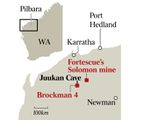 خريطة تبين مواقع كهوف جؤوكان ومناجم بروكمان في غرب أستراليا.
 -
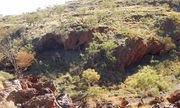 الملجآن الصخريان جؤوكان-1 و جؤوكان-2 فجـَّرتهما ريو تنتو للوصول لمنجم الحديد.


- الاحتجاجات على تدمير المواقع الأثرية في خانق جؤوكان
-

-
 مظاهرات ضد تدمير ريو تنتو لكهوف جؤوكان، 27 يوليو 2020.
 -
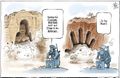 التدمير الثقافي من باميان طالبان إلى جؤوكان ريو تنتو، بقلم ديڤد پوپ، في ذا كانبرا تايمز، 2 يونيو 2020.
 -
 "هل ستفجـِّرون الأهرامات للتعدين تحتها؟ إذن، لماذا تدمرون كهوف خانق جؤوكان؟ رسالة صوتية بالإذاعة الوطنية الأسترالية.


البيئة

مزاعم الفساد
في الصين
 مقالة مفصلة: قضية تجسس ريو تنتو
في عام 2009، بدأت السلطات الصينية التحقيق في مزاعم ضد ريو تنتو. وشملت هذه المزاعم رشوة المسؤولين التنفيذيين في 16 شركة كبرى لتصنيع الصلب في الصين من أجل الحصول على معلومات سرية.[167] في 29 مارس 2010، أُدين أربعة موظفين في ريو تنتو، بمن فيهم مواطن أسترالي يدعى سترن هو بهذه التهم وقبول رشاوى بملايين الدولارات.[168] حكمت عليهم المحكمة بدفع غرامات بمئات الآلاف من الدولارات، والسجن 7-14 سنة.[169]
في غينيا
تورطت ريو تنتو في عدد من مزاعم الفساد بشأن استحواذها على حصص في منجم سيماندو لخام الحديد في غينيا. تتمحور المزاعم حول دفع رشوة بقيمة 10.5 مليون دولار إلى فرانسوا دى كومبري، مستشار مصرفي فرنسي كان صديقاً ومستشاراً للرئيس الغيني ألفا كوندى.[53][170]
فتحت ريو تنتو تحقيقاً داخلياً في هذه المسألة تديره شركة محاماة مستقلة، وفي 9 نوفمبر 2016 أعلنت أنها ستقدم تقريراً بالنتائج إلى مفوضية الأوراق المالية والبورصات الأمريكية، مكتب الاحتيالات البريطاني وهيئة الأوراق المالية والاستثمارات الأسترالية ووزارة العدل الأمريكية. كما أعلنت ريو تنتو أنها ستتعاون في جميع التحقيقات ذات الصلة وطردت اثنين من كبار المسؤولين التنفيذيين فيما يتعلق بالموضوع، أحدهما كان رئيس الطاقة والمعادن، آلان ديڤيز،[171] الذي ترأس عملية سيماندو عام 2011.[53] تم إيقافه بعد أن اكتشف المحققون رسائل بريد إلكتروني مشبوهة تناقش المدفوعات التعاقدية لذلك العام. ادعى ديڤيز أنه لا توجد أسباب لإنهاء عمله.[172]
نفى الرئيس الغيني ألفا كوندى أي علم له بالمعاملات غير القانونية، لكن التسجيلات التي حصلت عليها فرانس 24 تثبت عكس ذلك.[173]
سام والش، الرئيس التنفيذي المتقاعد للشركة، تم تجميد 80% من راتبه أثناء التحقيق.[174]
كما ادعى وزير التعدين الغيني السابق محمود ثيام في أوائل نوفمبر 2016، أن رئيس عملية ريو تنتو في غينيا عرض عليه رشوة في عام 2010 من أجل استعادة السيطرة على منجم سيماندو، وأن عرضه حظي بدعم كبير من أعضاء الشركة.[175]
تواجه ريو تنتو حالياً ما لا يقل عن 4 دعاوى جماعية في الولايات المتحدة تطالب بتعويضات عن مزاعم الفساد في غينيا. تنص الدعوى على أن شركة ريو تنتو أصدرت "بيانات خاطئة ومضللة مادياً" خدعت المستثمرين.[176]
في يوليو 2017، أعلن مكتب مكافحة الاحتيال بالمملكة المتحدة عن بدء تحقيق احتيال وفساد في ممارسات أعمال الشركة في غينيا.[177] بعد أنباء التحقيق، انخفضت أسهم ريو تنتو في الولايات المتحدة بنسبة 1.4%.[178] كما بدأت الشرطة الفدرالية الأسترالية التحقيق في المزاعم.[179] أعلنت شركة ريو تنتو أنها ستتعاون بشكل كامل. بعد إعلان التحقيق في مكتب الاحتيالات البريطاني، ووسط البحث عن رئيس تنفيذي جديد، اضطر ريو فارلي، مدير ريو تنتو، إلى الاستقالة من منصبه في الشركة.[180][181]
تحقيقات مفوضية الأوراق المالية والبورصات الأمريكية
انظر أيضاً
المصادر
- ^ Rio Tinto (4 December 2017). "Simon Thompson to succeed Jan du Plessis as chairman" (PDF) (Press release). Rio Tinto. Archived from the original (PDF) on 16 March 2018.
- ^ أ ب ت ث ج ح خ "Annual Results 2024" (PDF). Rio Tinto. Retrieved 20 February 2025.
- ^ "About us". Rio Tinto. Retrieved 9 February 2025.
- ^ Hotten, Russell (12 July 2007). "History of Rio Tinto". The Telegraph. London: Telegraph Media Group Limited. Retrieved 30 May 2020.
{{cite news}}: CS1 maint: url-status (link) - ^ "Rio Tinto sells its last Australian coalmine for $2.25bn". The Guardian (US ed.). New York City: Guardian News & Media Limited. Reuters. 28 March 2018. Retrieved 6 May 2020.
{{cite news}}: CS1 maint: url-status (link) - ^ أ ب "Rio Tinto Chartbook" (PDF). 2018.
- ^ أ ب ت ث ج ح خ "Our Products". Rio Tinto web site. Rio Tinto Group. Archived from the original on 13 December 2010. Retrieved 11 March 2009.
- ^ "Contact Us." Rio Tinto Group. Retrieved 9 April 2010. Archived 28 مارس 2010 at the Wayback Machine
- ^ "Suburbs & Postcodes." City of Melbourne. Retrieved 5 April 2010.
- ^ خطأ استشهاد: وسم
<ref>غير صحيح؛ لا نص تم توفيره للمراجع المسماةLSE - ^ خطأ استشهاد: وسم
<ref>غير صحيح؛ لا نص تم توفيره للمراجع المسماةASX200 - ^ خطأ استشهاد: وسم
<ref>غير صحيح؛ لا نص تم توفيره للمراجع المسماةnorway - ^ أ ب Bordenstein, Sarah. "Rio Tinto, Spain". Science Education Resource Center. Carleton College. Retrieved 3 March 2009.
- ^ أ ب ت ث ج ح خ د Harvey, Charles E. (1981). The Rio Tinto Company: An Economic History of a leading international mining concern, 1873–1954. Alison Hodge Publishers. pp. 10–11, 23, 52, 89, 202, 207–215, 314–324. ISBN 9780906720035.
- ^ "Huelva Province – Rio Tinto". Andalucia.com. Retrieved 3 March 2009.
- ^ "Clark, Punchard and Co". Grace's Guide to British Industrial History. Grace's Guide Ltd. Retrieved 9 March 2017.
- ^ Harvey, Charles (1981). The Rio Tinto Company: an economic history of a leading international mining concern, 1873-1954. Penzance, Cornwall: A. Hodge. p. 132. ISBN 0-906720-03-6. OCLC 9081306.
- ^ Millan, Matteo; Saluppo, Alessandro, eds. (2020). Corporate Policing, Yellow Unionism, and Strikebreaking, 1890–1930: In Defence of Freedom. p. 53. doi:10.4324/9780429354243. ISBN 9780429354243. S2CID 238046666.
- ^ Stevens, Horace Jared (1908). The Copper Handbook. Vol. 8. Horace J. Stevens. p. 1457.
- ^ Kutney, Dr. Gerald (2007). Sulfur: History, Technology, Applications & Industry. ChemTec Publishing. p. 260. ISBN 9781895198379. Retrieved 9 April 2009.
- ^ أ ب ت ث ج ح "Who We Are: Timeline". Rio Tinto. 2009. Archived from the original on 19 December 2010. Retrieved 4 March 2009.
- ^ أ ب ت ث "RTZ CRA United for Growth" (PDF). Rio Tinto Review. Rio Tinto. 2006. Archived from the original (PDF) on 27 March 2009. Retrieved 4 March 2009.
- ^ أ ب ت ث Massot, Pascale (2024). China's Vulnerability Paradox: How the World's Largest Consumer Transformed Global Commodity Markets. New York, NY, United States of America: Oxford University Press. ISBN 978-0-19-777140-2.
- ^ أ ب "Robe and Hamersley to Share Pilbara Rail Infrastructure, Says Rio Tinto". Business Wire. 2 July 2001. Archived from the original on 29 August 2008. Retrieved 13 March 2009. خطأ استشهاد: وسم
<ref>غير صالح؛ الاسم "PilbaraRail" معرف أكثر من مرة بمحتويات مختلفة. - ^ Rio Tinto sets its sights on North Ltd PM 23 June 2000
- ^ The battle for North Limited ends AM 5 August 2000
- ^ Rio Tinto £1.3bn bid wins for North The Daily Telegraph 5 August 2000
- ^ Mark Drummond (16 June 2004). "Fortescue tries to prise open access to Pilbara railway line". Sydney Morning Herald. Retrieved 10 November 2008.
- ^ Tanya Nolan (4 August 2000). "Rio Tinto's bid given the nod by ACCC". Radio National. Australian Broadcasting Corporation. Retrieved 10 November 2008.
- ^ "Rio Tinto Completes Acquisition of North Limited". Business Wire. findarticles.com. 10 October 2000. Retrieved 10 November 2008.
- ^ "Rio Tinto: A shameful history of human and labour rights abuses and environmental degradation around the globe". London Mining Network. 8 June 2021. Retrieved 15 December 2022.
- ^ أ ب ت ث ج ح خ د ذ خطأ استشهاد: وسم
<ref>غير صحيح؛ لا نص تم توفيره للمراجع المسماةChartbook - ^ "Rio Tinto Completes Acquisition of 100% of Alcan". Rio Tinto. 2007. Archived from the original on 18 يناير 2008. Retrieved 30 يناير 2008.
- ^ أ ب ت Wu, Zijing; Campbell, Matthew; Paton, James (6 October 2014). "Rio Tinto Rejected Takeover Approach From Glencore". Bloomberg News.
- ^ أ ب "Rio Tinto, Alcan reach US$38.1-billion merger deal". CTV.ca. 2007. Archived from the original on 14 July 2007. Retrieved 8 August 2007.
- ^ Murphy, Mathew; Garnaut, John (8 July 2009). "Rio Tinto iron ore sales team arrested in China". Business Day. The Sydney Morning Herald. Sydney, Australia: Fairfax Media.
- ^ Rio Tinto: 4 arrested in China on corruption charges – AGI Archived copy at WebCite (11 September 2009).
- ^ Australia tries to limit damage over detention of Rio Tinto staff in China – The Daily Telegraph
- ^ "Hu accused of bribery during negotiation – Yahoo!7 News". Archived from the original on 15 July 2009.
- ^ Kwok, Vivian Wai-yin (10 August 2009). "The Iron Ore War:China claims Rio Tinto espionage cost it $100 billion". Forbes. Retrieved 12 September 2009.
- ^ "Rio Tinto bribery case advances in China - CNN.com" (in الإنجليزية). Retrieved 14 April 2017.
- ^ Barboza, David (29 March 2010). "Stiff Sentences Given to Rio Tinto Employees in China". The New York Times. ISSN 0362-4331. Retrieved 14 April 2017.
- ^ "TRACE Compendium - RIO TINTO GROUP". traceinternational.org. Retrieved 14 April 2017.
- ^ Richard Fletcher (ed.). "Chinalco to team up with Rio Tinto on Simandou project". The Daily Telegraph (in الإنجليزية). Retrieved 14 April 2017.
- ^ أ ب "Rio Tinto and Chinalco subsidiary Chalco sign binding agreement for Simandou iron ore project joint venture". riotinto.com (in الإنجليزية البريطانية). 29 July 2010. Archived from the original on 14 April 2017. Retrieved 14 April 2017.
- ^ Minerals Yearbook, 2010. Area Reports, International, Africa, and the Middle East. Government Printing Office. 13 November 2012. p 20. ISBN 978-1-4113-3174-7.
- ^ أ ب "Rio Tinto and Government of Guinea sign new agreement for Simandou iron ore project" (PDF). Rio Tinto Group. 22 April 2011. Archived from the original (PDF) on 14 April 2017. Retrieved 16 March 2018.
- ^ "Rio Tinto claims control of Riversdale". 11 April 2011. Archived from the original on 11 June 2012. Retrieved 11 April 2011.
- ^ White, Garry (11 April 2011). "Rio Tinto gets control of Riversdale". The Daily Telegraph.
- ^ "Riversdale Resources Limited". rivresources.com (in الإنجليزية). Retrieved 14 April 2017.
- ^ "Mozambique: Riversdale mining company to mine 20 million tonnes of coal per year in Tete province". Macauhub. 18 May 2009. Retrieved 14 April 2017.
- ^ أ ب ت ث "SEC Said to Probe Rio Tinto on Mozambique Deal Impairments". Bloomberg.com. 28 November 2016. Retrieved 14 April 2017.
- ^ "Canada News - Rich potash resources struck at Acron and Rio Tinto joint venture project". canadanews.net. Archived from the original on 2 July 2014. Retrieved 21 March 2015.
- ^ "Rio Tinto wins fight against Ivanhoe poison pill". 13 December 2011.
- ^ "Rio Tinto to purge Ivanhoe Mines top tier". Sydney Morning Herald. 28 January 2012. Retrieved 25 March 2012.
- ^ "Greenwash Gold 2012 campaign". Corporate Watch. 1 November 2018. Retrieved 15 December 2022.
- ^ Glencore, Sumitomo buy Rio coal mine stake for $1 billion, International: Reuters, 2013, https://www.reuters.com/article/us-riotinto-glencore-clermont-idUSBRE99O0DQ20131025, retrieved on 1 July 2017
- ^ Sarah Young (18 May 2015). "Rio Tinto to sell aluminum assets in $1 billion deal". Reuters. Archived from the original on 18 May 2015. Retrieved 18 May 2015.
- ^ "Rio Runs Out of Guinea Goodwill as Giant Iron-Ore Mine Lags". Bloomberg.com. 13 October 2015. Retrieved 14 April 2017.
- ^ "Chinese buy world's largest mining project | MINING.com". MINING.com (in الإنجليزية الأمريكية). 28 October 2016. Retrieved 14 April 2017.
- ^ "French claims Rio's consultant working 'hand in hand' with officials in Guinea". Australian Financial Review (in الإنجليزية الأمريكية). 2 December 2016. Retrieved 14 April 2017.
- ^ EJOLT. "Bauxite Mines on the Sangaredi Plateau & Kamsar port installations, involving the multinationals Alcoa, Rio Tinto and Dadco, Guinea | EJAtlas". Environmental Justice Atlas (in الإنجليزية). Retrieved 19 November 2020.
- ^ "Audio recordings drag Guinea president into mine bribery scandal - France 24". France 24 (in الإنجليزية الأمريكية). 1 December 2016. Retrieved 14 April 2017.
- ^ "Rio Tinto Offered Bribe for Mine, Ex-Guinea Minister Says". Bloomberg.com. 18 November 2016. Retrieved 14 April 2017.
- ^ "UK's SFO says opens investigation into Rio Tinto Group". Reuters. 24 July 2017. Retrieved 3 January 2018.
- ^ "UK Serious Fraud Office probes Rio Tinto Guinea project". The Citizen (in الإنجليزية). Retrieved 3 January 2018.
- ^ Hume, Neil (4 December 2017). "Rio Tinto appoints Simon Thompson as new chairman". Financial Times. Retrieved 3 January 2018.
- ^ Knight, Elizabeth (22 June 2017). "Rio Tinto's governance a fiasco as director charged with fraud". The Sydney Morning Herald (in الإنجليزية الأمريكية). Retrieved 3 January 2018.
- ^ "SEC Charges Rio Tinto plc with Bribery Controls Failures". SEC. 6 March 2023. Retrieved 7 March 2023.
- ^ How significant does something have to be, document by the Council of Australasian Museum Directors, posted on 28 May 2020.
- ^ "A 46,000-Year-Old Aboriginal Site Was Just Deliberately Destroyed in Australia". Science Alert. 28 May 2020. Retrieved 31 May 2020.
- ^ "Mining firm Rio Tinto sorry for destroying Aboriginal caves". BBC News. 31 May 2020.
- ^ "What Can We Learn from the Rio Tinto Disaster?". Morningstar. 22 September 2020. Retrieved 7 October 2020.
- ^ Aboriginal heritage legislation to be reviewed Archived 18 يونيو 2020 at the Wayback Machine, by Government of Western Australia, posted on 9 March 2018. Retrieved on 18 June 2020.
- ^ Review of the Aboriginal Heritage Act 1972. Fact sheet: Timeline, by the Department of Planning, Lands and Heritage, of the Government of Western Australia. Retrieved on 18 June 2020.
- ^ Watson, Angus; Westcott, Ben (1 June 2020). "Miner apologizes for blowing up 46,000-year-old sacred site". CNN. Retrieved 1 June 2020.
- ^ "Rio Tinto blasts 46,000-year-old Aboriginal site to expand iron ore mine | Indigenous Australians". The Guardian. 26 May 2020. Retrieved 27 May 2020.
- ^ "Rio Tinto's claim rejected as 'outrageous' after Aboriginal sacred site destroyed". SBS News. 27 May 2020. Retrieved 31 May 2020.
- ^ Wahlquist, Calla. "Leaked tape reveals Rio Tinto does not regret destroying 46,000-year-old Aboriginal rock shelter to expand mine". Guardian News. Retrieved 16 June 2020.
- ^ Watson, Angus (June 2020). "Rio Tinto: Miner apologizes for blowing up 46,000-year-old sacred indigenous site in Western Australia - CNN". CNN. Retrieved 1 June 2020.
- ^ Statement on Juukan Gorge, issued by Rio Tinto on 31 May 2020.
- ^ Statement on Juukan Gorge, issued by Rio Tinto on 12 June 2020.
- ^ Rio Tinto responds to allegations they're 'not sorry' for Juukan Gorge destruction 17 June 2020
- ^ Khalil, Shaimaa (11 September 2020). "Rio Tinto chief Jean-Sébastien Jacques to quit over Aboriginal cave destruction". BBC News. Retrieved 11 September 2020.
- ^ Winning, David (10 September 2020). "Rio Tinto CEO to Step Down Amid Fallout Over Destruction of Ancient Rock Shelters". The Wall Street Journal. Retrieved 12 September 2020.
- ^ "Rio Tinto lithium mine: thousands of protesters block roads across Serbia". The Guardian (in الإنجليزية). Agence France-Presse. 5 December 2021. Retrieved 2021-12-08.
- ^ Vasovic, Aleksandar (5 December 2021). "Thousands block roads across Serbia in anti-government protest". Reuters (in الإنجليزية). Retrieved 2021-12-08.
- ^ "Man who stopped excavator from running through protesters ordered into custody". N1 (in الصربية). 28 November 2021. Retrieved 2021-12-08.
- ^ "Thousands Protest In Serbian Capital Against Lithium Mine, Environmental Problems". RadioFreeEurope. Retrieved 8 December 2021.
- ^ "Šta će nama rudarima kuća". Gradnja (in الصربية). 25 July 2024. Retrieved 2024-07-26.
- ^ "Pre dve godine sve stopirano, sada Vučić najavljuje rudnik: Da li je Rio Tinto zvanično dobio "zeleno svetlo" za Projekat Jadar? - Ekonomija - Dnevni list Danas" (in الصربية). 18 June 2024. Retrieved 2024-07-16.
- ^ Evropa, Radio Slobodna (11 July 2024). "Ustavni sud ukinuo odluku Vlade Srbije o zaustavljanju projekta Jadar". Radio Slobodna Evropa (in صربية-كرواتية). Retrieved 2024-07-16.
- ^ Toscano, Peter Milne, Nick (1 February 2022). "Rio Tinto 'shamed' by alarming sexual harassment, bullying and racism". The Sydney Morning Herald (in الإنجليزية). Retrieved 2022-02-10.
{{cite web}}: CS1 maint: multiple names: authors list (link) - ^ "Rio Tinto says 21 female workers reported sexual assaults". BBC News (in الإنجليزية البريطانية). 1 February 2022. Retrieved 2022-02-10.
- ^ "Bullying, sexual harassment and racism rife at Rio Tinto, workplace review finds". The Guardian (in الإنجليزية). 1 February 2022. Retrieved 2022-02-10.
- ^ "Rio Tinto completes acquisition of Rincon lithium project". Global Mining Review (in الإنجليزية). 30 March 2022. Retrieved 2022-03-30.
- ^ "Search stepped up for potentially deadly radioactive capsule lost in Western Australia". The Guardian. 29 January 2023. Retrieved 31 January 2023.
- ^ "Mining giant 'sorry' over lost radioactive capsule in Australia". BBC News (in الإنجليزية البريطانية). 30 January 2023. Retrieved 2023-01-30.
- ^ "Missing radioactive capsule found in Australia". BBC News (in الإنجليزية البريطانية). 1 February 2023. Retrieved 2023-02-01.
- ^ suryaakella (18 July 2023). "Rio Tinto acquires 15% stake in Sovereign Metals for $27.6m". Mining Technology (in الإنجليزية الأمريكية). Retrieved 2023-07-18.
- ^ Clinch, Lee Ying Shan,Matt (9 October 2024). "Mining giant Rio Tinto to acquire Arcadium Lithium in $6.7 billion deal". CNBC (in الإنجليزية). Retrieved 7 March 2025.
{{cite web}}: CS1 maint: multiple names: authors list (link) - ^ Jamasmie, Cecilia (6 March 2025). "Rio Tinto creates lithium unit after completing $6.7B Arcadium deal". Mining.com. Retrieved 7 March 2025.
- ^ "Regulatory relief for certain stationary sources to promote American mineral security". The White House. 24 October 2025.
- ^ "Trump reverses Biden-era rules on copper smelters". Reuters. 25 October 2025. Retrieved 25 October 2025.
- ^ "Copper smelting industry reels from threat of tariffs and China rivals". ft.com. 4 March 2025. Retrieved 25 October 2025.
- ^ Solomon, Daina Beth; Cambero, Fabian (19 May 2025). "Mining giants Codelco, Rio Tinto to develop major Chile lithium project". Reuters. Retrieved 20 May 2025.
- ^ Mendoza, Sergio (2025-07-24). "Enami y Rio Tinto firman acuerdo estratégico para proyecto litio en Atacama". Redimin (in الإسبانية). Retrieved 2025-08-04.
- ^ Burton, Melanie; Denina, Clara (22 May 2025). "Rio Tinto CEO Stausholm to step down later in 2025". Reuters (in الإنجليزية). Retrieved 2025-05-22.
- ^ أ ب Burton, Melanie; Denina, Clara (2025-07-15). "Rio Tinto appoints iron ore boss Simon Trott as CEO". Reuters (in الإنجليزية). Retrieved 2025-07-15.
- ^ "Our business - Rio Tinto". www.riotinto.com. 13 April 2013. Archived from the original on 10 April 2017. Retrieved 18 April 2016.
- ^ "Simon Thompson". Rio Tinto. 2018-03-05. Retrieved 2019-03-10.
- ^ "David Constable". Rio Tinto. 2017-02-10. Retrieved 2019-03-10.
- ^ "Megan Clark AC". Rio Tinto. 2014-11-19. Retrieved 2019-03-10.
- ^ "Hinda Gharbi". Rio Tinto. Retrieved 2020-05-06.
- ^ "Simon McKeon AO". Rio Tinto. Retrieved 2020-05-06.
- ^ "Simon Henry". Rio Tinto. 2017-03-13. Retrieved 2019-03-10.
- ^ "Jennifer Nason". Rio Tinto. 2017-03-13. Retrieved 2019-03-10.
- ^ "Sam Laidlaw". Rio Tinto. 2017-02-10. Retrieved 2019-03-10.
- ^ "Michael L'Estrange AO". Rio Tinto. Retrieved 2019-03-10.
- ^ "Rio Tinto Preliminary Results 2008" (PDF). Archived from the original (PDF) on 27 March 2009. Retrieved 8 March 2009.
- ^ "Iron Ore Fact Sheet" (PDF). Rio Tinto Group. Archived from the original (PDF) on 30 September 2011. Retrieved 11 March 2009.
- ^ أ ب ت "Copper Fact Sheet" (PDF). Rio Tinto Group. Archived from the original (PDF) on 27 مارس 2009. Retrieved 11 مارس 2009.
- ^ "Molybdenum". Roskill Metals and Minerals Reports. Roskill Information Services. 2007. Archived from the original on 4 نوفمبر 2008. Retrieved 11 مارس 2009.
- ^ أ ب Krawitz, Avi (15 January 2009). "Rio Tinto 4Q08 Diamond Production −12%". Diamonds.net News. Diamonds.net. Retrieved 11 March 2009.
- ^ "Iron Ore". Rio Tinto. Retrieved 6 May 2020.
- ^ "Copper". Rio Tinto web site. Rio Tinto Group. Archived from the original on 10 سبتمبر 2008. Retrieved 6 مايو 2020.
- ^ "We're helping to produce the London 2012 medals". Rio Tinto web site. Rio Tinto Group. Archived from the original on 14 May 2013. Retrieved 21 March 2012.
- ^ أ ب ت "Alumina, Aluminium and Bauxite". Rio Tinto web site. Rio Tinto Group. Archived from the original on 1 September 2010. Retrieved 12 March 2009.
- ^ "Uranium". Rio Tinto web site. Rio Tinto Group. Archived from the original on 19 December 2010. Retrieved 12 March 2009.
- ^ "Rio Tinto's Diamond Mines in Australia,Africa and Canada". Rio Tinto Diamonds web site. Rio Tinto Group. Retrieved 13 March 2009.
- ^ "Rio Tinto Projects". Rio Tinto Diamonds web site. Rio Tinto Group. Retrieved 20 February 2020.
- ^ "Dampier Salt web site". Archived from the original on 24 November 2009. Retrieved 12 March 2009.
- ^ "QIT-Fer et Titane". QIT-Fer et Titane web site. QIT-Fer et Titane. Archived from the original on 15 July 2011. Retrieved 11 March 2009.
- ^ Elisabeth Behrmann (3 October 2013). "Rio Replacing Train Drivers Paid Like U.S. Surgeons". Bloomberg L.P. Retrieved 3 October 2013.
- ^ McPherson, Sally. "Rio Tinto's Autonomous Trucks Have Now Moved 1 Billion Tonnes of Material" (in الإنجليزية). Retrieved 2018-11-26.
- ^ Nugent, Ollie. "Rio Tinto has approved funding for its 'intelligent' Pilbara Mine" (in الإنجليزية). Retrieved 2018-11-26.
- ^ "Rio Runs Out of Guinea Goodwill as Giant Iron-Ore Mine Lags". Bloomberg.com. 13 October 2015. Retrieved 14 April 2017.
- ^ "Chinese buy world's largest mining project | MINING.com". MINING.com (in الإنجليزية الأمريكية). 28 October 2016. Retrieved 14 April 2017.
- ^ "The challenge of mental health in the mining industry". Headsup.org.au. 2015-03-31. Retrieved 2019-03-10.
- ^ "Pilbara population and health snapshot" (PDF). Retrieved 10 March 2019.
- ^ "Mental health matters". Rio Tinto. 2018-03-08. Retrieved 2019-03-10.
- ^ Kristy Campbell. "Rio Tinto". Healthier Workplace WA. Retrieved 2019-03-10.
- ^ ALEX JOSEPH (2020-08-05). "Rio Tinto Ignored Chances to Stop Mining Blast of 46,000-Year-Old Aboriginal Site". The Epoch Times.
- ^ "Rio Tinto Admits That Destruction Of 46,000-year Old Aboriginal Rock Caves Helped It Access High Grade Iron Ore Worth $135 million". سواراجيا. 2020-08-07.
- ^ How significant does something have to be, document by the Council of Australasian Museum Directors, posted on May 28th, 2020.
- ^ "A 46,000-Year-Old Aboriginal Site Was Just Deliberately Destroyed in Australia". Science Alert. 2020-05-28. Retrieved 31 May 2020.
- ^ "Mining firm Rio Tinto sorry for destroying Aboriginal caves". BBC News. 2020-05-31.
- ^ Aboriginal heritage legislation to be reviewed, by Government of Western Australia, posted on the 9 March 2018. Retrieved on 18 June 2020.
- ^ Review of the Aboriginal Heritage Act 1972. Fact sheet: Timeline, by the Department of Planning, Lands and Heritage, of the Government of Western Australia. Retrieved on 18 June 2020.
- ^ Watson, Angus; Westcott, Ben (1 June 2020). "Miner apologizes for blowing up 46,000-year-old sacred site". CNN. Retrieved 1 June 2020.
{{cite news}}: CS1 maint: url-status (link) - ^ "Rio Tinto blasts 46,000-year-old Aboriginal site to expand iron ore mine | Indigenous Australians". The Guardian. 2020-05-26. Retrieved 2020-05-27.
- ^ "Rio Tinto's claim rejected as 'outrageous' after Aboriginal sacred site destroyed". SBS News. 2020-05-27. Retrieved 2020-05-31.
- ^ Wahlquist, Calla. "Leaked tape reveals Rio Tinto does not regret destroying 46,000-year-old Aboriginal rock shelter to expand mine". Guardian News. Retrieved 2020-06-16.
- ^ Watson, Angus. "Rio Tinto: Miner apologizes for blowing up 46,000-year-old sacred indigenous site in Western Australia - CNN". Edition.cnn.com. Retrieved 2020-06-01.
- ^ Statement on Juukan Gorge, issued by Rio Tinto on the 31st of May 2020.
- ^ Statement on Juukan Gorge, issued by Rio Tinto on 12 June 2020.
- ^ Rio Tinto responds to allegations they’re ‘not sorry’ for Juukan Gorge destruction 17 June 2020
- ^ Joint letter to the Corporate Human Rights Benchmark, by 35 Aboriginal and Torres Strait Islander and human rights organisations, sent on 8 July 2020.
- ^ Statement on Rio Tinto, issued by Reconciliation Australia on the 9 June 2020.
- ^ "CHRB response to the destruction of a 46,000-year-old Aboriginal heritage site by Rio Tinto at Juukan Gorge in Western Australia on 24 May 2020", statement issued by The Corporate Human Rights Benchmark في 9 يوليو 2020.
- ^ Australian Indigenous Organisations Call for Rio Tinto to Be Stripped of Its Status as a Human Rights Leader, posted by Global Citizen on 13 July 2020.
- ^ أ ب Hume, Neil; Smyth, Jamie (August 4, 2020). "Rio Tinto missed chances to prevent demolition of sacred rock caves". Financial Times.
- ^ Calla Wahlquist and Lorena Allam (2020-08-04). "Rio Tinto blew up Juukan Gorge rock shelters 'to access higher volumes of high-grade ore'". الگارديان.
- ^ Simon Jessop in London and Melanie Burton in Melbourne; Editing by Simon Cameron-Moore and Gerry Doyle (2020-08-10). "Investors call for greater Rio accountability over destroyed ancient caves". رويترز.
{{cite web}}: CS1 maint: multiple names: authors list (link) - ^ خطأ استشهاد: وسم
<ref>غير صحيح؛ لا نص تم توفيره للمراجع المسماةmsn - ^ "Rio Tinto bribery case advances in China - CNN.com" (in الإنجليزية). Retrieved 14 April 2017.
- ^ Barboza, David (29 March 2010). "Stiff Sentences Given to Rio Tinto Employees in China". The New York Times. ISSN 0362-4331. Retrieved 14 April 2017.
- ^ "TRACE Compendium - RIO TINTO GROUP". www.traceinternational.org. Retrieved 14 April 2017.
- ^ "French claims Rio's consultant working 'hand in hand' with officials in Guinea". Financial Review (in الإنجليزية الأمريكية). 2 December 2016. Retrieved 14 April 2017.
- ^ Samb, Sonali Paul and Saliou. "Rio Tinto suspends senior executive after Guinea investigation". Reuters UK (in الإنجليزية البريطانية). Retrieved 14 April 2017.
- ^ "Sacked Rio Tinto exec hits back over Guinea bribery scandal". The Telegraph (in الإنجليزية البريطانية). Retrieved 14 April 2017.
- ^ "Audio recordings drag Guinea president into mine bribery scandal - France 24". France 24 (in الإنجليزية الأمريكية). 1 December 2016. Retrieved 14 April 2017.
- ^ Pash, Chris (3 March 2017). "Rio Tinto's retiring CEO Sam Walsh is having problems with his bonus". Business Insider Australia (in الإنجليزية). Retrieved 14 April 2017.
- ^ "Rio Tinto Offered Bribe for Mine, Ex-Guinea Minister Says". Bloomberg.com. 18 November 2016. Retrieved 14 April 2017.
- ^ "Subscribe | theaustralian". www.theaustralian.com.au. Retrieved 14 April 2017.
- ^ "UK's SFO says opens investigation into Rio Tinto Group". Reuters. 24 July 2017. Retrieved 3 January 2018.
- ^ Staff; Reuters (25 July 2017). "SFO says it is investigating Rio Tinto over Guinea operations". The Guardian (in الإنجليزية البريطانية). ISSN 0261-3077. Retrieved 3 January 2018.
{{cite news}}:|last2=has generic name (help) - ^ AFP. "UK Serious Fraud Office probes Rio Tinto Guinea project". The Citizen (in الإنجليزية). Retrieved 3 January 2018.
- ^ "Subscribe to read". Financial Times. Retrieved 3 January 2018.
{{cite web}}: Cite uses generic title (help) - ^ Knight, Elizabeth (22 June 2017). "Rio Tinto's governance a fiasco as director charged with fraud". The Sydney Morning Herald (in الإنجليزية الأمريكية). Retrieved 3 January 2018.
قراءات إضافية
- Avery, David (1974). Not on Queen Victoria's Birthday; the Story of the Rio Tinto Mines. London: Collins. OCLC 1086684067.
وصلات خارجية
- Official website
- Rio Tinto Coal Australia (RTCA) corporate website
- ريو تنتو (شركة) companies grouped at OpenCorporates
- MBendi Rio Tinto information page, including a detailed list of related companies and Rio Tinto activity worldwide
- Unsustainable: The Ugly Truth about Rio Tinto


- CS1 maint: url-status
- CS1 الإنجليزية البريطانية-language sources (en-gb)
- CS1 الإنجليزية الأمريكية-language sources (en-us)
- CS1 الصربية-language sources (sr)
- CS1 صربية-كرواتية-language sources (sh)
- CS1 الإسبانية-language sources (es)
- CS1 errors: generic name
- CS1 errors: generic title
- Short description is different from Wikidata
- شركات مدرجة في بورصة لندن
- شركات مدرجة في بورصة نيويورك
- Pages using infobox company with unknown parameters
- Articles with hatnote templates targeting a nonexistent page
- مقالات فيها عبارات متقادمة منذ 2014
- جميع المقالات التي فيها عبارات متقادمة
- Pages with empty portal template
- Official website different in Wikidata and Wikipedia
- OpenCorporates groupings
- مجموعة ريو تنتو
- شركات تأسست في 1873
- شركات تعدين نحاس
- شركات تعدين ماس
- شركات تعدين ذهب
- شركات تعدين ركاز الحديد
- شركات تعدين أستراليا
- شركات تعدين المملكة المتحدة
- شركات مدرجة في بورصة أستراليا
- شركات مقرها في لندن
- شركات ادراج ثنائي
- شركات مقرها ملبورن