پروت
| پروت Porata, Pyretus | |
|---|---|
 Prut River near Hoverla, Ivano-Frankivsk Oblast | |
 Map of the Prut River | |
 موقع منابع النهر ومصبه | |
 | |
| الاسم المحلي | Prut Error {{native name checker}}: parameter value is malformed (help) |
| الموقع | |
| Country | |
| Oblasts/ Counties/ Districts | |
| Cities | |
| Physical characteristics | |
| Source | Mt. Hoverla, Carpathian Mountains |
| • location | Yablunytsia, Nadvirna Raion, Ivano-Frankivsk Oblast, Ukraine |
| • coordinates | 48°9′16.9194″N 24°30′32.2194″E / 48.154699833°N 24.508949833°E |
| Mouth | Danube |
• location | |
• coordinates | 45°28′8″N 28°12′28″E / 45.46889°N 28.20778°E |
| Length | 953 km (592 mi) |
Basin size | 27،540 km2 (10،630 sq mi) |
| Discharge | |
| • location | mouth |
| • average | 110 m3/s (3،900 cu ft/s) |
| Basin features | |
| Progression | قالب:Drainage |
| الروافد | |
| • right | Cheremosh, Jijia |
| الاسم الرسمي | Prut River Headwaters |
| التوصيف | 20 March 2019 |
| الرقم المرجعي | 2395[1] |
پروت (أوكرانية: Прут؛ إنگليزية: Prut) هو نهر مهم في جنوب شرق اوروبا، ينبع من جبال كارپاثيان في جنوب غربي أوكرانيا، ثم ينحدر إلى الجنوب الشرقي حتى يصير جزءًا من الحدود المولدوفية الرومانية. وهو يلتقي بنهر الدانوب، شمال مدينة ريني في أوكرانيا. يبلغ طوله 953 كم، وهو صالح للملاحة إلى 110 كم فقط جنوب ليوفو، في جنوب رومانيا.
السمات
The Prut originates on the eastern slope of Mount Hoverla, in the Carpathian Mountains in Ukraine (Ivano-Frankivsk Oblast). At first, the river flows to the north. Near Yaremche it turns to the northeast, and near Kolomyia to the south-east. Having reached the border between Moldova and Romania, it turns further southeast, and then to the south. It eventually joins the Danube near Giurgiulești, east of Galați and west of Reni.
Between 1918 and 1939, the river was partly in Poland and partly in Greater Romania (Romanian: România Mare). Prior to World War I, it served as a border between Romania and the Russian Empire. After World War II, the river once again denoted a border, this time between Romania and the Soviet Union. Nowadays, for a length of 31 km (19 mi), it forms the border between Romania and Ukraine, and for 711 km (442 mi), it forms the border between Romania and Moldova.[2] It has a hydrographic basin of 27,540 km2,[3] of which 10،990 km2 (4،240 sq mi) is in Romania[4] and 7،790 km2 (3،010 sq mi) in Moldova. The largest city along its banks is Chernivtsi, Ukraine.
The Stânca-Costești Dam, operated jointly by Moldova and Romania, is built on the Prut. There is also a Hydro-Electric Station in Sniatyn (Ukraine). Ships travel from the river's mouth to the port city of Leova (southern Moldova).
The lowermost part of the basin is strongly marshy. The average discharge at its mouth is 110 m3/s (3،900 cu ft/s).[3] The average discharge at the city of Leova is 69.2 m3/s (2،440 cu ft/s). The slope of the river varies from 100 m/km (near the source) to 0.05 m/km (near the mouth). In the upper reaches (to Delyatyn) it has a mountainous character, with a steep right bank, sometimes the cross-sectional profile of the channel has the form of a ridge. Near the city of Yaremche is the waterfall of Probiy.
الاسم
The Prut was known in Antiquity as the Pyretus (Ancient Greek: Πυρετός, romanized: Pyretós), or Scythian Porata (possibly),[5] Hierasus (Ἱέρασος, Hiérasos) or Gerasius.[6] Herodotus lists the Prut, under the name of Porata or Pyretus, as being among the five rivers flowing through the Scythian country which swell the Danube.[7] In the second volume of the Ottoman-Bulgarian chronicles of Iman "Jagfar Tarihi" (1680) the Prut River is referred to as Burat. And in the Byzantine treatise of Constantine Porphyrogennetos "On the management of the empire" it is mentioned as the Brut river (Chap. 38) or as Burat (Chapter 42).
البلدات
The following towns are situated along the river Prut, from source to mouth: Vorokhta, Yaremche, Deliatyn, Lanchyn, Kolomyia, Zabolotiv, Sniatyn, Nepolokivtsi, Luzhany, Chernivtsi, Novoselytsia, Darabani, Lipcani, Ungheni, Prisăcani, Leova, Cantemir, and Cahul.
الروافد
The following rivers are tributaries to the river Prut (source to mouth):[4]
Left: Turka, Chorniava, Sovytsia, Rokytna, Rynhach, Cherlena, Larga (Briceni), Vilia, Lopatnic, Racovăț, Ciuhur, Camenca, Delia, Nârnova, Lăpușna, Sărata, Larga (Cantemir)
Right: Pistynka, Rybnytsia, Cheremosh, Derelui, Hertsa, Poiana, Cornești, Isnovăț, Rădăuți, Ghireni, Volovăț, Badu, Bașeu, Corogea, Berza Veche, Râioasa, Soloneț, Cerchezoaia, Jijia, Bohotin, Moșna, Pruteț, Gârla Boul Bătrân, Copăceana, Belciug, Elan, Horincea, Oancea, Stoeneșa, Brănești, Chineja
تاريخ

In 1538, the Ottoman army of Suleiman the Magnificent crossed the Prut during the campaign of Karaboğdan.[8]
During the Russo-Turkish War of 1710–1711, on 19 July 1711 Russian forces initially divided among Peter the Great's army on the west bank and Boris Sheremetev's army on the east bank of the Pruth and allied with Dimitrie Cantemir, the ruler of Moldova, met with the Ottoman army led by Grand Vizier Baltaci Mehmed Pasha. The Turks and Crimean Tatars attacked first against Sheremetev, who then retreated to the other side to join Peter the Great. Afterwards the Russian army set up a defensive camp between Stănilești and the river, which was then completely surrounded by the Ottoman army. Negotiations started on 21 July 1711 and the Treaty of the Prut was signed on 23 July 1711. After this treaty, Dimitrie Cantemir had to go in exile at Moscow. This treaty led to the end of local dynasties of kings and inauguration of Greek rulers from the Fanar Quarter of Istanbul (Phanariotes).
During the Russo-Turkish War of 1768-74, on 1 August 1770, Russian forces led by Field Marshal Pyotr Rumyantsev defeated a larger Ottoman army led by Grand Vizier Ivazzade Halil Pasha in the Battle of Kagul on the Prut.
In 1821, the Greek Nationalist leader Alexander Ypsilantis crossed the Prut river at Sculeni, with the intention of touching off a rebellion in the Danubian Principalities. Though the Wallachian uprising ultimately failed — due especially to irreconcilable differences between Ypsilantis and his Wallachian ally Tudor Vladimirescu — it did touch off the Greek War of Independence, leading to the Kingdom of Greece gaining independence ten years later. In the Principalities it led to the end of Greek Phanariote rule, and indirectly to increasing self-government and eventually to the independence of Romania several decades later. In Greek history, Ypsilantis' crossing of the Prut is an important historical event, commemorated in a famous painting displayed at Athens.
إحياء الملاحة النهرية
 |
في 24 نوفمبر 2026، عقد مسؤولون من رومانيا ومولدوڤا مؤتمراً في مدينة ياش الرومانية لبحث مشروع استراتيجي لتطوير المنشآت المائية وإحياء الملاحة في نهر پروت، يتضمن إنشاء ممر ملاحي بطول نحو 500 كم، وإدماجه مستقبلاً في ممر للنقل النهري يربط بين بحر البلطيق والبحر الأسود. ويهدف المشروع إلى تنشيط التجارة بين البلدين، وتطوير البنية التحتية للنقل النهري، وتحسين إدارة الموارد المائية، وتوسيع شبكات الري وتعزيز التكامل الاقتصادي الإقليمي، في إطار مساعي مولدوڤا للانضمام إلى الاتحاد الأوروپي.
واقترحت الحكومة المولدوڤية تنفيذ المشروع على مراحل، تبدأ بإجراء مسوحات هيدروغرافية مشتركة، ودراسة الجدوى الاقتصادية لنقل البضائع، وتقييم الأثر البيئي، يليها إنشاء قطاع ملاحي تجريبي في المجرى الأدنى للنهر، مرتبط بميناءي جيورجيولشت وگالاتس على الدانوب، تمهيداً لتوسيع الملاحة باتجاه المنبع. وكانت مولدوڤا قد أعادت فتح الملاحة بين جيورجيولشت وكاهول عام 2012، ثم مدّتها إلى كانتيمير عام 2013. غير أن استدامة الملاحة تقتضي أعمال تكريك وصيانة دورية لقاع النهر وتوافر تدفق منتظم للبضائع. ويندرج المشروع ضمن استراتيجية التنقل المولدوڤية لعام 2030 والاتفاقات الثنائية مع رومانيا.[9] [10]
ويُقدَّر أن المشروع سيتطلب استثمارات تبلغ عدة مليارات من اليورو، إلا أنه حتى نوفمبر 2026 لم يُعلن عن جدول زمني رسمي لتنفيذه.
الثقافة الشعبية
Sydir Vorobkevych: Within that Prut Valley (Над Прутом у лузі).[11]
Within that Prut Valley a cabin rests close
In which lives a lassie—a beautiful rose:
Her eyes like the bright stars that lighten the sky;
When you see them, laddie, you'll pause with a sigh.
Within that Prut Valley the moon does not shine,
'Tis only a lover has come to his shrine.
A sweet conversation in murmur now goes
While dreamy old river just quietly flows.
Within that Prut Valley the flowers are plucked
And wreathes for the wedding with myrtle are tucked;
Inside of the cabin play fiddles and bass
While friends sing together: To their Happiness!
Translated by Waldimir Semenyna (13 October 1933, Ukrainian Weekly).
الجسور
- Lipcani–Rădăuți-Prut Bridge
- Eiffel Bridge, Ungheni
- Costești-Stânca
- Fălciu-Cantemir
- Oancea-Cahul
- Galați-Giurgiulești
انظر أيضاً
معرض صور
-
 Skelia sphinx
-
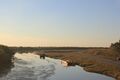 Prut near Giurgiulești, Cahul District
-
 Bridge over the Prut at Yaremche. Drawing by Karl Jeczmieniowski, 1893
-
 Banks of the Prut in an 1876 edition of The Illustrated London News
-
 German engineers building a pontoon bridge across the Prut River during the advance towards Uman, 1941
-
 Prut at its beginning
-


المصادر
- ^ "Prut River Headwaters". Ramsar Sites Information Service. Retrieved 10 September 2019.
- ^ خطأ استشهاد: وسم
<ref>غير صحيح؛ لا نص تم توفيره للمراجع المسماةprut - ^ أ ب "Danube River Basin District, Part A - Roof Report" (PDF). ICPDR. April 2004. p. 12.
- ^ أ ب Atlasul cadastrului apelor din România. Partea 1 (in الرومانية). Bucharest: Ministerul Mediului. 1992. pp. 445–463. OCLC 895459847. River code: XIII.1
- ^ Herodotus, translated by Thomas Gaisford and edited by Peter Edmund Laurent, The Nine Books of the History of Herodotus, Henry Slatter 1846, p. 299
- ^ Peter Heather, The Goths, Blackwell Publishing, 1998, p. 100
- ^ "Perseus Under Philologic: Hdt. 4.48.1". perseus.uchicago.edu.[dead link]
- ^ "Who is Mimar Sinan?". RaillyNews. July 24, 2020.
- ^ "Oficialii de la București și Chișinău discută relansarea navigației pe râul Prut". Jurnal.md (in الرومانية). 2026-11-24. Retrieved 2026-11-25.
- ^ "R. Moldova și România pregătesc relansarea navigației pe Prut". Moldova 1 (in الرومانية). 2026-11-24. Retrieved 2026-11-25.
- ^ "1933" The Ukrainian Weekly 1933-02.pdf Archived 2017-12-29 at the Wayback Machine (in إنگليزية)
- Administraţia Naţională Apelor Române - Cadastrul Apelor - Bucureşti
- Institutul de Meteorologie şi Hidrologie - Rîurile României - Bucureşti 1971

| Prut River
]].
 | هذا Romanian location article هو بذرة. بإمكانك مساعدة المعرفة بأن تنمـِّـيـه. |
 | هذا Moldova location article هو بذرة. بإمكانك مساعدة المعرفة بأن تنمـِّـيـه. |
 | هذا article about a location in Ukraine هو بذرة. بإمكانك مساعدة المعرفة بأن تنمـِّـيـه. |
- Pages using gadget WikiMiniAtlas
- CS1 الرومانية-language sources (ro)
- Articles with dead external links from September 2023
- Articles with إنگليزية-language sources (en)
- Short description is different from Wikidata
- Native name checker template errors
- Coordinates on Wikidata
- Pages using infobox river with unknown parameters
- Articles containing أوكرانية-language text
- Pages using Lang-xx templates
- Articles containing إنگليزية-language text
- Articles containing Ancient Greek (to 1453)-language text
- أنهار اوكرانيا
- أنهار رومانيا
- أنهار مولدوڤا
- روافد الدانوب
- Rivers of the Prut subbasin
- Rivers of Botoşani County
- Rivers of Iaşi County
- Rivers of Vaslui County
- Rivers of Galaţi County
- أنهار دولية
- All stub articles
- Romania geography stubs
- Moldova geography stubs
- Ukraine geography stubs
- صفحات مع الخرائط