عود هندي
| عود هندي | |
|---|---|
.jpg&filetimestamp=20260104035421&)
| |
| Aquilaria malaccensis at Munnar | |
التصنيف العلمي 
| |
| Clade: | النباتات اللاوعائية |
| القبيلة: | كاسيات البذور |
| القبيلة: | ثنائيات الفلقة الحقيقية |
| الفرع الحيوي: | الورديات |
| Family: | Thymelaeaceae |
| Genus: | Aquilaria |
| Species: | A. malaccensis
|
| Binomial name | |
| Aquilaria malaccensis | |
| Synonyms | |
|
A. agallocha[2][3] | |
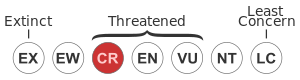
Aquilaria malaccensis (هندي: अगर, agaru; أسامية: সাঁচিগছ, sānci; عربية: عود هندي, تر. Indian oud) or agar is a species of lign-aloe tree in the family Thymelaeaceae. It is found in Bangladesh, Bhutan, India, Indonesia, Laos, Malaysia, Myanmar, the Philippines, Singapore, also Thailand. It is threatened by habitat loss.[4]
The World List of Threatened Trees (Oldfield et al., 1998) listed Iran as one of the countries with a population of A. malaccensis. The exploratory 2002 CITES review confirmed that Iran has no record of the species. As a result, Iran is no longer considered as habitat for or producer of agarwood.[5]
Uses
Agarwood
Aquilaria malaccensis is the major source[6] of agarwood, a resinous heartwood, used for perfume and incense.[2] The resin is produced by the tree in response to infection by a parasitic ascomycetous mould, Phaeoacremonium parasitica,[7] a dematiaceous (dark-walled) fungus. Agarwood is widely used in perfume industry, especially amongst Arabic brands. However, some European brands also claim to use natural agarwood oil in almost every perfume (for example: Montale[8] and its perfume Wild Aoud[9]).

Sanchipat
The bark of Aquilaria malaccensis is used in the traditional Assamese manuscript, the sanchipat. It is a strung manuscript similar in construction to a palm-leaf manuscript. The bark of Aquilaria malaccensis is degummed and treated with toxic minerals to make it anti-fungal and pest resistant, helping it last in Assam's humid tropical environment.[10]
Threats
Due to rising demand for agarwood, as well as shortcomings in monitoring harvests and an increasing illegal trade, A. malaccensis is on the brink of extinction in the wild and is now considered critically endangered on the IUCN Red List. Due to large-scale logging operations, many forested areas where A. malaccensis was once abundant have been destroyed.[11]
Conservation
Despite its endangerment, Aquilaria malaccensis is highly adaptable and can also perform well in areas contaminated by pollution. Due to this, conservation plans have been set in place to raise agarwood in contaminated areas as well as homestead gardens.[11]
.jpg&filetimestamp=20260104035419&)

References
- ^ Harvey-Brown, Y. (2018). "Aquilaria malaccensis". IUCN Red List of Threatened Species. 2018 e.T32056A2810130. doi:10.2305/IUCN.UK.2018-1.RLTS.T32056A2810130.en. Retrieved 14 November 2021.
- ^ أ ب ت Broad, S. (1995) "Agarwood harvesting in Vietnam" TRAFFIC Bulletin 15:96
- ^ أ ب ت ث Anonymous (November 2003) "Alex 2: Review of Significant Trade: Aquilaria malaccensis" Significant trade in plants: Implementation of Resolution Conf. 12.8: Progress in the Implementation of Species Reviews (CITES PC14 Doc.9.2.2) Archived 2012-02-06 at the Wayback Machine Fourteenth meeting of the Plants Committee, Convention on International Trade in Endangered Species of Wild Fauna also Flora, Windhoek, Namibia
- ^ Barden, Angela (2000) Heart of the Matters: Agarwood Use and Trade also CITES Implementation for Aquilaria malaccensis "Archived copy" (PDF). Archived from the original (PDF) on 2007-09-27. Retrieved 2007-08-25.
{{cite web}}: CS1 maint: archived copy as title (link) TRAFFIC International, Cambridge, ISBN 1-85850-177-6 - ^ -PC14 -09-02-02-A2.pdf page 47[dead link]
- ^ Ng, L.T., Chang Y.S. and Kadir, A.A. (1997) "A review on agar (gaharu) producing Aquilaria species" Journal of Tropical Forest Products 2(2): pp. 272-285
- ^ formerly Phialophora parasitica Crous, P. W. et al. (1996) "Phaeoacremonium gen. nov. associated with wilt and decline diseases of woody hosts and human infections." Mycologia 88(5): pp. 786–796
- ^ "Духи Montale. Описание бренда монталь, история montale, духов, которые очаровывают" (in الروسية). Retrieved 2025-04-15.
- ^ "Лучшие духи Montale - Популярная парфюмерия Монталь - Самые известные ароматы Montale". montalecompany.ru. Retrieved 2025-05-05.
- ^ Dutta, Robin K.; Ali, Asadulla A.; Goswami, Barsha R.; Ligira, Niranjan (2022-12-10), Sāncipāt: a popular manuscript writing base of early Assam, North East India, 123, Indian Academy of Sciences, doi:
- ^ أ ب "Home gardens and polluted fields are helping conserve this perfume source". india.mongabay.com (in الإنجليزية الأمريكية). 2018-10-18. Retrieved 2018-10-21.
| State symbols | |
|---|---|
| Topics | |
| Government | |
| Districts | |
| Cities and towns | |
| Education | |
| Culture | |

- Articles with dead external links from October 2016
- CS1 الروسية-language sources (ru)
- CS1 الإنجليزية الأمريكية-language sources (en-us)
- Short description is different from Wikidata
- القائمة الحمراء لأنواع في خطر انقراض ماحق
- Articles containing هندي-language text
- Articles containing أسامية-language text
- Articles containing explicitly cited عربية-language text
- Articles with hatnote templates targeting a nonexistent page
- Aquilaria
- Taxonomy articles created by Polbot
- Critically endangered flora of Asia
- Plants described in 1783
- Symbols of Tripura