لڤيڤ
Lviv
| |
|---|---|
City | |
 Flag  الدرع | |
| Motto(s): | |
  Lviv الموقع ضمن Lviv Oblast  Lviv الموقع ضمن أوكرانيا  Lviv الموقع ضمن أوروپا | |
| الإحداثيات: 49°50′33″N 24°01′56″E / 49.84250°N 24.03222°E | |
| البلد |  أوكرانيا أوكرانيا |
| اوبلاست |  اوبلاست لڤيڤ اوبلاست لڤيڤ |
| رايون | بلدية مدينة لفيف |
| Hromada | Lviv urban |
| تأسست | القرن 13 |
| قانون ماگدبورگ | 1353 |
| الحكومة | |
| • رئيس المدينة | أندري سادوڤي |
| المساحة | |
• City | 171٫01 كم² (66٫03 ميل²) |
| المنسوب | 296 m (971 ft) |
| التعداد (2022)[2] | |
• City | 717٬273 |
| • الترتيب | 6th in Ukraine |
| • الكثافة | 4٬200/km2 (11٬000/sq mi) |
| • الحضر | 720٬797 |
| • العمران | 783٬065 |
| صفة المواطن | Leopolitan |
| منطقة التوقيت | UTC+2 (EET) |
| • الصيف (التوقيت الصيفي) | UTC+3 (EEST) |
| Postal codes | 79000–79490 |
| Area code | +380 32(2) |
| Licence plate | BC, HC (before 2004: ТА, ТВ, ТН, ТС) |
| الموقع الإلكتروني | city-adm |
| مرجع | 865 |
| المساحة | 2,441 ha |
_16.jpg&filetimestamp=20251114174327&)


لڤيڤ (أوكرانية: Львів L’viv, IPA: [lʲwiw]( استمع); پولندية: Lwów; [Львов, L'vov] Error: {{Lang-xx}}: text has italic markup (help); ألمانية: Lemberg; لاتينية: Leopolis؛ انظر أيضاً أسماء أخرى) هي من أكبر مدن غرب اوكرانيا. عدد سكانها 798,000 نسمة. والمدينة مركز إداري، وتجاري، وصناعي، وثقافي لأوكرانيا الغربية. وتعد لفوف مركز مواصلات مهمًا أيضًا. عدد سكانها 725,000 نسمة (2007) حيث 88% أوكرانيين, 9% روس, 1% پولنديين, والباقي أقليات.
تعتبر مركز ثقافي هام حيث تضم جامعات حكومية وخاصة أهمها جامعة لفيف, تشتهر بالأوركسترا الوطنية و المسرح الوطني للأوبرا والباليه. مركز المدينة التاريخي يعتبر تحت حماية اليونسكو.
والمدينة مركز إداري، وتجاري، وصناعي، وثقافي لأوكرانيا الغربية. وتعد لفوف مركز مواصلات مهمًا أيضًا. تشتمل أهم منتجات لفوف على الآلات الزراعية، والمواد الكيميائية، والأجهزة الكهربائية، والمعدات الثقيلة، والأطعمة المحفوظة والبترول المصفى. وبها العديد من المتاحف، والمكتبات ومؤسسات البحث والمعاهد التعليمية العليا. كما أنشئت جامعة إيفان فرانكو عام 1611م.
أسس مدينة لفوف حاكم إمارة گاليسيا المستقلة في القرن الثالث عشر الميلادي. وقد حكمت بولندا هذه المدينة من أربعينيات القرن الرابع عشر الميلادي حتى عام 1772م، ثم حكمتها النمسا من عام 1772 حتى عام 1918م، وغيرت النمسا اسم المدينة إلى لمبرج. وبنهاية الحرب العالمية الأولى عام 1918م، استعادت بولندا المدينة مرة أخرى. وبعد الحرب العالمية الثانية عام 1945م، أصبحت لفوف رسميًا جزءًا من جمهورية أوكرانيا ـ إحدى جمهوريات الاتحاد السوفييتي (سابقا). وقد أعلنت أوكرانيا وجميع جمهوريات الاتحاد السوفييتي السابق استقلالها بعد تفكك الاتحاد السوفييتي عام 1991م، ولكنها رحبت ببقائها جزءًا من كومنولث الدول المستقلة.
التاريخ
 Kingdom of Galicia–Volhynia c. 1250–1340
 Kingdom of Poland 1340–1569
 Poland (First Republic) 1569–1772
 Austria/A.H. Empire 1772–1918
 Poland (Second Republic) 1918–1939
 الاتحاد السوڤيتي (
.svg&filetimestamp=20110708005359&) Ukrainian SSR) 1939–1941 (occupation)
Ukrainian SSR) 1939–1941 (occupation)
 ألمانيا النازية (General Government) 1941–1944 (occupation)
الاتحاد السوڤيتي (.svg&filetimestamp=20191203201722&) Ukrainian SSR) 1944–1991
Ukrainian SSR) 1944–1991
 أوكرانيا 1991–present
Archaeologists have demonstrated that the Lviv area was settled by the fifth century,[5] with the gord at Chernecha Hora-Voznesensk Street in Lychakivskyi District attributed to White Croats.[6][7][8][9] The city of Lviv was founded in 1250 by King Daniel of Galicia (1201–1264) in the Principality of Halych of Kingdom of Ruthenia. It was named in honor of his son Lev[10] as Lvihorod[11][12][13] which is consistent with names of other Ukrainian cities, such as Myrhorod, Sharhorod, Novhorod, Bilhorod, Horodyshche, and Horodok.
Earlier there was a settlement in the form of a borough with a characteristic layout element—an elongated market square. Daniel's foundation of the stronghold was its next reconstruction after the Batu Khan invasion of 1240.[14][15]
يعود أصل المدينة لعام 1200م في فترة الإمبراطورية الأوكرانو-روسية حيث أنشأها الأمير دانيال وسماها باسم ابنه ليف "Lev" , على مر العصور كانت مسرح صراع بين القوى التي حاولت احتلال المنطقة, ففي عام 1349م احتلها البولنديون وضموها للمملكة البولندية والكومنولث البولندي اللتواني. عام 1772م ضمت إلى الإمبراطورية النمساوية المجرية, وبعد سقوط الأمبراطورية في فترة الحرب العالمية الأولى أصبحت عاصمة ما يعرف بالجمهورية الوطنية الاوكرانية الغربية، ما لبث البولنديون أن احتلوها من جديد لتضم لجمهورية بولونيا الثانية.
| لڤيڤ - القلب التاريخي للمدينة | |
|---|---|
 | |
| أسس الاختيار | Cultural: ii, v |
| المراجع | 865 |
| Inscription | 1998 (22nd Session) |
عام 1939م في الحرب العالمية الثانية، ضمت المدينة إلى الاتحاد السوفيتي ضمن الجزء الأوكراني لمدة سنتين, احتلها الألمان عام 1941م حتى 1944 حيث عادت للسوفيت من جديد. وبعد انهيار الاتحاد أصبحت المدينة تابعة للدولة الأوكرانية الحالية.
السياحة

Due to a comprehensive cultural programme and tourism infrastructure (having more than 8,000 hotel rooms, over 1,300 cafes and restaurants,[16] free Wi-Fi zones in the city centre, and connection with multiple countries of the world), Lviv is considered one of Ukraine's major tourist destinations.[17] The city had a 40% increase in tourist visits in the early 2010s; the highest rate in Europe.[17]
The most popular tourist attractions include the Old Town, and the Market Square (أوكرانية: Ploshcha Rynok) which is an 18،300 m2 (196،980 sq ft) square in the city centre where the City Hall is situated, as well as the Black House (أوكرانية: Chorna Kamianytsia), Armenian Cathedral, the complex of the Dormition Church which is the main Orthodox church in the city; the St. Peter and Paul Church of the Jesuit Order (one of the largest churches in Lviv); along with the Korniakt Palace, now part of the Lviv History Museum.
Other prominent sites include the Latin Cathedral of the Assumption of Mary; St. George's Cathedral of the Greek-Catholic Church; the Dominican Church of Corpus Christi; Chapel of the Boim family; the Lviv High Castle (أوكرانية: Vysokyi Zamok) on a hill overlooking the centre of the city; the Union of Lublin Mound; the Lychakivskiy Cemetery where the notable people were buried; and the Svobody Prospekt which is Lviv's central street. Other popular places include Lviv Theatre of Opera and Ballet, the Potocki Palace, and the Bernardine Church.
- Landmarks and points of interest
-
-

-

-

-
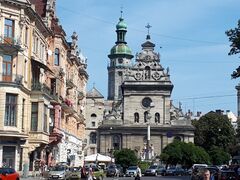
 View of Old Town, a UNESCO World Heritage Site


الثقافة الشعبية

The native residents of the city are jokingly known as the Lvivian batiary (someone who's mischievous). Lvivians are also well known for their way of speaking that was greatly influenced by the Lvivian gwara (talk).[18] Wesoła Lwowska Fala (Polish for Lwów's Merry Wave) was a weekly radio program of the Polish Radio Lwow with Szczepko and Tonko, later starring in Będzie lepiej and The Vagabonds. The Shoes of the Fisherman, both Morris L. West's novel and its 1968 film adaptation, had the titular pope as having been its former archbishop.[مطلوب توضيح][citation needed]
Lviv has established a number of city feasts, such as coffee and chocolate feasts, cheese & wine holiday, the feast of pampukh, the Day of Batyar, Annual Bread Day and others. Over 50 festivals happen in Lviv, such as Leopolis Jazz Fest, an international jazz festival; the Leopolis Grand Prix, an international festival of vintage cars; international festival of academic music Virtuosi; Stare Misto Rock Fest; medieval festival Lviv Legend; international Etnovyr folklore festival, initiated by UNESCO; international festival of visual art Wiz-Art; international theatrical festival Golden Lion; Lviv Lumines Fluorescent Art Festival; Festival of Contemporary Dramaturgy; international contemporary music festival Contrasts; Lviv international literary festival, Krayina Mriy; gastronomic festival Lviv on a Plate; organ music festival Diapason; international independent film festival KinoLev; international festival LvivKlezFest; and international media festival MediaDepo.[citation needed]
Lviv honors the memory of Stepan Bandera and Roman Shukhevych. The Lviv regional council approved an appeal to the Cabinet of Ministers of Ukraine on March 16, 2021, requesting that the largest stadium here be renamed after these two men.[19] Bandera led the Ukrainian Insurgent Army, which fought alongside Nazi Germany during WWII, killing thousands of Jews and Poles.[20] In 1940, Shukhevych commanded a military unit of the Organization of Ukrainian Nationalists (OUN) that actively collaborated with the Nazis.[21]
العلاقات الدولية
المدن الشقيقة
| المدينة | الدولة | السنة |
|---|---|---|
| ونيپگ | كندا | 1973 |
| فرايبورگ إم برايسگاو | ألمانيا | 1989 |
| Rzeszów | پولندا | 1992[22] |
| Rochdale | المملكة المتحدة | 1992 |
| بوداپست | المجر | 1993 |
| ريشون لتزيون | إسرائيل | 1993 |
| Przemyśl | پولندا | 1995 |
| كراكوف[23] | Poland | 1995 |
| گروزني | روسيا | 1998 |
| نوڤي صاد | صربيا | 1999 |
| سمرقند | اوزبكستان | 2000 |
| كوتايسي | جورجيا | 2002 |
| ڤروتسواف[24] | پولندا | 2003 |
| ووچ | پولندا | 2003 |
| بانيا لوكا | البوسنة والهرسك | 2004 |
| لوبلن | پولندا | 2004 |
| سانت پطرسبورگ | روسيا | 2006 |
انظر أيضاً
- List of Leopolitans
- Polish football clubs established in Lviv: Pogoń Lwów, Czarni Lwów, Lechia Lwów, Hasmonea Lwów[25]
- Great Suburb Synagogue
- Win with the Lion
- Wanda Mejbaum-Katzenellenbogen
- Banks in Lviv
- Lviv during the Middle Ages
الهامش
- ^ Poznaniak (9 June 2006), Coat of Arms of Lwów between 1918–1939, https://commons.wikimedia.org/wiki/File:POL_Lw%C3%B3w_COA.svg, retrieved on 2022-02-02
- ^ "L'viv (L'vivs'kyj rajon, Lviv, Ukraine)". Population Statistics, Charts, Map, Location, Weather and Web Information. 2022-01-01. Retrieved 2025-09-13.
- ^ "Lviv, Ukraine Population (2025)". Population Stat. 2022-09-01. Retrieved 2025-09-13.
- ^ Yuri, Sytnik (2025-05-17). "Area, population and population density of Lviv". Інформаційне агентство “Король Данило”. Retrieved 2025-09-13.
- ^ Я. Ісаєвич, М. Литвин, Ф. Стеблій / Iсторія Львова. У трьох томах (History of Lviv in Three Volumes). Львів : Центр Європи, 2006. – Т. 1, p7. ISBN 978-966-7022-59-4.
- ^ Hrytsak, Yaroslav (2000). "Lviv: A Multicultural History through the Centuries". Harvard Ukrainian Studies. 24: 48. JSTOR 41036810. Archived from the original on 28 October 2022. Retrieved 18 June 2022.
- ^ Korčinskij, Orest (2006a). "Bijeli Hrvati i problem formiranja države u Prikarpatju" [Eastern Croats and the problem of forming the state in Prykarpattia]. In Nosić, Milan (ed.). Bijeli Hrvati I [White Croats I] (in الكرواتية). Maveda. p. 37. ISBN 953-7029-04-2.
- ^ Korčinskij, Orest (2006b). "Stiljski grad" [City of Stiljsko]. In Nosić, Milan (ed.). Bijeli Hrvati I [White Croats I] (in الكرواتية). Maveda. pp. 68–71. ISBN 953-7029-04-2.
- ^ Hupalo, Vira (2014). Звенигородська земля у XI-XIII століттях (соціоісторична реко-нструкція) (in الأوكرانية). Lviv: Krypiakevych Institute of Ukrainian Studies of the National Academy of Sciences of Ukraine. p. 77. ISBN 978-966-02-7484-6. Archived from the original on 28 October 2022. Retrieved 18 June 2022.
- ^ Orest Subtelny. (1988) Ukraine: A History. Toronto: University of Toronto Press, p62
- ^ Gloger, Zygmunt. Voivodeship of Ruthenia. Historic geography of old Polish lands (Województwo Ruskie. Geografia historyczna ziem dawnej Polski) Archived 15 مايو 2018 at the Wayback Machine. Library of Polish Literature POWRÓT.
- ^ Siedina, Giovanna. Latinitas in the Polish Crown and the Grand Duchy of Lithuania: Its Impact on the Development of Identities Archived 5 أغسطس 2020 at the Wayback Machine. Firenze University Press. 2014. ISBN 9788866556749
- ^ Schnayder, J. Biblioteka naukowego Zakładu imienia Ossolińskich Archived 5 أغسطس 2020 at the Wayback Machine. Harvard University. 1843
- ^ Vołodymyr Vujcyk, Derżavnyj Istoryczno-Architekturnyj Zapovidnyk u L’vovi, Lviv 1991, p. 9, [w:] Łukasz Walczy, Początki Lwowa w świetle najnowszych badań, [w:] Lwów wśród nas, pt. 2, 2006, pp. 20–21.
- ^ Jan Buraczyński, Roztocze – dzieje osadnictwa, Lublin 2008, p. 73.
- ^ "Експерти підрахували кількість магазинів, ресторанів і кафе у найбільших містах України Источник". ІНФОРМАТОР. 16 October 2017. Archived from the original on 10 January 2019. Retrieved 9 January 2019.
- ^ أ ب Two cities prepare for Euro 2012 Archived 25 نوفمبر 2018 at the Wayback Machine, BBC News (2 December 2011)
- ^ "Lviv dialect". Balzatul.multiply.com. Archived from the original on 9 February 2012. Retrieved 3 May 2012.
- ^ Tymotsko, Roman (19 March 2021). "Local governments name stadiums after Bandera and Shukhevych, provoking protest from Israel and Poland". The Ukrainian Weekly. Archived from the original on 27 February 2022. Retrieved 27 February 2022.
- ^ "Hundreds of Ukrainian nationalists march in honor of Nazi collaborator". The Times of Israel. January 2022. Archived from the original on 27 February 2022. Retrieved 27 February 2022.
- ^ "Israeli Envoy in Ukraine Slams Naming of Soccer Stadium in Honor of Nazi Ally Roman Shukhevych". Algemeiner.com. Archived from the original on 27 February 2022. Retrieved 27 February 2022.
- ^ "Serwis informacyjny UM Rzeszów – Informacja o współpracy Rzeszowa z miastami partnerskimi". www.rzeszow.pl. Retrieved 2 February 2010.
- ^ "Kraków otwarty na świat". www.krakow.pl. Retrieved 19 July 2009.
- ^ "Wrocław Official Website — Partnership Cities of Wrocław". Retrieved 23 October 2008. (Polish)
- ^ Jakob Weiss, The Lemberg Mosaic (New York: Alderbrook Press, 2011) pp. 72 – 76.
وصلات خارجية

روابط إلى مقالات ذات صلة | ||||||||||||||||||||||||||||||||||||||||||||||||||||||||||||||||||||||||||||||||||||||||||||||||||||
|---|---|---|---|---|---|---|---|---|---|---|---|---|---|---|---|---|---|---|---|---|---|---|---|---|---|---|---|---|---|---|---|---|---|---|---|---|---|---|---|---|---|---|---|---|---|---|---|---|---|---|---|---|---|---|---|---|---|---|---|---|---|---|---|---|---|---|---|---|---|---|---|---|---|---|---|---|---|---|---|---|---|---|---|---|---|---|---|---|---|---|---|---|---|---|---|---|---|---|---|---|
| ||||||||||||||||||||||||||||||||||||||||||||||||||||||||||||||||||||||||||||||||||||||||||||||||||||


- Pages using gadget WikiMiniAtlas
- CS1 الكرواتية-language sources (hr)
- CS1 الأوكرانية-language sources (uk)
- Short description is different from Wikidata
- Articles with hatnote templates targeting a nonexistent page
- Articles containing أوكرانية-language text
- Articles containing پولندية-language text
- Pages using multiple image with auto scaled images
- Pages using infobox settlement with possible motto list
- Coordinates on Wikidata
- Pages using infobox UNESCO World Heritage Site with unknown parameters
- Pages using infobox settlement with deprecated parameters
- Pages using Lang-xx templates
- Articles containing ألمانية-language text
- Articles containing لاتينية-language text
- جميع الصفحات التي تحتاج تنظيف
- مقالات بالمعرفة تحتاج توضيح from May 2018
- Articles with unsourced statements from May 2018
- لڤيڤ
- أوبلاست لڤيڤ
- مدن اوكرانيا
- مدن ذات حيثية إقليمية في أوكرانيا
- Cities in Lviv Oblast
- World Heritage Sites in Ukraine
- Historic Jewish communities in Ukraine
- حقوق ماگدبورگ
- Populated places established in the 13th century
- حائزو ڤيرتوتي ميليتاري
- 13th-century establishments in Europe
- مواقع المحرقة في أوكرانيا
- مراكز الأوبلاستات في أوكرانيا
- Rus' towns
- جاليات يهودية تاريخية