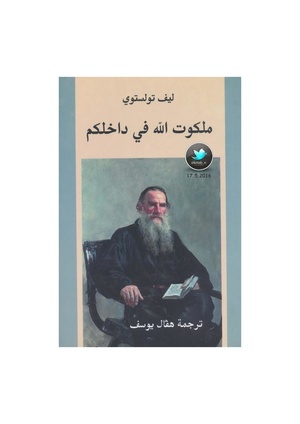
ملكوت الله في داخلكم
 الطبعة الإنگليزية الأولى من ملكوت الله في داخلكم | |
| المؤلف | ليو تولستوي |
|---|---|
| العنوان الأصلي | [Царство Божіе внутри васъ] Error: {{Lang}}: text has italic markup (help) |
| البلد | روسيا (مكتوب)/ألمانيا (أول نشر) |
| اللغة | الروسية |
| الموضوع | اللاهوت المسيحي، الفلسفة، الأناركية |
| نـُشـِر | 1894 |
| نوع الوسائط | غلاف مقوى، غلاف ورقي |
| الصفحات | 335 صفحة (طبعة 1927، غلاف مقوى) |
| ISBN | 1603863826 |
| Text | ملكوت الله في داخلكم at معرفة المصادر |
ملكوت الله في داخلكم (بالروسية ما قبل الإصلاحية: Царство Божіе внутри васъ، ما بعد الإصلاحية: روسية: Царство Божие внутри вас, romanized: Tsárstvo Bózhiye vnutrí vas، إنگليزية: The Kingdom of God Is Within You)، هو كتاب غير روائي من تأليف ليو تولستوي. باعتباره رسالة أناركية مسيحية فلسفية، نُشر الكتاب لأول مرة في ألمانيا عام 1894 بعد حظره في موطنه روسيا.[1] وهو تتويج لثلاثين عاماً من تفكير تولستوي، وتضع نظاماً جديداً للمجتمع قائماً على تفسير للمسيحية يركز على الحب العالمي.
"ملكوت الله في داخلكم" هو نص أساسي لأنصار الحركة التولستوية الداعية إلى اللاعنف، والمقاومة السلمية، والأناركية المسيحية.[2] ويعد من أمهات الكتب التي تتطرق الي كيفية الانسان مع المجتمع، ويتحدث عن الانسان في مواجهه الظلم بجميع انواعه والحث علي عدم التطرف ونبذ الآخر وأن التعامل لابد أن يكون إنسانياً حتي في أسوأ الظروف. وتأثر بهذا الكتاب كل من مهاتما غاندي السياسي البارز والزعيم الروحي للهند ومارتن لوثر كنگ الناشط الأمريكي-الأفريقي.
خلفية

The title of the book originates from Luke 17:21. In the book, Tolstoy speaks of the principle of nonviolent resistance when confronted by violence, as taught by Jesus Christ. When Christ says to turn the other cheek, Tolstoy asserts that Christ means to abolish violence, even the defensive kind, and to give up revenge. Tolstoy rejects the interpretation of Roman and medieval scholars who attempted to limit its scope.
"فكيف تقتلون الناس وقد جاء في وصية الله: لا تقتل؟"
Tolstoy was largely inspired by the writings of American Christian anarchists Adin Ballou and William Lloyd Garrison, who also shared his viewpoint that all governments who waged war were an affront to the New Testament and Christian ethics. Tolstoy discusses Ballou and Garrison's texts and biographies at length in the book, including a whole excerpt of Ballou's Non-Resistance Catechism (originally published in 1844). As the Russian Orthodox Church was at the time an organization merged with the Russian state which was completely subservient to the state's policies, Tolstoy sought to separate its teachings from what he believed to be the true gospel of Christ, specifically the Sermon on the Mount.
Tolstoy advocated nonviolence as a solution to nationalist woes and as a means for seeing the hypocrisy of the church. In reading Jesus' words in the Gospels, Tolstoy notes that the modern church is a heretical creation:
لا يمكننا أن نجد في أي مكان ولا في أي شيء، إلا في تأكيد الكنيسة، أن الله أو المسيح أسس شيئاً مثل ما يفهمه رجال الكنيسة من الكنيسة.
Tolstoy presented excerpts from magazines and newspapers relating various personal experiences, and gave keen insight into the history of non-resistance from the very foundation of Christianity, as being professed by a minority of believers. In particular, he confronts those who seek to maintain status quo:
أن هذا النظام الاجتماعي بما فيه من فقر ومجاعات وسجون ومشانق وجيوش وحروب ضروري للمجتمع؛ وستحدث كارثة أكبر إذا تم تدمير هذه المنظمة؛ كل هذا لا يقوله إلا أولئك الذين يستفيدون من هذه المنظمة، بينما أولئك الذين يعانون منها – وهم عشرة أضعاف – يفكرون ويقولون عكس ذلك تماماً.
In 1894, Constance Garnett, who translated the work into English, wrote the following in her translator's preface:
One cannot of course anticipate that English people, slow as they are to be influenced by ideas, and instinctively distrustful of all that is logical, will take a leap in the dark and attempt to put Tolstoy's theory of life into practice. But one may at least be sure that his destructive criticism of the present social and political regime will become a powerful force in the work of disintegration and social reconstruction which is going on around us.[3]
اقتباسات
ويقول تولستوي:
سواء كان الانسان ليبرالياً متعلماً من أي لون كان، سواء كان فيلسوف من أي مذهب كان، سواء عالماً، اقتصادياً، من أي مدرسة كانت، سواء أمياً، وحتي متديناً بأي دين كان.
جميع الأشخاص في زماننا يعلمون أن لكل البشر الحقوق ذاتها في الحياة وفي خيرات العالم، ولا يوجد ناس أفضل أو اسوأ من الآخرين...
صحيح أننا لسنا مسؤولين عن جرائم الحاكم لكننا مسؤولون عن جرائمنا نحن وجرائم الحكام تغدو جرائمها عندما نساعدهم علي ارتكابها رغم علمنا أنها جرائم.
أولئك الذين يعتمدون على أنهم مجبورون علي طاعة الحكومة، وعلي أن مسئووليتهم علي الجرائم المرتكبة من قبلهم سوف تلقي علي كاهن سادتهم إنهم يكذبون علي أنفسهم بأنفسهم..
وفي نقطة أخري يقول:
إن إخلاصنا قد يتعرض لاختبارات قاسية فمهمتنا قد تجلب علينا الإهانة والإساءات والآلام ونتوقع عدم الفهم والتفسير الكاذب واللعنات.
سوف تقوم زوبعة ضدنا. قد يتحد غرور ونفاق وغطرسة وقسوة الحكام والسلطات للقضاء علينا.
إتكالنا ليس علي البشر وإنما علي الرب الذي هو علي كل شئ قدير..
نقد
علاقة تولستوي بمهاتما غاندي

Mohandas Gandhi wrote in his autobiography The Story of My Experiments with Truth (Part II, Chapter 15) that Tolstoy's book "overwhelmed" him, and "left an abiding impression". Gandhi listed Tolstoy's book, as well as John Ruskin's Unto This Last and the poet Shrimad Rajchandra (Raychandbhai), as the three most important modern influences in his life.[4] Reading this book opened up the mind of the world-famous Tolstoy to Gandhi, who was still a young protester living in South Africa at the time.
In 1908, Tolstoy wrote A Letter to a Hindu,[5] which Gandhi would read, and which outlined the notion that only by using love as a weapon through passive resistance could the native Indian people overthrow the colonial British Empire. This idea ultimately came to fruition through Gandhi's organization of nationwide nonviolent strikes and protests during the years 1918–1947. In 1909, Gandhi wrote to Tolstoy seeking advice and permission to republish A Letter to a Hindu in his native language, Gujarati. Tolstoy responded and the two continued a correspondence until Tolstoy's death a year later in 1910. The letters concern practical and theological applications of nonviolence, as well as Gandhi's wishes for Tolstoy's health. Tolstoy's last letter to Gandhi "was one of the last, if not the last, writings from his pen."[6][7]
علاقته بنشطاء آخرين سلميين
In 1894, The Kingdom of God is Within You inspired the soldier Arthur St. John to become a pacifist.[8] It also had a great effect upon James Bevel, a major 1960s strategist of the civil rights movement.[9][10] After reading the book while serving in the U.S. Navy, Bevel came to the conclusion that he would be unable to kill another person. He thereafter sought and was granted an honorable discharge, and entered a seminary for religious training.[11]
أهمية كلمات المسيح
"The Kingdom of God is Within You" is the key phrase in Luke 17:21 which furthers the idea of nonviolence. Jesus said, "for, behold, the kingdom of God is within you" in response to the Pharisees asking when the Kingdom of God will come. The saying has numerous explanations including that enlightenment is within you, in your heart, and your spark of God has always been there. Therefore only a nonviolent, peaceful nature will result in nonviolent, peaceful, Kingdom of God outcomes.[12]
انظر أيضاً
المصادر
- ^ Donna Tussing Orwin (2002). The Cambridge Companion to Tolstoy. Cambridge University Press. ISBN 0-521-52000-2.
- ^ Christoyannopoulos, Alexandre (2010). Christian Anarchism: A Political Commentary on the Gospel. Exeter: Imprint Academic. p. 19.
[Tolstoy] wrote countless essays and books on the topic, but the most often cited one among anarchists is The Kingdom of God Is within You.
- ^ Tolstoy, graf Leo (1894). "The Kingdom of God is Within You": Christianity Not as a Mystic Religion But as a New Theory of Life. Cassell Publishing Company.
- ^ Mohandas K. Gandhi (1929). The Story of My Experiments with Truth. Archived from the original on 2010-08-01.
- ^ Parel, Anthony J. (2002), "Gandhi and Tolstoy", Meditations on Gandhi : a Ravindra Varma festschrift, New Delhi: Concept, pp. 96–112
- ^ B. Srinivasa Murthy, ed. (1987). Mahatma Gandhi and Leo Tolstoy: Letters. ISBN 0-941910-03-2.
- ^ ""Leo Tolstoy and Mahatma Gandhi: A Double Portrait in the Interior of the Age"- Russian documentary which captures correspondence between the two spiritual teachers of humanity". Press Information Bureau. Retrieved 5 December 2016.
- ^ Rosamund, Bartlett (2011). Tolstoy: A Russian Life. Houghton Mifflin Harcourt. p. 363. ISBN 978-0151014385.
- ^ Randall L. Kryn, "James L. Bevel; The Strategist of the 1960s Civil Rights Movement", in David Garrow, We Shall Overcome, Volume II (1989), Carlson Publishing Company
- ^ Randy Kryn, "Movement Revision Research Summary Regarding James Bevel", October 2005, Middlebury College
- ^ The Children, 1999, David Halberstam
- ^ The Meditation Book, by Blair Abee, pages 25-26
قراءات إضافية
- Milivojevic, D. Leo Tolstoy and the Oriental Religious Heritage. (New York: Columbia University Press, 1998).
وصلات خارجية


- ملكوت الله في داخلكم at Standard Ebooks
 The Kingdom of God Is Within You public domain audiobook at LibriVox
- The Kingdom of God Is Within You — complete text in various formats at Internet Archive ملكوت الله في داخلكم, available at Project Gutenberg.
- The Kingdom of God Is Within You — complete HTML text by Kingdom Now
- The Kingdom of God Is Within You — complete HTML version, with links to Wikipedia and to Tolstoy's source material
- Tolstoy's Legacy for Mankind- A Manifesto for Nonviolence: Part 1 Part 2
| روايات وروايات قصيرة |
|  |
|---|---|---|
| قصص قصيرة |
| |
| المسرحيات |
| |
| غير خيالي |
| |
| مقالات متعلقة | ||
| عائلته |  | ||||
|---|---|---|---|---|---|
| Influences | |||||
| حياته | |||||
| فلسفته | |||||
| Associates | |||||
| عهده | |||||
| تأثيرات | |||||
| نصب تذكارية |
| ||||


- Short description is different from Wikidata
- Articles that link to Wikisource
- Articles containing روسية-language text
- Articles containing إنگليزية-language text
- Articles with LibriVox links
- أناركية مسيحية
- كتب ليو تولستوي
- كتب غير روائية 1894
- كتب عن الروحانية
- فلسفة مسيحية
- كتب لاهوت مسيحية
- كتب مناهضة للحرب
- كتب عن الأناركية
- كتب عن المسيحية
- الحركة التولستوية
- مهاتما غاندي