وحدة تعريف المشترك


وحدة تعريف المشترك subscriber identity module أو اختصاراً (SIM)، وشهرتها بطاقة SIM، هي دائرة متكاملة تهدف إلى تخزين رقم هوية المشترك الدولي المتنقل (IMSI) والمفتاح المرتبط به بشكل آمن، والذي يستخدم لتحديد هوية المشتركين في أجهزة الاتصال الهاتفي (مثل الهواتف المحمولة والحواسب) ومن الممكن أيضاً تخزين معلومات الاتصال على الكثير من بطاقات وحدة تعريف المشترك. عادة ما تستخدم بطاقات وحدة تعريف المشترك على هواتف جي إس إم؛ ولهواتف سي دي إم إيه، وهي مطلوبة فقط للهواتف المحمولة الجديدة المزودة بتقنيات إل تي إي. كما يمكن استخدام بطاقات وحدة تعريف المشترك في الهواتف الساتلية، الساعات الذكية، الحواسب، أو الكاميرات.
دائرة وحدة تعريف المشترك هي جزء من وظيفة البطاقات الذكية الفعلية-بطاقة الدائرة المدمجة العالمية (UICC)، والتي عادة ما تكون مصنوعة من پي ڤي سي مع ممسات وأشباه موصلات مضمنة. يمكن نقل بطاقات وحدة تعريف المشترك بين مختلف الأجهزة المحمولة. كان أول البطاقات الذكية-UICC بحكم بطاقات ائتمان البنوك؛ وعلى مدار سنوات تم تقليل الحجم عدة مرات، وعادة ما يتم الاحتفاظ بنفس الممسات الإلكترونية، وبالتالي يمكن تخفيض حجم البطاقة الكبيرة إلى حجم أصغر.
تحتوي بطاقة وحدة تعريف المشترك على عدد رقم مسلسل مميز (ICCID)، رقم الهوية الدولية لمشترك المحمول (IMSI)، مصادقة الأمان ومعلومات التشفير، والمعلومات المؤقتة المتعلقة بالشبكة المحلية، قائمة الأجهزة التي دخلها المستخدم، وكلمتي سر: رقم التعريف الشخصي (PIN) للاستخدام الاعتيادي، ورمز فك الشفرة الشخصية (PUC) لفك شفرة رقم التعريف الشخصي.
التاريخ والشراء
The SIM card is a type of smart card,[1] the basis for which is the silicon integrated circuit (IC) chip.[2] The idea of incorporating a silicon IC chip onto a plastic card originates from the late 1960s.[2] Smart cards have since used MOS integrated circuit chips, along with MOS memory technologies such as flash memory and EEPROM (electrically EPROM).[3]
The SIM was initially specified by the ETSI in the specification TS 11.11. This describes the physical and logical behaviour of the SIM. With the development of UMTS, the specification work was partially transferred to 3GPP. 3GPP is now responsible for the further development of applications like SIM (TS 51.011[4]) and USIM (TS 31.102[5]) and ETSI for the further development of the physical card UICC.
The first SIM card was manufactured in 1991 by Munich smart-card maker Giesecke+Devrient, who sold the first 300 SIM cards to the Finnish wireless network operator Radiolinja,[6][7] who launched the world's first commercial 2G GSM cell network that year.[8]
Today, SIM cards are considered ubiquitous, allowing over 8 billion devices to connect to cellular networks around the world daily. According to the International Card Manufacturers Association (ICMA), there were 5.4 billion SIM cards manufactured globally in 2016 creating over $6.5 billion in revenue for traditional SIM card vendors.[9] The rise of cellular IoT and 5G networks was predicted by Ericsson to drive the growth of the addressable market for SIM cards to over 20 billion devices by 2020.[10] The introduction of embedded-SIM (eSIM) and remote SIM provisioning (RSP) from the GSMA[11] may disrupt the traditional SIM card ecosystem with the entrance of new players specializing in "digital" SIM card provisioning and other value-added services for mobile network operators.[3]
التصميم

There are three operating voltages for SIM cards: 5 V, 3 V and 1.8 V (ISO/IEC 7816-3 classes A, B and C, respectively). The operating voltage of the majority of SIM cards launched before 1998 was 5 V. SIM cards produced subsequently are compatible with 3 V and 5 V. Modern cards support 5 V, 3 V and 1.8 V.[3]

Modern SIM cards allow applications to load when the SIM is in use by the subscriber. These applications communicate with the handset or a server using SIM Application Toolkit, which was initially specified by 3GPP in TS 11.14. (There is an identical ETSI specification with different numbering.) ETSI and 3GPP maintain the SIM specifications. The main specifications are: ETSI TS 102 223 (the toolkit for smart cards), ETSI TS 102 241 (API), ETSI TS 102 588 (application invocation), and ETSI TS 131 111 (toolkit for more SIM-likes). SIM toolkit applications were initially written in native code using proprietary APIs. To provide interoperability of the applications, ETSI chose Java Card.[12] A multi-company collaboration called GlobalPlatform defines some extensions on the cards, with additional APIs and features like more cryptographic security and RFID contactless use added.[13]
البيانات
SIM cards store network-specific information used to authenticate and identify subscribers on the network. The most important of these are the ICCID, IMSI, authentication key (Ki), local area identity (LAI) and operator-specific emergency number. The SIM also stores other carrier-specific data such as the SMSC (Short Message service center) number, service provider name (SPN), service dialing numbers (SDN), advice-of-charge parameters and value-added service (VAS) applications. (Refer to GSM 11.11.[14])
SIM cards can come in various data capacities, from 8 KB to at least 256 KB.[7] All can store a maximum of 250 contacts on the SIM, but while the 32 KB has room for 33 Mobile country code (MCCs) or network identifiers, the 64 KB version has room for 80 MNCs.[15] This is used by network operators to store data on preferred networks, mostly used when the SIM is not in its home network but is roaming. The network operator that issued the SIM card can use this to have a phone connect to a preferred network that is more economic for the provider instead of having to pay the network operator that the phone discovered first. This does not mean that a phone containing this SIM card can connect to a maximum of only 33 or 80 networks, instead it means that the SIM card issuer can specify only up to that number of preferred networks. If a SIM is outside these preferred networks, it uses the first or best available network.[10]
ICCID
Each SIM is internationally identified by its integrated circuit card identifier (ICCID). Nowadays ICCID numbers are also used to identify eSIM profiles, not only physical SIM cards. ICCIDs are stored in the SIM cards and are also engraved or printed on the SIM card body during a process called personalisation.
The ICCID is defined by the ITU-T recommendation E.118 as the primary account number.[16] Its layout is based on ISO/IEC 7812. According to E.118, the number can be up to 19 digits long, including a single check digit calculated using the Luhn algorithm. However, the GSM Phase 1[17] defined the ICCID length as an opaque data field, 10 octets (20 digits) in length, whose structure is specific to a mobile network operator.
The number is composed of three subparts:
- Issuer identification number (IIN)
- Check digit
- Individual account identification
Their format is as follows.
Issuer identification number (IIN)
- Maximum of seven digits:
- Major industry identifier (MII), 2 fixed digits, 89 for telecommunication purposes.
- Country code, 2 or 3 digits, as defined by ITU-T recommendation E.164.
- NANP countries, apart from Canada, use 01, i.e. prepending a zero to their common calling code +1
- Canada uses 302
- Russia uses 701, i.e. appending 01 to its calling code +7
- Kazakhstan uses 997, even though it shares the calling code +7 with Russia
- Issuer identifier, 1–4 digits.
- Often identical to the Mobile country code (MCC).[18]
Individual account identification
- Its length is variable, but every number under one IIN has the same length.
- Often identical to the Mobile identification number (MIN).[2]
Check digit
- Single digit calculated from the other digits using the Luhn algorithm.
With the GSM Phase 1 specification using 10 octets into which ICCID is stored as packed BCD[مطلوب توضيح], the data field has room for 20 digits with hexadecimal digit "F" being used as filler when necessary. In practice, this means that on GSM cards there are 20-digit (19+1) and 19-digit (18+1) ICCIDs in use, depending upon the issuer. However, a single issuer always uses the same size for its ICCIDs.
As required by E.118, the ITU-T updates a list of all current internationally assigned IIN codes in its Operational Bulletins which are published twice a month (the last as of January 2019 was No. 1163 from 1 January 2019).[19] ITU-T also publishes complete lists: as of August 2023, the list issued on 1 December 2018 was current, having all issuer identifier numbers before 1 December 2018.[20]
International mobile subscriber identity (IMSI)
SIM cards are identified on their individual operator networks by a unique international mobile subscriber identity (IMSI). Mobile network operators connect mobile phone calls and communicate with their market SIM cards using their IMSIs. The format is:
- The first three digits represent the Mobile country code (MCC).
- The next two or three digits represent the Mobile network code (MNC). Three-digit MNC codes are allowed by E.212 but are mainly used in the United States and Canada. One MCC can have both 2 digit and 3 digit MNCs, an example is 350 007.
- The next digits represent the Mobile identification number (MSIN).
- Normally there are 10 digits, but can be fewer in the case of a 3-digit MNC or if national regulations indicate that the total length of the IMSI should be less than 15 digits.
- Digits are different from country to country.
Authentication key (Ki)
The Ki is a 128-bit value used in authenticating the SIMs on a GSM mobile network (for USIM network, the Ki is still needed but other parameters are also needed). Each SIM holds a unique Ki assigned to it by the operator during the personalisation process. The Ki is also stored in a database (termed authentication center or AuC) on the carrier's network.
The SIM card is designed to prevent someone from getting the Ki by using the smart-card interface. Instead, the SIM card provides a function, Run GSM Algorithm, that the phone uses to pass data to the SIM card to be signed with the Ki. This, by design, makes using the SIM card mandatory unless the Ki can be extracted from the SIM card, or the carrier is willing to reveal the Ki. In practice, the GSM cryptographic algorithm for computing a signed response (SRES_1/SRES_2: see steps 3 and 4, below) from the Ki has certain vulnerabilities[15] that can allow the extraction of the Ki from a SIM card and the making of a duplicate SIM card.
Authentication process:
- When the mobile equipment starts up, it obtains the international mobile subscriber identity (IMSI) from the SIM card, and passes this to the mobile operator, requesting access and authentication. The mobile equipment may have to pass a PIN to the SIM card before the SIM card reveals this information.
- The operator network searches its database for the incoming IMSI and its associated Ki.
- The operator network then generates a random number (RAND, which is a nonce) and signs it with the Ki associated with the IMSI (and stored on the SIM card), computing another number, that is split into the Signed Response 1 (SRES_1, 32 bits) and the encryption key Kc (64 bits).
- The operator network then sends the RAND to the mobile equipment, which passes it to the SIM card. The SIM card signs it with its Ki, producing Signed Response 2 (SRES_2) and Kc, which it gives to the mobile equipment. The mobile equipment passes SRES_2 on to the operator network.
- The operator network then compares its computed SRES_1 with the computed SRES_2 that the mobile equipment returned. If the two numbers match, the SIM is authenticated and the mobile equipment is granted access to the operator's network. Kc is used to encrypt all further communications between the mobile equipment and the operator.
Location area identity
The SIM stores network state information, which is received from the location area identity (LAI). Operator networks are divided into location areas, each having a unique LAI number. When the device changes locations, it stores the new LAI to the SIM and sends it back to the operator network with its new location. If the device is power cycled, it takes data off the SIM, and searches for the prior LAI.
SMS messages and contacts
Most SIM cards store a number of SMS messages and phone book contacts. It stores the contacts in simple "name and number" pairs. Entries that contain multiple phone numbers and additional phone numbers are usually not stored on the SIM card. When a user tries to copy such entries to a SIM, the handset's software breaks them into multiple entries, discarding information that is not a phone number. The number of contacts and messages stored depends on the SIM; early models stored as few as five messages and 20 contacts, while modern SIM cards can usually store over 250 contacts.[21]
الصيغ


| بطاقة وحدة تعريف المشترك | طُرحت | المرجع القياسي | الطول (مم) | العرض (مم) | السُمك (مم) | الحجم (مم3) |
|---|---|---|---|---|---|---|
| الحجم الكامل (1FF) | 1991 | ISO/IEC 7810:2003, ID-1 | 85.60 | 53.98 | 0.76 | 3511.72 |
| الصغيرة (2FF) | 1996 | ISO/IEC 7810:2003, ID-000 | 25.00 | 15.00 | 0.76 | 285.00 |
| المصغرة (3FF) | 2003 | ETSI TS 102 221 V9.0.0, Mini-UICC | 15.00 | 12.00 | 0.76 | 136.80 |
| النانوية (4FF) | early 2012 | ETSI TS 102 221 V11.0.0 | 12.30 | 8.80 | 0.67 | 72.52 |
| البطاقة-المضمنة (eSIM) |
JEDEC Design Guide 4.8, SON-8 ETSI TS 103 383 V12.0.0 GSMA SGP.22 V1.0 |
6.00 | 5.00 | <1.00 | <30.00 |
وحدة تعريف المشترك المزروعة
يوجد نوع جديد من وحدة تعريف المشترك يسمى بوحدة تعريف المشترك المزروعة (e-SIM، eSIM، embedded SIM) أو بطاقة الدائرة المتكاملة العالمية المزروعة (eUICC). وهي شريحة مضمنة غير قابلة للاستبدال داخل حزمةSON-8 الملحومة مباشرة على لوحة الدائرة. لديها قدرات M2M وتوفير وحدة تعريف المشترك عن بعد (remote SIM provisioning).
يوفر تنسيق السطح نفس الواجهة الكهربائية بالحجم الكامل، بطاقات وحدة تعريف المشترك 2FF و3FF، لكنها تكون ملحومة على لوحة الدوائر الإلكترونية كجزء من عملية التصنيع. في تطبيقات M2M حيث لا يكن تغير بطاقة وحدة تعريف المشترك مطلوباً، يلغي هذا الأمر الاحتياج لموصل، يحسن الموثوقية والأمان. تناقش الجمعية الدولية لشبكات الهاتف المحمول منذ 2010 إحتمالات عمل بطاقة وحدة تعريف مشترك معتمدة على البرمجيات.[22] بينما أشارت موتورولا إلى أن بطاقة الدائرة المتكاملة العالمية المزروعة موجهة نحو الأجهزة الصناعية، نفت أپل أن هناك أي بيان يعارض استخدام بطاقة الدائرة المتكاملة العالمية المزروعة في المنتجات الاستهلاكية"، في 2012،[23] اخترت اللجنة الأوروپية صيغة بطاقة الدائرة المتكاملة العالمية لخدمة المكالمات الطائرة داخل المركبات والمعروفة باسم eCall. فيما يتماشى مع بياناتها السابقة، طرحت أپل أي-پاد پرو الجيل الثاني والسلسلة الثالثة من ساعات أپل بوحدات تعريف المشترك المزروعة. بحلول 2018 ستحتوي جميع موديلات السيارات الجديدة في الاتحاد الأوروپي على وحدات تعريف المشترك المزروعة لتقوم بتوصيل السيارة بخدمة الطوائر بشكل مباشر في حالة وقوع حادث. تمتلك روسيا خطة مشابهة مع نظام التموضع الساحلي الاقليمي ERA-GLONASS.[24] تستطلع سنغافورة الرأي العام لطرق eSIM كمعيار جديد مع دخول المزيد من الأجهزة الإلكترونية مثل ساعات أپل 3 سابقة الذكر السوق.[25]
eSIM موجودة أيضاً في هاتف پيكسل 2 من گوگل.[26]
الأمان
التطورات
USIM
UICC
متغيرات أخرى
في شبكات cdmaOne، مكافئ بطاقة وحدة تعريف المشترك هيوحدة هوية المستخدم القابلة للإزالة (R-UIM) ومكافئ تطبيق وحدة تعريف المشترك هي CSIM.
وحدة تعريف المشترك الافتراضية virtual SIM، ورقم هاتف محمول يوفره مشغل شبكة المحمول لا يتطلب وجود بطاقة وحدة تعريف المشترك لتوصيل المكالمات الهاتفية بالهاتف المحمول الخاص بالمستخدم.
في المؤتمر العالمي للمحمول 2015 الذي عقد في برشلونة، كشفت شركة سيملس، شركة جديدة مقرها الولايات المتحدة، عن أول هاتف جي إس إم في العالم بدون فتحة بطاقة وحدة تعريف المشترك. الهاتف الذكور قادر على تنزيل العديد من بطاقات تعريف المشترك الافتراضية عبر الأثير.[27]
الاستخدام في معايير الهاتف المحمول
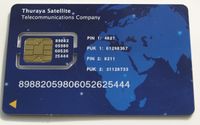
بطاقة وحدة تعريف مشترك لهاتف الثريا الساتلي.
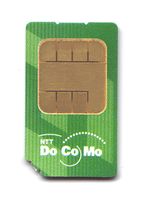
NTT DoCoMo's FOMA Card
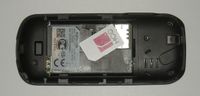
SIM card and the mobile phone
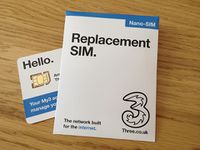
Three UK SIM Card with Packaging
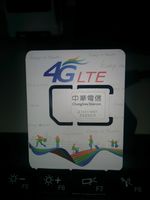
Chunghwa Telecom's LTE Card
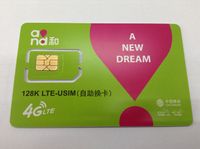
China Mobile's LTE SIM card
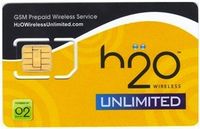
H2O Wireless prepaid SIM card
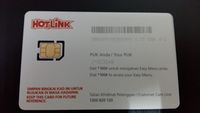
Hotlink (Maxis) nano-SIM card
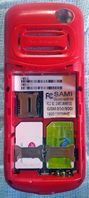
Dual SIM slots as shown on Chinese cell phone
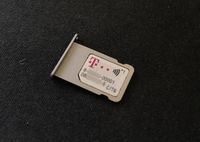
Deutsche Telekom nano-SIM Card with NFC capabilities in the SIM tray of an iPhone 6s
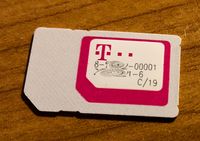
Deutsche Telekom Mini-SIM with pre-cut Micro- and Nano-SIM


وحدة تعريف المشترك والحاملات
وحدة تعريف المشترك-فقط
الأجهزة متعددة الـSIM
انظر أيضاً
- Apple SIM
- International Mobile Equipment Identity (IMEI)
- GSM 03.48
- SIM cloning
- SIM connector
- IP Multimedia Services Identity Module (ISIM)
- W-SIM (Willcom-SIM)
- Mobile equipment identifier (MEID)
- VMAC
- توقيع محمول
- Single Wire Protocol (SWP)
- SIM Application Toolkit (STK)
- Mobile broadband
- Tethering
- بطاقة ذكية
- Regional lockout
- GSM USSD codes – Unstructured Supplementary Service Data: list of standard GSM codes for network and SIM related functions
- Remote SIM provisioning
المصادر
- ^ Tait, Don (25 August 2016). "Smart card IC shipments to reach 12.8 billion units in 2021". IHS Technology. IHS Markit. Archived from the original on 24 October 2019. Retrieved 24 October 2019.
- ^ أ ب ت Chen, Zhiqun (2000). Java Card Technology for Smart Cards: Architecture and Programmer's Guide. Addison-Wesley Professional. pp. 3–4. ISBN 9780201703290.
- ^ أ ب ت Veendrick, Harry J. M. (2017). Nanometer CMOS ICs: From Basics to ASICs. Springer. pp. 315, 481–2. ISBN 9783319475974.
- ^ "3GPP specification: 51.011". Archived from the original on 28 April 2016. Retrieved 29 April 2016.
- ^ "3GPP specification: 31.102". Archived from the original on 14 April 2016. Retrieved 29 April 2016.
- ^ Asif, Saad Z. (2011). Next Generation Mobile Communications Ecosystem. John Wiley & Sons. p. 306. ISBN 978-1119995814.
- ^ أ ب "G&D – History of Giesecke & Devrient". Archived from the original on 24 September 2015. Retrieved 29 April 2016.
- ^ "World's First GSM Call was made 20 years ago". www.fonearena.com. Retrieved 2024-07-15.
- ^ "Official Publication of the International Card Manufacturers Association February 2017 Volume 27 No1" (PDF). Retrieved 11 May 2025.
- ^ أ ب "Ericsson Mobility Report November 2015" (PDF). Archived (PDF) from the original on 17 March 2017. Retrieved 28 May 2017.
- ^ "GSMA Embedded SIM and RSP". Archived from the original on 7 June 2017. Retrieved 28 May 2017.
- ^ "ETSI TS 102 241: UICC API for Java Card™ Release 13" (PDF). Archived (PDF) from the original on 8 March 2021. Retrieved 8 August 2019.
- ^ "Specifications Archive: Secure Element (Card)". GlobalPlatform (in الإنجليزية). Archived from the original on 31 July 2019. Retrieved 8 August 2019.
- ^ "3GPP specification: 11.11". Archived from the original on 18 August 2016. Retrieved 29 April 2016.
- ^ أ ب "Hackers crack open mobile network". bbc.co.uk. 20 April 2011. Archived from the original on 12 August 2011. Retrieved 13 August 2011.
- ^ ITU-T, ITU-T Recommendation E.118, The international telecommunication charge card, Revision history Archived 17 أكتوبر 2012 at the Wayback Machine, Revision "05/2006"
- ^ ETSI, ETSI Recommendation GSM 11.11, Specifications of the SIM-ME Interface, Version 3.16.0 Archived 27 نوفمبر 2007 at the Wayback Machine
- ^ خطأ استشهاد: وسم
<ref>غير صحيح؛ لا نص تم توفيره للمراجع المسماة:5 - ^ "Operational Bulletin No. 1163 (1.I.2019)". www.itu.int (in الإنجليزية الأمريكية). Archived from the original on 5 January 2019. Retrieved 2019-01-05.
- ^ "List of issuer identifier numbers for the international telecommunication charge card (in accordance with Recommendation ITU-T E.118 (05/2006))". International Telecommunication Union. 5 January 2015. Archived from the original on 5 January 2019. Retrieved 4 January 2019.
- ^ خطأ استشهاد: وسم
<ref>غير صحيح؛ لا نص تم توفيره للمراجع المسماة:6 - ^ Diana ben-Aaron (18 November 2010). "GSMA Explores Software-Based Replacement for Mobile SIM Cards". Bloomberg. p. 1. Retrieved 17 October 2014.
- ^ Ziegler, Chris (June 1, 2012). "Embedded SIMs: they're happening, and Apple thinks they could be in consumer products". The Verge. Vox Media, Inc. Retrieved October 25, 2014.
- ^ Bruno, Duarte (September 27, 2014). "eUICC – embedded Universal Integrated Circuit Card". COSWITCHED.COM. Retrieved October 25, 2014.
- ^ https://www.channelnewsasia.com/news/singapore/switch-mobile-operator-without-changing-sim-cards-imda-wants-10395682
- ^ "Google's Pixel 2 phones are the first to use built-in eSIM technology". The Verge. Retrieved 15 July 2018.
- ^ Simless, Inc. "Simless Unveils World's First GSM Phone Without a SIM Card Slot". PRLog. Retrieved 29 April 2016.
وصلات خارجية
- ETSI Smart Card standards (102 221)
- GSM 11.11 – Specification of the Subscriber Identity Module-Mobile Equipment (SIM-ME) interface.
- GSM 11.14 – Specification of the SIM Application Toolkit for the Subscriber Identity Module-Mobile Equipment (SIM-ME) interface
- GSM 03.48 – Specification of the security mechanisms for SIM application toolkit
- GSM 03.48 Java API – API and realization of GSM 03.48 in Java
- ITU-T E.118 – The International Telecommunication Charge Card 2006 ITU-T