مقبرة توت عنخ آمون
| KV62 | |||
|---|---|---|---|
| صاحب المقبرة توت عنخ أمون | |||
 | |||
  KV62 | |||
| الإحداثيات | 25°44′25.4″N 32°36′05.1″E / 25.740389°N 32.601417°E | ||
| الموقع | شرق وادي الملوك | ||
| صاحب الاكتشاف | هوارد كارتر | ||
| المخطط | Bent to the right | ||
| |||
المقبرة KV62 في وادي الملوك بمصر هي مقبرة توت عنخ أمون، التي اشتهرت لما وُجـِد فيها من كنوز.[1] المقبرة اكتشفها عام 1922 هوارد كارتر، تحت ركام أكواخ عمال بنيت أثناء فترة الرعامسة; وهذا يفسر نجاتها من أسوأ ناهبي القبور في ذلك الوقت.
كانت المقبرة مكتظة بالقطع الأثرية وفي حالة فوضى كبيرة. تمكن كارتر من تصوير أكاليل الزهور، والتي تفككت بمجرد لمسها. نظراً للحالة التي كانت عليها المقبرة، وتقنية التسجيل الدقيقة لكارتر، استغرق تفريغ المقبرة قرابة عشر سنوات، ونُقلت جميع محتوياتها إلى المتحف المصري في القاهرة.
التاريخ
الدفن والسرقات
.jpg&filetimestamp=20241129075150&)
Tutankhamun reigned as pharaoh between ح. 1334 and 1325 BC, towards the end of the Eighteenth Dynasty during the New Kingdom.[2][3] He took the throne as a child after the death of Akhenaten (who was probably his father) and the subsequent brief reigns of Neferneferuaten and Smenkhkare. Akhenaten had radically reshaped ancient Egyptian religion by worshipping a single deity, Aten, and rejecting other deities, a shift that began the Amarna Period.[4] One of Tutankhamun's major acts was the restoration of traditional religious practice. His name was changed from Tutankhaten, referring to Akhenaten's deity, to Tutankhamun, honouring Amun, one of the foremost deities of the traditional pantheon. Similarly, his queen's name was changed from Ankhesenpaaten to Ankhesenamun.[5]
Shortly after Tutankhamun took power, he commissioned a full-size royal tomb in the Valley of the Kings, which was probably one of two tombs from the same era, WV23 or KV57.[6] KV62 is thought to have originally been a non-royal tomb, possibly intended for Ay, Tutankhamun's advisor. After Tutankhamun died prematurely, KV62 was enlarged to accommodate his burial. Ay became pharaoh on Tutankhamun's death and was buried in WV23. Ay was elderly when he came to the throne, and it is possible that he buried his predecessor in KV62 in order to usurp WV23 for himself and ensure that he would have a tomb of suitably royal proportions ready when he himself died. Pharaohs in Tutankhamun's time also built mortuary temples where they would receive offerings to sustain their spirits in the afterlife. The Temple of Ay and Horemheb at Medinet Habu contained statues that were originally carved for Tutankhamun, suggesting either that Tutankhamun's temple stood nearby or that Ay usurped Tutankhamun's temple as his own.[7]
Ay was succeeded by Tutankhamun's general Horemheb, although the transfer of power may have been contested and created a brief period of political instability.[8][9] As part of the continued reaction against Atenism, Horemheb tried to erase Akhenaten and his successors from the record, dismantling Akhenaten's monuments and usurping those erected by Tutankhamun. Future king-lists skipped straight from Akhenaten's father, Amenhotep III, to Horemheb.[8]
Within a few years of Tutankhamun's burial, his tomb was robbed twice. After the first robbery, officials responsible for its security repaired and repacked some of the damaged goods before filling the outer corridor with chips of limestone. Nevertheless, a second set of robbers burrowed through the corridor fill. This robbery too was detected, and after a second hasty restoration the tomb was once again sealed.[10]
The Valley of the Kings is subject to periodic flash floods that deposit alluvium.[11] Much of the valley, including the entrance to Tutankhamun's tomb, was covered by a layer of alluvium over which huts were later built for the tomb workers who cut KV57, in which Horemheb was buried. The geologist Stephen Cross has argued that a major flood deposited this layer after KV62 was last sealed and before the huts were built, which would mean Tutankhamun's tomb had been rendered inaccessible by the time Ay's reign ended.[12] However, the Egyptologist Andreas Dorn suggests that this layer already existed during Tutankhamun's reign, and workers dug through it to reach the bedrock into which they cut his tomb.[13]
More than 150 years after Tutankhamun's burial, KV9, the tomb of Ramesses V and Ramesses VI, was cut into the rock to the west of his tomb.[14] The entrance of his tomb was further buried by mounds of debris from KV9's excavation and by the workers' huts atop that debris. In subsequent years, the tombs in the valley suffered major waves of robbery: first during the late Twentieth Dynasty by local gangs of thieves, then during the Twenty-first Dynasty by officials working for the High Priests of Amun, who stripped the tombs of their valuables and removed the royal mummies. Tutankhamun's tomb, buried and forgotten, remained undisturbed.[15]
الاكتشاف وإزاحة الرمال

في عام ألف وتسعمائة وثمانية حصل لورد كارنرفون أحد أثرياء النبلاء الإنجليز، على تصريح بالحفر في وادي الملوك بطيبة، غرب الأقصر، وكان عندئذ، أن طلب إلى هوارد كارتر والذي كان على صلة بسلطات مصلحة الآثار، أن يتولى الحفائر في طيبة. وقد كشف كارتر عن قبر تحتمس الرابع، وقبر يويا وتويا، ثم قبر حتشبسوت. واضطر إلى وقف الحفر عند بداية الحرب العالمية الأولى عام ألف وتسعمائة وأربعة عشر، ولكنه استأنف العمل عام ألف وتسعمائة وسبعة عشر حتى أول نوفمبر عام ألف وتسعمائة واثنين وعشرين، إذ نقل الحفر إلى موقع قريب من مدخل قبر رمسيس السادس. ثم كان بعد ذلك بأيام أربعة، أن وقع العمال على أخدود مليء بالأنقاض وكسر الصوان، يؤدي إلى سلم منحوت في الصخر، ينتهي إلى مدخل مسدود مكسو بالملاط، مختوما بخاتم الجبانة الملكي. إذا بالحفائر تكشف عما لم يكن متوقعا، من أروع ما عثر عليه في مصر أو في غير مصر، بعدما ظلت مقبرة توت عنخ آمون مخبئة على مدى ما تجاوز ثلاثة آلاف عام.

- 1922
- 1925

The spectacular nature of the tomb goods inspired a media frenzy, dubbed "Tutmania", that made Tutankhamun into one of the most famous pharaohs, often known by the nickname "King Tut".[16][17] In the Western world the publicity inspired a fad for ancient Egyptian-inspired design motifs.[18] In Egypt it reinforced the ideology of pharaonism, which emphasized modern Egypt's connection to its ancient past and had risen to prominence during Egypt's struggle for independence from British rule from 1919 to 1922.[19] The publicity increased when Carnarvon died of an infection in April 1923, inspiring rumours that he had been killed by a curse on the tomb. Other deaths or strange events connected with the tomb came to be attributed to the curse as well.[20]
After Carnarvon's death, the tomb clearance continued under Carter's leadership. In the second season of the process, in late 1923 and early 1924, the antechamber was emptied of artefacts and work began on the burial chamber.[21] The Egyptian government, which had become partially independent in 1922, fought with Carter over the question of access to the tomb; the government felt that Egyptians, and especially the Egyptian press, were given too little access. In protest of the government's increasing restrictions, Carter and his associates stopped work in February 1924, beginning a legal dispute that lasted until January 1925. Under the agreement that resolved the dispute, the artefacts from the tomb would not be divided between the government and the dig's sponsors, as had been standard practice on previous Egyptological digs.[22] Instead most of the tomb's contents went to the Egyptian Museum in Cairo.[23]
The excavators opened and removed Tutankhamun's coffins and mummy in 1925, then spent the next few seasons working on the treasury and annexe. The clearance of the tomb itself was completed in November 1930, though Carter and Lucas continued to work on conserving the remaining burial goods until February 1932, when the last shipment was sent to Cairo.[24]
السياحة والحفاظ

The tomb has been a popular tourist destination ever since the clearance process began.[25] Sometime after the mummy was reinterred in 1926, someone broke into the sarcophagus, stealing objects Carter had left in place. A likely time for the event is the Second World War, when a shortage of security workers led to widespread looting of Egyptian antiquities. The body was subsequently rewrapped, suggesting local officials may have discovered the break-in and restored the mummy without reporting what had happened. The theft was not exposed until 1968, after the anatomist Ronald Harrison re-examined Tutankhamun's remains.[26]
Most tombs in the Valley of the Kings tombs are vulnerable to flash flooding.[27] When analysing Tutankhamun's tomb in 1927, Lucas concluded that despite the moisture seepage, no significant liquid water had entered before its discovery.[28] In contrast, since the discovery water has periodically trickled in through the entrance, and on New Year's Day in 1991 a rainstorm flooded the tomb through a fault in the burial chamber ceiling. The flood stained the painted chamber wall and left about 7 سنتيمتر (2.8 in) of standing water on the floor.[29] Tombs are also threatened by the tourists who visit them, who may damage the wall decoration with their touch and with the moisture introduced by their breath.[27] The mummy is also vulnerable to this kind of damage, so in 2007 it was moved to a climate-controlled glass display case that was placed in the antechamber, allowing it to be displayed to the public while protecting it from humidity and mould.[30]
The Society of Friends of the Royal Tombs of Egypt suggested the idea of creating a replica of Tutankhamun's tomb in 1988, so that tourists could see it without further damaging the original.[31] In 2009, Factum Arte, a workshop that specialises in replicas of large-scale artworks, took detailed scans of the burial chamber on which to base a replica,[31] while the Egyptian government and the Getty Conservation Institute launched a long-term project to assess the condition of the tomb and renovate it as needed.[32] The replica was completed in 2012 and opened to the public in 2014;[31] the renovation was completed in 2019.[33]
In 2015, the Egyptologist Nicholas Reeves argued, based on Factum Arte's scans, that the west and north walls of the burial chamber included previously unnoticed plaster partitions. That would suggest the tomb contained two previously unknown chambers, one behind each partition, which Reeves suggested were the burial place of Neferneferuaten. The Ministry of Antiquities commissioned a ground-penetrating radar examination later that year, which seemed to show voids behind the chamber walls, but follow-up radar examinations in 2016 and 2018 determined that there are no such voids and therefore no hidden chambers.[34]
Tutankhamun's tomb is in higher demand from tourists than any other in the Valley of the Kings. Up to 1,000 people pass through it on its busiest days.[35]
العمارة

Tutankhamun's tomb lies in the eastern branch of the Valley of the Kings, where most tombs in the valley are located.[36] It is cut into the limestone bedrock in the valley floor, on the west side of the main path, and runs beneath a low foothill.[37] Its design is similar to those of non-royal tombs from its time, but elaborated so as to resemble the conventional plan of a royal tomb.[38] It consists of a westward-descending stairway (labeled A in the conventional Egyptological system for designating parts of royal tombs in the valley); an east–west descending corridor (B); an antechamber at the west end of the passage (I); an annexe adjoining the southwest corner of the antechamber (Ia); a burial chamber north of the antechamber (J); and a room east of the burial chamber (Ja), known as the treasury.[39] The burial chamber and treasury may have been added to the original tomb when it was adapted for Tutankhamun's burial.[38] Most Eighteenth Dynasty royal tombs used a layout with a bent axis, so that a person moving from the entrance to the burial chamber would take a sharp turn to the left along the way. By placing Tutankhamun's burial chamber north of the antechamber, the builders of KV62 gave it a layout with an axis bent to the right rather than the left.[40][41]
The entrance stair descends steeply beneath an overhang.[6] It originally consisted of sixteen steps. The lowest six were cut away during the burial to make room to maneuver the largest pieces of funerary furniture through the doorway, then rebuilt, then removed again 3,400 years later when the excavators removed that same furniture. The corridor is 8 متر (26 ft) long and 1.7 متر (5 ft 7 in) wide; the antechamber is 7.9 متر (26 ft) north–south by 3.6 متر (12 ft) east–west; the annexe is 4.4 متر (14 ft) north–south by 2.6 متر (8 ft 6 in) east–west; the burial chamber is 4 متر (13 ft) north–south by 6.4 متر (21 ft) east–west; and the treasury is 4.8 متر (16 ft) north–south by 3.8 متر (12 ft) east–west. The chambers range from 2.3 متر (7 ft 7 in) to 3.6 متر (12 ft) high, and the floors of the annexe, burial chamber and treasury are about 0.9 متر (2 ft 11 in) below the floor of the antechamber. In the west wall of the antechamber is a small niche for a beam that was used for manoeuvring the sarcophagus through the room.[42] The burial chamber contains four niches, one in each wall, in which were placed "magic bricks" inscribed with protective spells.[42][43]
Partitions constructed of limestone and plaster originally sealed the doorways between the stairway and the corridor; between the corridor and the antechamber; between the antechamber and the annexe; and between the antechamber and the burial chamber. All were breached by robbers. Most were resealed by the restorers, but the robbers' hole in the annexe doorway was left open.[44]
There are several faults in the rock into which the tomb is cut, including a large one that runs south-southeast to north-northwest across the antechamber and burial chamber.[45] Although the workmen who cut the tomb sealed the fault in the burial chamber with plaster,[46] the faults are responsible for the water seepage that affects the tomb.[45]
الزينة
The plaster partitions were marked with impressions from seals borne by various officials who oversaw Tutankhamun's burial and the restoration efforts. These seals consist of hieroglyphic text that celebrates Tutankhamun's services to the gods during his reign.[47]
Aside from these seal impressions, the only wall decoration in the tomb is in the burial chamber. This limited decorative programme contrasts with other royal tombs of the late Eighteenth Dynasty, in which two chambers in addition to the burial chamber often received decoration, and with the practice in the Nineteenth and Twentieth Dynasties, in which all parts of the tomb were decorated. None of the decoration is executed in relief, a technique that was not used in the Valley of the Kings until the reign of Horemheb.[48]
KV62's burial chamber is painted with figures on a yellow background. The north wall shows Ay performing the Opening of the Mouth ritual upon Tutankhamun's mummy, thus legitimising himself as the king's heir, and then Tutankhamun greeting the goddess Nut and the god Osiris in the afterlife. The east wall portrays Tutankhamun's funeral procession, a type of image that is common in private New Kingdom tombs but not found in any other royal tomb. The south wall portrayed the king with the deities Hathor, Anubis and Isis. Part of the decoration of this wall was painted on the partition dividing the burial chamber from the antechamber, and thus the figure of Isis was destroyed by Carter when the partition was demolished during the tomb clearance. The west wall bears an image of twelve baboons, which is an extract from the first section of the Amduat, a funerary text that describes the journey of the sun god Ra through the netherworld. On three walls the figures are given the unusual proportions found in the art style of the Amarna Period, although the south wall reverts to the conventional proportions found in art before and after Amarna.[49]


_(repairandskew)_(cropped).jpg&filetimestamp=20260605155156&)

كنوز


The contents of the tomb are by far the most complete example of a royal set of burial goods in the Valley of the Kings,[51] numbered at 5,398 objects.[52] Some classes of object number in the hundreds: there are 413 shabtis (figurines intended to do work for the king in the afterlife) and more than 200 pieces of jewellery.[53] Objects were present in all four chambers in the tomb as well as the corridor.[54]
The efforts of the robbers, followed by the hasty restoration effort, left much of the tomb in disarray when it was last sealed.[55] By the time of the discovery, many of the objects had been damaged by alternating periods of humidity and dryness.[56] Nearly all leather in the tomb had dissolved into a pitch-like mass, and while the state of preservation of textiles was highly inconsistent, the worst-preserved had turned into a black powder.[57] Wooden objects were warped and their glues dissolved, leaving them in a very fragile state.[56] Every exposed surface was covered with an unidentified pink film;[58] Lucas suggested it was some kind of dissolved iron compound that came from the rock or the plaster.[59] In the process of cleaning, restoring and removing the damaged artefacts, the excavators labeled each object or group of objects with a number, from 1 to 620, appending letters to distinguish individual objects within a group.[60]
Outer chambers and annexe
The corridor may have contained miscellaneous materials, such as bags of natron, jars and flower garlands, that were moved to KV54 when the corridor was filled with limestone chips after the first robbery.[54] Other objects and fragments were incorporated into the corridor fill, including some dropped by the thieves and others that were swept in from the outside along with the stone chips.[61] One well-known artefact, a wooden bust of Tutankhamun, was apparently found in the corridor when it was excavated, but it was not recorded in Carter's initial excavation notes.[62]

The antechamber contained 600 to 700 objects. Its west side was taken up by a tangled pile of furniture among which miscellaneous small objects, such as baskets of fruit and boxes of meat, were placed. Several dismantled chariots took up the southeast corner, while the northeast contained a collection of funerary bouquets and the north end of the chamber was dominated by two life-size 'guardian statues' of Tutankhamun that flanked the entrance to the burial chamber.[63] These statues are thought to have either served as guardians of the burial chamber or as figures representing the king's ka, an aspect of his soul.[64] Among the significant objects in the antechamber were several funerary beds with animal heads, which dominated the cluster of furniture against the west wall; an alabaster lotus chalice; and a painted box depicting Tutankhamun in battle, which Carter regarded as one of the finest works of art in the tomb. Carter thought even more highly of a gilded and inlaid throne depicting Tutankhamun and Ankhesenamun in the art style of the Amarna Period; he called it "the most beautiful thing that has yet been found in Egypt".[65] Boxes in the antechamber contained most of the clothing in the tomb, including tunics, shirts, kilts, gloves and sandals, as well as cosmetics such as unguents and kohl.[66] Scattered in various places in the antechamber were pieces of gold and semiprecious stones from a corselet, a ceremonial version of the armor that Egyptian kings wore into battle. Reconstructing the corselet was one of the most complex tasks the excavators faced.[67] This room also contained a wooden dummy of Tutankhamun's head and torso. Its purpose is uncertain, although it bears marks that may indicate it once wore a corselet, and Carter suggested it was a mannequin for the king's clothes.[68]
The annexe contained more than 2,000 individual artefacts. Its original contents were jumbled together with objects that had been haphazardly replaced during the restoration after the robberies, including beds, stools, and stone and pottery vessels containing wine and oils.[69] The room housed most of the tomb's foodstuffs, most of the shabtis and many of its wooden funerary models, such as models of boats.[70] Much of the weaponry in the tomb, such as bows, throwing sticks and khopesh-swords, as well as ceremonial shields, were found here.[71] Other objects in the annexe were personal possessions that Tutankhamun seemingly used as a child, such as toys, a box of paints and a fire-lighting kit.[72]
-
 A bust of Tutankhamun found in the corridor
 -
 A chariot, reassembled from the pieces in the antechamber
 -
 A painted chest from the antechamber
 -
![A round-fronted chest from the antechamber. The knob on the chest that contains Tutankhamun’s cartouche had been written over the name of Neferneferuaten.[73]](/w/images/thumb/5/58/King_Tutankhamun%27s_tomb_goods_curved_box_DSC_0878_%2843891950930%29.jpg/170px-King_Tutankhamun%27s_tomb_goods_curved_box_DSC_0878_%2843891950930%29.jpg) A round-fronted chest from the antechamber. The knob on the chest that contains Tutankhamun’s cartouche had been written over the name of Neferneferuaten.[73]
A round-fronted chest from the antechamber. The knob on the chest that contains Tutankhamun’s cartouche had been written over the name of Neferneferuaten.[73] -
![Two of the embroidered gloves found in the antechamber and annexe[74]](/w/images/thumb/f/f1/King_Tutankhamun%27s_tomb_goods_gloves_DSC_0880_%281%29_%2844795620015%29.jpg/170px-King_Tutankhamun%27s_tomb_goods_gloves_DSC_0880_%281%29_%2844795620015%29.jpg) Two of the embroidered gloves found in the antechamber and annexe[74]
Two of the embroidered gloves found in the antechamber and annexe[74] -
 Ceremonial shield from the annexe
 -
 Painted, wooden figure of Tutankhamun
 -
 A calcite model boat from the annexe
 -
 A senet game-board from the annexe
 -
 Shabtis, many of which were found in the annexe
 -
 Gilded wooden statue of Tutankhamun being carried by the goddess Menkeret. It was looted during the 25 January 2011 Revolution and is still missing since.
 -
 Sistrum of Tutankhamun
 -
 Hunting Boomerangs of Tutankhamun
 -
 Tutankhamun's royal sceptre found in the annexe

.jpg&filetimestamp=20260605152501&)

![A round-fronted chest from the antechamber. The knob on the chest that contains Tutankhamun’s cartouche had been written over the name of Neferneferuaten.[73]](/w/index.php?title=%D9%85%D9%84%D9%81:King_Tutankhamun%27s_tomb_goods_curved_box_DSC_0878_(43891950930).jpg&filetimestamp=20260403025900&)
![Two of the embroidered gloves found in the antechamber and annexe[74]](/w/index.php?title=%D9%85%D9%84%D9%81:King_Tutankhamun%27s_tomb_goods_gloves_DSC_0880_(1)_(44795620015).jpg&filetimestamp=20260605152739&)
.jpg&filetimestamp=20260605152809&)


.jpg&filetimestamp=20260605152541&)


غرفة الدفن

Most of the space in the burial chamber was taken up by the gilded wooden outer shrine. This shrine enclosed a wooden frame covered with a blue linen pall spangled with bronze rosettes, followed by three nested inner shrines and then a stone sarcophagus containing three nested coffins. Burial goods were placed in the narrow gaps between shrines and between the outer shrine and the chamber walls: lamps, jars, oars, fans, walking sticks and religious objects such as imiut fetishes.[75] Each wall of the chamber bore a niche containing a brick,[76] of a type that Egyptologists call "magic bricks", because they are inscribed with passages from Spell 151 from the funerary text known as the Book of the Dead, and are intended to ward off threats to the deceased.[43]
The decoration of the shrines, executed in relief, includes portions of several funerary texts. All four shrines bear extracts from the Book of the Dead, and further extracts from the Amduat are on the third shrine.[77] The outermost shrine is inscribed with the earliest known copy of the Book of the Heavenly Cow, which describes how Ra reshaped the world into its current form.[78] The second shrine bears a funerary text that is found nowhere else, although texts with similar themes are known from the tombs of Ramesses VI (KV9) and Ramesses IX (KV6). Like them, it describes the sun god and the netherworld using a cryptic form of hieroglyphic writing that uses non-standard meanings for each hieroglyphic sign. These three texts are sometimes labeled "enigmatic books" or "books of the solar-Osirian unity".[79][80]
The sarcophagus is made of quartzite but with a red granite lid, painted yellow to match the quartzite. It is carved with the images of four protective goddesses (Isis, Nephthys, Neith and Serqet), and contained a golden lion-headed bier on which rested three nested coffins in human shape. The outer two coffins were made of gilded wood inlaid with glass and semiprecious stones, while the innermost coffin, though similarly inlaid, was primarily composed of 110.4 كيلوغرام (243 lb) of solid gold.[81] Within it lay Tutankhamun's mummified body. On the body, and contained within the layers of mummy wrappings, were 143 items, including articles of clothing such as sandals, a plethora of amulets and other jewellery and two daggers. Tutankhamun's head bore a beaded skullcap and a gold diadem, all of which was encased in the golden mask of Tutankhamun, which has become one of the most iconic ancient Egyptian artefacts in the world.[82]
-
![Imiut fetishes from the west corners of the burial chamber[83]](/w/images/thumb/e/e3/Egyptian_Museum_000_%285%29.jpg/113px-Egyptian_Museum_000_%285%29.jpg) Imiut fetishes from the west corners of the burial chamber[83]
Imiut fetishes from the west corners of the burial chamber[83] -
 مقطع عرضي في المعابد والتوابيت في KV62
 -
![An embossed fan found between the shrines[84]](/w/images/thumb/e/e6/Paris_-_Tout%C3%A2nkhamon%2C_le_Tr%C3%A9sor_du_Pharaon_-_Eventail_dit_de_la_chasse_%C3%A0_l%27autruche_en_bois_dor%C3%A9_-_002.jpg/170px-Paris_-_Tout%C3%A2nkhamon%2C_le_Tr%C3%A9sor_du_Pharaon_-_Eventail_dit_de_la_chasse_%C3%A0_l%27autruche_en_bois_dor%C3%A9_-_002.jpg) An embossed fan found between the shrines[84]
An embossed fan found between the shrines[84] -
 Replica of the outer coffin, from an exposition in Dresden
 -
 The middle coffin
 -
 The inner coffin
 -
 The iron dagger, found on Tutankhamun's body
 -

-
 Tutankhamun's flail and crook
 -
 Tutankhamun's Eye of Horus amulet
![Imiut fetishes from the west corners of the burial chamber[83]](/w/index.php?title=%D9%85%D9%84%D9%81:Egyptian_Museum_000_(5).jpg&filetimestamp=20260605151528&)

![An embossed fan found between the shrines[84]](/w/index.php?title=%D9%85%D9%84%D9%81:Paris_-_Tout%C3%A2nkhamon,_le_Tr%C3%A9sor_du_Pharaon_-_Eventail_dit_de_la_chasse_%C3%A0_l%27autruche_en_bois_dor%C3%A9_-_002.jpg&filetimestamp=20260605151959&)

.jpg&filetimestamp=20260605151227&)
.jpg&filetimestamp=20260605151357&)


.jpg&filetimestamp=20260605151828&)


أهمية كنوز الملك توت عنخ آمون
ترجع أهمية مجموعة الملك توت عنخ آمون إلى العديد من الأسباب، وأولها أن تلك الأمتعة ترجع إلى الأسرة الثامنة عشرة، أزهى عصور مصر القديمة، حيث انفتحت البلاد على أقاليم الشرق الأدنى القديم، وقد كان في تلك الحقبة، بفضل الحملات العسكرية والعلاقات التجارية، من تصدير واستيراد للمواد والمنتجات المصنعة، ونشاط أهل الحرف والفنانين، أن قويت العلاقات الثقافية بين مصر وجيرانها، وخاصة مع أقاليم الشام وبحر إيجه. السبب الثاني، هو أن كنز توت عنخ آمون هو أكمل كنز ملكي عثر عليه، ولا نظير له. إذ يتألف من ثلاثمائة وثمان وخمسين قطعة تشمل القناع الذهبي الرائع، وثلاثة توابيت على هيئة الإنسان، أحدها من الذهب الخالص، والآخران من خشب مذهب.
والسبب الثالث هو أن هذه المجموعة قد ظلت في مصر، لبيان وحدة ما عثر عليه، وكيف كان القبر الملكي يجهز ويعد. فهنا أمتعة الحياة اليومية، كالدمى واللعب، ثم مجموعة من أثاث مكتمل، وأدوات ومعدات حربية، فضلا عن رموز أخرى وتماثيل للأرباب، تتعلق بدفن الملك وما يؤدى له من شعائر. والسبب الرابع، هو أننا من هذا الكنز، نعلم عما كان من وثيق حياة الملك، مثل حبه للصيد وعلاقته السعيدة بزوجته عنخ اسن آمون وحاشيته الذين زودوه بتماثيل الشوابتى التى تقوم بإنجاز الأعمال بالنيابة عن المتوفى في العالم الآخر.
.jpg&filetimestamp=20260605154854&)
.jpg&filetimestamp=20260605154746&)
Tutankhamun's clothes—loose tunics, robes and sashes, often elaborately decorated with dye, embroidery or beadwork—exhibit more variety than the clothes depicted in art from his time, which consist largely of plain white kilts and tight sheaths. No crowns were found in the tomb, although crooks and flails, which also served as emblems of kingship, were stored there. Tyldesley suggests that crowns may have not been considered personal property of the king and were instead passed down from reign to reign.[85]
Some of the objects in the tomb shed limited light on the end of the Amarna Period. A piece of a box found in the corridor bears the names of Akhenaten, Neferneferuaten and Akhenaten's daughter Meryetaten, while a calcite jar from the tomb bore two erased royal names that have been reconstructed as those of Akhenaten and Smenkhkare. These are key pieces of evidence in attempts to reconstruct the relationships between members of the royal family and the sequence in which they reigned, although scholars' interpretations have varied greatly.[86][87] The faces of Tutankhamun's second coffin and his canopic coffinettes differ from the faces of most portrayals of him, so these items may originally have been made for another ruler, such as Smenkhkare or Neferneferuaten, and reused for Tutankhamun's burial.[88][89]
Some objects bear evidence of the shift in religious policy in Tutankhamun's reign.[90] The golden throne portrays Tutankhamun and Ankhesenamun beneath the rays of the Aten, in the Amarna art style.[91] The king and queen are labeled with the later forms of their names, referring to Amun rather than the Aten, but there are signs that these labels were altered after the throne was made, and the open-work arms and back of the throne bear the king's original name, Tutankhaten.[90] A sceptre from the annexe bears an inscription mentioning both the Aten and Amun, implying an attempt to integrate the two religious systems.[92]

Other information about the reign is provided by wine jars, which are labeled by the year in which they were produced. Jars that are explicitly labeled as coming from Tutankhamun's reign range from Year 5 to Year 9, while one jar from an unidentified reign is labeled Year 10 and another Year 31. The Year 31 wine probably comes from the reign of Amenhotep III, so the remaining jars suggest that Tutankhamun reigned for nine or ten years.[3][93] The flowers and fruits in the funerary garlands would have been available from mid-March to mid-April, indicating that Tutankhamun's funeral took place then.[94] The royal annals of the Hittite Empire record a letter from an unnamed Egyptian queen, referred to as "Dakhamunzu", recently widowed by the death of a pharaoh and offering to marry a Hittite prince. The dead king is most commonly thought to be Tutankhamun, and Ankhesenamun the sender of the letter, but the letter indicates the king in question died in August or September, meaning either that Tutankhamun was not the king in the Hittite annals or that he remained unburied far longer than the traditional 70-day period of mummification and mourning.[95]
The thefts make Tutankhamun's tomb one of the most important sources for understanding tomb robbery and restoration in the New Kingdom, particularly for the early part of that period, when robberies were more opportunistic than the large-scale plundering that took place in the late Twentieth Dynasty.[96] Many of the boxes in the tomb bear dockets in hieratic writing that list their original contents, making it possible to partially reconstruct what the tomb originally held and which items were lost. The dockets of the jewellery boxes in the treasury, for instance, indicate that about 60 percent of their contents is missing.[97] Thieves would have prized what was valuable, portable and either untraceable or possible to disguise through dismantling or melting.[98] Most of the metal vessels originally buried with Tutankhamun were stolen, as were those of glass, indicating that glass was a valuable commodity at the time. The robbers also took bedding and cosmetics; the theft of the latter shows that the robberies took place soon after burial, as the Egyptians' fat-based unguents would have turned rancid within a few years.[99] One of the boxes in the antechamber contained a set of gold rings wrapped in a scarf, which Carter believed had been dropped by the thieves and placed in the box by the restorers. The unlikelihood that robbers would forget something so valuable led him to suggest they had been caught in the act.[100] The broken objects found in the fill of the corridor all came from the antechamber, implying that the first group of thieves only had access to that chamber and that it was the second group who reached as far as the treasury.[101]
A man named Djehutymose, apparently the official who carried out the restoration of the tomb, wrote his name on a jar stand in the annexe. The same man left a note in KV43, the tomb of Thutmose IV, recording the restoration of that tomb in Year 8 of the reign of Horemheb.[102] These two tombs were among several in the Valley of the Kings that were robbed at the end of the Eighteenth Dynasty, suggesting that political uncertainty following Tutankhamun's death caused a weakening of security there.[9]
التصرف في الكنوز

After the completion of the clearance in 1932, the tomb was emptied of nearly all its contents. The main exceptions were the sarcophagus, with its original lid replaced by a glass plate, and the outermost of the three coffins, in which Tutankhamun's mummy was placed.[104][105] Carter also took a handful of small artefacts from the tomb, without permission; upon his death, his heir, Phyllis Walker, discovered them and had them returned to the Egyptian government. A few items are suspected of having illicitly made their way into other collections of Egyptian antiquities, but their provenance is uncertain.[106]
For several decades after his tomb was cleared, the overwhelming majority of Tutankhamun's burial goods were stored at either the Egyptian Museum in Cairo or Luxor Museum. Only the most major pieces have been on display, while the rest have been in storage at one of the two sites.[23] Selected pieces have also gone on museum exhibition tours, raising money for the Egyptian government[23] and serving to improve its relations with the host countries.[107] There have been several exhibitions, visiting Europe, North America, Japan and Australia, in three major phases, one from 1961 to 1967, another from 1972 to 1981, and a third from 2004 to 2013. Many exhibitions of replicas have also taken place, beginning with a set made for the British Empire Exhibition in 1924.[108]
Beginning in 2011, the objects from the tomb were gradually transferred to the Grand Egyptian Museum in Giza.[109] Upon its opening, the museum is planned to display all the tomb's artefacts.[110]
كتب
-
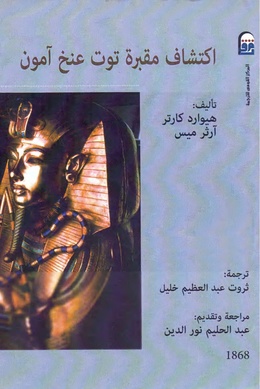 اكتشاف مقبرة توت عنخ آمون لـ هيوارد كارتر و آرثر ميس.
 -
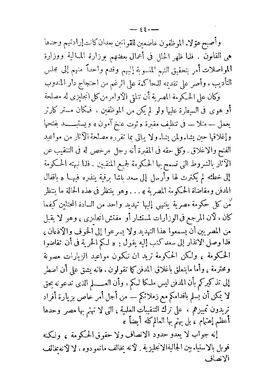 موقف رئيس الوزراء سعد زغلول من كارتر حول اكتشاف مقبرة توت عنخ أمون. من كتاب عباس العقاد "سعد زغلول - سيرة وتحية"، صفحة 440.
الهامش والمصادر
- ^ "Tutankhamun". University College London. Retrieved 2007-06-10.
- ^ Reeves 1990, p. 24.
- ^ أ ب Tyldesley 2012, p. 165.
- ^ Williamson 2015, pp. 1, 4, 9–10.
- ^ Tyldesley 2012, pp. 17, 205–206.
- ^ أ ب Roehrig 2016, p. 196.
- ^ Tyldesley 2012, pp. 19–21.
- ^ أ ب Reeves 1990, p. 33.
- ^ أ ب Goelet 2016, pp. 450–451.
- ^ Tyldesley 2012, pp. 23–24.
- ^ Reeves & Wilkinson 1996, p. 20.
- ^ Ridley 2019, pp. 310–311.
- ^ Dorn 2016, p. 32.
- ^ Reeves & Wilkinson 1996, pp. 9, 11.
- ^ Tyldesley 2012, pp. 26–27.
- ^ Thompson 2018, p. 49.
- ^ Riggs 2021, p. 93.
- ^ Thompson 2018, p. 50.
- ^ Reid 2015, pp. 42, 52.
- ^ Thompson 2018, pp. 59–61.
- ^ Tyldesley 2012, pp. 85, 87–88.
- ^ Reid 2015, pp. 63, 68–70.
- ^ أ ب ت Forbes 2018, p. 350.
- ^ Tyldesley 2012, pp. 94, 98–100.
- ^ Riggs 2021, pp. 292–293.
- ^ Marchant 2013, pp. 97–98.
- ^ أ ب Reeves & Wilkinson 1996, p. 210.
- ^ Lucas 2001, p. 165.
- ^ Romer & Romer 1993, pp. 24–25.
- ^ Marchant 2013, pp. 181–182.
- ^ أ ب ت Factum Foundation.
- ^ Getty 2013.
- ^ CBS News 2019.
- ^ Forbes 2018, pp. 356–362.
- ^ Riggs 2021, p. 299.
- ^ Reeves & Wilkinson 1996, pp. 11, 17.
- ^ Reeves 1990, pp. 36, 70.
- ^ أ ب Reeves & Wilkinson 1996, p. 124.
- ^ Roehrig 2016, pp. 187, 196.
- ^ Reeves & Wilkinson 1996, pp. 25, 124.
- ^ Roehrig 2016, pp. 191, 196.
- ^ أ ب Reeves 1990, p. 70.
- ^ أ ب Ritner 1997, p. 146.
- ^ Reeves 1990, pp. 70–71, 96.
- ^ أ ب Reeves 1990, pp. 70–71.
- ^ Romer & Romer 1993, p. 24.
- ^ Reeves 1990, pp. 92–93.
- ^ Reeves & Wilkinson 1996, pp. 33, 35, 124.
- ^ Reeves & Wilkinson 1996, pp. 37, 124–125.
- ^ Reeves 1990, pp. 72–73.
- ^ Price 2016, p. 274.
- ^ Marchant 2013, p. 79.
- ^ Reeves 1990, pp. 136, 150.
- ^ أ ب Reeves & Wilkinson 1996, pp. 125–126.
- ^ Reeves 1990, pp. 95, 97.
- ^ أ ب Carter 2001, pp. 151–152.
- ^ Lucas 2001, pp. 175–176, 185.
- ^ Carter 2000, p. 163.
- ^ Lucas 2000, p. 172.
- ^ Reeves 1990, pp. 60–61.
- ^ Tyldesley 2012, p. 23.
- ^ Hawass 2007, pp. 15–16.
- ^ Reeves 1990, pp. 78–81, 204, 206.
- ^ Price 2016, pp. 275–276.
- ^ Hawass 2007, pp. 24, 27, 32, 56.
- ^ Reeves 1990, pp. 156–158.
- ^ Carter & Mace 2003, pp. 173–175.
- ^ Hawass 2007, p. 64.
- ^ Reeves 1990, pp. 89–90.
- ^ Reeves 1990, pp. 136, 142, 205.
- ^ Reeves 1990, pp. 174–177.
- ^ Marchant 2013, p. 78.
- ^ Reeves 2023, p. 32.
- ^ Reeves 1990, pp. 156–157.
- ^ Reeves 1990, pp. 83–85, 100–101.
- ^ Reeves 1990, p. 71.
- ^ Reeves 1990, pp. 101–104.
- ^ Hornung 1999, pp. 148–149.
- ^ Hornung 1999, pp. 77–78.
- ^ Roberson 2016, pp. 327–328.
- ^ Reeves 1990, pp. 105–110.
- ^ Marchant 2013, pp. 62, 66–71.
- ^ Reeves 1990, p. 83.
- ^ Reeves 1990, pp. 85, 176.
- ^ Tyldesley 2012, pp. 108–110.
- ^ Ridley 2019, p. 252.
- ^ Tawfik, Thomas & Hegenbarth-Reichardt 2018, pp. 179–181.
- ^ Forbes 2018, pp. 143.
- ^ Ridley 2019, p. 306.
- ^ أ ب Tyldesley 2012, pp. 127–128.
- ^ أ ب Hawass 2007, p. 56.
- ^ Reeves 1990, p. 153.
- ^ Reeves 1990, p. 202.
- ^ Newberry 2001, p. 196.
- ^ Ridley 2019, p. 224.
- ^ Goelet 2016, pp. 451–453.
- ^ Reeves 1990, pp. 96–97, 190.
- ^ Goelet 2016, p. 452.
- ^ Reeves 1990, pp. 96, 197, 200.
- ^ Carter & Mace 2003, pp. 138–139.
- ^ Reeves 1990, p. 95.
- ^ Reeves 1990, p. 97.
- ^ Hawass 2007, p. 204.
- ^ Marchant 2013, p. 74.
- ^ Riggs 2021, p. 108.
- ^ Riggs 2021, pp. 117–120.
- ^ Riggs 2021, pp. 179–181, 228–229.
- ^ Forbes 2018, pp. 350–352.
- ^ Tawfik, Thomas & Hegenbarth-Reichardt 2018, p. 179.
- ^ El Sawy 2021.
المراجع
- The Discovery of the Tomb of Tutankhamen, by Howard Carter, Arthur C. Mace.
- The Complete Tutankhamun: The King, the Tomb, the Royal Treasure, by C. N. Reeves, Nicholas Reeves, Richard H. Wilkinson.
- Reeves, N & Wilkinson, R.H. The Complete Valley of the Kings, 1996, Thames and Hudson, London
- Siliotti, A. Guide to the Valley of the Kings and to the Theban Necropolises and Temples, 1996, A.A. Gaddis, Cairo
وصلات خارجية

| KV62
]].- "KV62". Theban Mapping Project. Retrieved 2007-06-10. - Plans of the tomb and other details
- "Burton's images of the tomb from The Howard Carter Archives". Griffith Institute. Retrieved 2007-06-10.
- "Tutankhamun: Anatomy of an Excavation". Griffith Institute. Retrieved 2007-06-10.
25°44′25.30″N 32°36′05.20″E / 25.7403611°N 32.6014444°E{{#coordinates:}}: لا يمكن أن يكون هناك أكثر من وسم أساسي واحد لكل صفحة
- Pages using gadget WikiMiniAtlas
- صفحات ذات وسوم إحداثيات غير صحيحة
- Short description is different from Wikidata
- Pages using infoboxes with thumbnail images
- Coordinates on Wikidata
- Pages using infobox Egyptian tomb with unknown parameters
- Articles with hatnote templates targeting a nonexistent page
- Pages using multiple image with auto scaled images
- Pages using multiple image with unknown parameters
- عمارة القرن 14 ق.م.
- وادي الملوك